
UK Airports Introduce Contactless eGates: What Travelers Need to Know in 2026
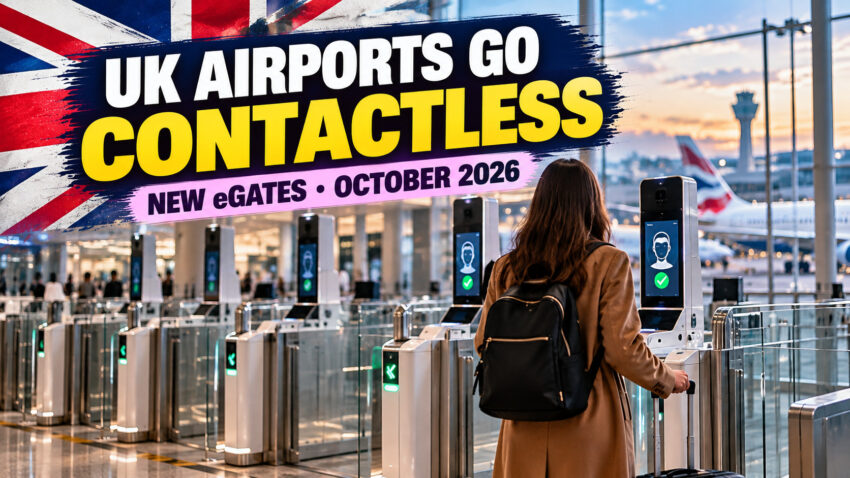
The United Kingdom is introducing new contactless technology at airport border gates, aiming to make arrivals faster and more convenient. The system uses facial-comparison technology to verify eligible passengers without requiring them to place their passports on an eGate reader.
The rollout began on October 6, 2026, at East Midlands Airport. According to the UK government, the technology is expected to reach all UK airports with eGates by early 2027. However, travelers should understand that contactless border processing does not remove passport requirements or eliminate immigration checks.
What Are Contactless eGates?
Contactless eGates are automated border-control gates that use facial-comparison technology to help verify a traveler’s identity.
Under the new system, eligible passengers approach an eGate and have their photograph taken. The system compares the live image against verified travel, passport, and immigration information. If the required checks are completed successfully, the gate opens without the passenger needing to scan their passport at the gate.
The purpose is to simplify one part of the airport arrival process while maintaining border security.
How Does the New Technology Work?
The process is designed to be straightforward:
- Approach the eGate: The passenger walks toward a participating contactless gate.
- Facial image captured: The system takes a live photograph.
- Identity verification: The image is compared with verified information held for border checks.
- Border checks continue: The system completes the necessary checks before allowing the passenger through.
- Gate opens or further checks are requested: If verification is successful, the passenger can proceed. If more checks are needed, they may be asked to scan their passport or speak to a Border Force officer.
The government has reported that testing showed the new process could be up to 25% faster than using a passport reader at an eGate. Actual waiting times will still depend on passenger numbers, airport operations, and whether additional checks are necessary.
Which Travelers Can Use Contactless eGates?
At the beginning of the rollout, contactless eGates were limited to British citizens using eligible British passports.
The government plans to expand access to other nationalities that already qualify to use conventional UK eGates. This expansion is expected to take place in stages.
Important: Contactless technology does not automatically make every international traveler eligible to use an eGate. Eligibility rules still apply, and travelers should check the latest official guidance before their journey.
For Pakistani passport holders, the introduction of contactless eGates does not itself create permission to enter the UK without a visa. Travelers must continue to meet the UK’s applicable visa and entry requirements.
Which UK Airports Are Included?
The government’s rollout plan covers eGates at the following airports:
- Birmingham Airport
- Bristol Airport
- Cardiff Airport
- East Midlands Airport
- Edinburgh Airport
- Gatwick Airport
- Glasgow Airport
- Heathrow Airport
- London City Airport
- Luton Airport
- Manchester Airport
- Newcastle Airport
- Stansted Airport
East Midlands Airport was the first location to introduce the new technology on October 6, 2026. Birmingham Airport was subsequently added to the rollout, with wider implementation continuing in phases.
The government’s stated target is to upgrade all UK airport eGates by early 2027. Travelers should check the latest information because availability may vary by airport and gate.
Do Travelers Still Need to Carry Their Passports?
Yes. Travelers must continue to carry a valid passport.
Contactless eGates are intended to remove the need to place a passport on the gate’s reader during a successful contactless check. They do not replace the passport itself.
Passengers may still need their passports for airline check-in, boarding, identity verification, or additional border checks. If the system cannot complete verification, a passenger may be asked to scan the passport or speak to a Border Force officer.
Travelers should therefore keep their passports accessible rather than packing them in checked luggage or leaving them somewhere difficult to reach.
What Happens If Facial Recognition Does Not Work?
Contactless processing may not be successful in every case. If the system cannot verify a passenger or further checks are required, the passenger may be directed to use the passport reader or speak to a Border Force officer.
This means contactless gates should be viewed as an additional way to complete identity verification—not a guarantee of instant entry.
Passengers should follow instructions from airport staff and Border Force officers and allow enough time for border processing.
Will Contactless eGates Make UK Airport Queues Shorter?
The technology is intended to improve the flow of eligible passengers through border control. Government testing indicated that it could be up to 25% faster than the previous passport-reading process at an eGate.
However, this does not mean every traveler will experience a 25% reduction in their total airport waiting time. Queue lengths can depend on the number of arriving flights, staffing, technical performance, and the need for manual checks.
The new system is one part of the UK’s wider effort to modernize border operations.
What Should International Travelers Do Before Flying to the UK?
If you are planning a trip to the United Kingdom, follow these practical steps:
- Check whether you need a UK visa or an Electronic Travel Authorisation (ETA).
- Make sure your passport is valid for your planned journey.
- Confirm whether you are eligible to use UK eGates.
- Keep your passport and travel documents easily accessible.
- Follow the instructions displayed at the airport and those given by border staff.
- Check official UK government guidance before departure for any changes to entry requirements.
Do not assume that the new contactless system changes your nationality’s visa requirements or guarantees admission to the UK.
What Does This Change Mean for the Future of Air Travel?
Contactless eGates demonstrate how facial-comparison technology is increasingly being used to support airport identity checks. If implementation proceeds as planned, eligible passengers could experience a smoother arrival process at more UK airports.
At the same time, travelers should remember that convenience and eligibility are different things. Immigration rules, security checks, and passport requirements continue to apply.
For international visitors, the best approach is to stay informed, prepare travel documents in advance, and rely on official sources for current entry requirements.
Final Thoughts
The UK’s contactless eGate rollout is an important development in airport technology. Starting at East Midlands Airport in October 2026, the system is designed to verify eligible passengers through facial comparison without requiring a passport to be placed on the gate reader.
The planned expansion to UK airports by early 2027 could make the arrival process more convenient for eligible travelers. Nevertheless, passengers must still carry their passports, meet the relevant entry requirements, and be prepared for additional checks if necessary.
Planning a trip to the UK? Check the official guidance before you travel so you know which documents you need and whether you can use an eGate.
Official Sources
- UK Home Office and Border Force: Airports to go contactless in major boost for UK passengers
- UK Border Force: Contactless travel using eGates
- UK Border Force: Guide to faster travel through the UK border