
EES vs ETIAS in 2026: What Travelers Need to Know Before Visiting Europe
Introduction
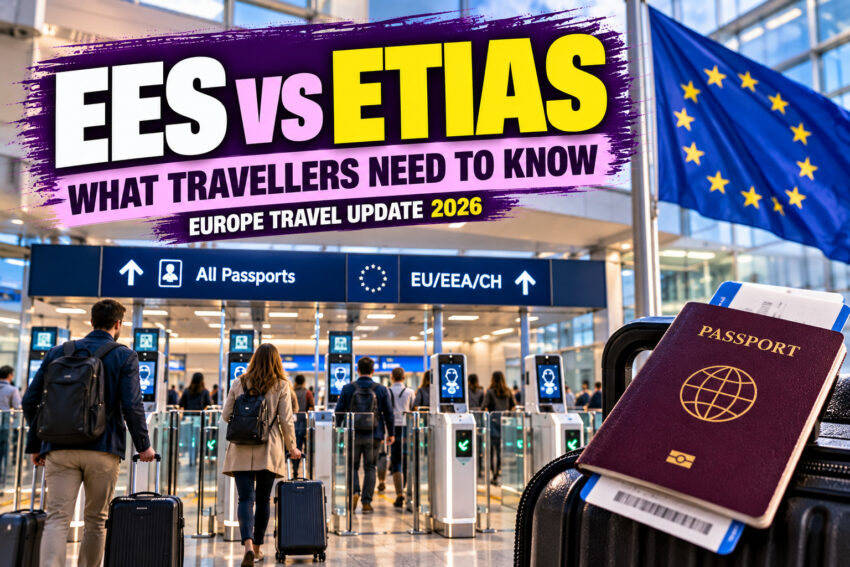
Planning a trip to Europe? New digital border systems are changing how many international travelers enter the Schengen Area. Two names you may see in travel news are the Entry/Exit System (EES) and the European Travel Information and Authorisation System (ETIAS).
Although they are connected to European border management, they serve different purposes. EES records the entry and exit of eligible non-EU visitors, while ETIAS is a travel authorization intended for eligible travelers who do not need a visa for short stays.
As of October 2026, EES is fully operational at participating external borders. ETIAS, meanwhile, is not yet accepting applications, and the EU says it will announce its exact launch date in advance.
Here is what travelers should understand before booking a trip.
What Is the Entry/Exit System (EES)?
The Entry/Exit System is a digital system that records information about eligible non-EU nationals traveling to participating European countries for short stays.
It became fully operational on April 10, 2026, following a phased rollout.
Instead of relying on passport stamps alone, the system digitally records relevant travel-document details, entry and exit dates, and biometric information where applicable.
How Does EES Work?
When an eligible traveler crosses an external border of a country using EES, border authorities register or verify the required information.
Depending on the traveler’s circumstances, this may include:
- Passport and travel-document information.
- A facial image.
- Fingerprints, where applicable.
- The date and place of entry or exit.
- Information about a refusal of entry, where relevant.
For travelers who hold a short-stay visa, fingerprints have generally already been collected during the visa process, so EES records the facial image rather than collecting fingerprints again under the standard procedure.
At a first crossing, the registration process may take additional time. On later trips, the system can verify information already recorded.
EES is also designed to help authorities identify overstays by calculating how long eligible visitors have stayed within the participating countries.
Important: EES does not remove the usual entry conditions. Travelers must still have the correct visa or authorization, valid travel documents, and meet the applicable border requirements.
What Is ETIAS?
ETIAS stands for the European Travel Information and Authorisation System. It is a pre-travel authorization for nationals of visa-exempt countries who intend to visit participating European destinations for a short stay.
It is not a Schengen visa and does not replace one.
The official EU website states that ETIAS is expected to begin operations in the last quarter of 2026. However, as of October 24, 2026, it is not yet in operation, and applications are not being collected.
The EU will announce the exact launch date several months before the system starts.
Who Will Need ETIAS?
ETIAS is intended for eligible travelers from visa-exempt countries who would otherwise be able to visit participating destinations for a short stay without first obtaining a visa.
Once the system launches, eligible travelers will need to obtain authorization before traveling, subject to the applicable rules and any exemptions.
The authorization is linked to the traveler’s passport. The official EU website states that it can generally remain valid for up to three years or until the passport expires, whichever comes first.
A valid ETIAS does not guarantee entry. Border officials still make the final decision at the border.
EES vs ETIAS: The Main Differences
| Feature | EES | ETIAS |
|---|---|---|
| Full name | Entry/Exit System | European Travel Information and Authorisation System |
| Main purpose | Digitally records eligible travelers’ border crossings | Screens eligible visa-exempt travelers before departure |
| Who it affects | Eligible non-EU nationals making short stays | Eligible nationals of visa-exempt countries |
| When it applies | At external border crossings | Before travel, once the system launches |
| Biometric information | Records facial images and, where applicable, fingerprints | Not a border biometric-registration system like EES |
| Status on October 24, 2026 | Fully operational | Not yet operational |
| Does it replace a visa? | No | No; it applies to eligible visa-exempt travelers |
The easiest way to remember the difference is this: EES records border crossings; ETIAS will be a pre-travel authorization for eligible visa-exempt visitors.
What Do Pakistani Travelers Need to Know?
This distinction is particularly important for travelers using Pakistani ordinary passports.
Pakistani citizens generally need a Schengen visa for short visits to the Schengen Area, unless a specific exemption applies to their circumstances.
That means ETIAS is not a substitute for a Schengen visa for Pakistani citizens who require one. ETIAS is designed for visa-exempt nationalities.
However, eligible Pakistani travelers visiting for a short stay may be subject to EES when crossing the external border of a participating country.
Before traveling from Pakistan, make sure you:
- Apply for the appropriate Schengen visa if required.
- Check your passport’s validity and all visa conditions.
- Carry supporting documents, such as accommodation details, return or onward travel information, and evidence of sufficient funds where required.
- Allow extra time at the airport or border for any required registration and checks.
- Follow instructions from your airline and the border authorities.
The applicable requirements depend on your nationality, travel purpose, destination, and residence status.
Will EES Make Airport Queues Longer?
EES may mean additional processing time for some travelers, particularly during initial registration or busy travel periods.
The impact can vary by airport, border crossing, staffing, and how many passengers need to register.
Over time, digital records and automated verification may make repeat crossings more efficient. However, travelers should not assume every airport will offer identical facilities or processing times.
To prepare for your trip:
- Arrive at the airport with enough time for check-in and border formalities.
- Keep your passport and visa documents accessible.
- Follow signs and instructions from border staff.
- Use self-service facilities only where they are available and you are eligible.
- Check for travel updates from your airline and destination authorities.
A biometric passport may be needed for some automated self-service processes, but a biometric passport is not generally a condition of entry under EES itself. Valid non-biometric passports can still be accepted if all other entry requirements are met.
Does EES Change the 90-Day Schengen Rule?
No. EES does not create a new general stay allowance.
For short stays, the familiar Schengen limit is generally 90 days in any 180-day period, subject to the applicable rules and individual circumstances.
EES helps authorities record and calculate eligible travelers’ stays across participating countries. It does not grant additional days or authorize someone to remain after their permitted stay expires.
Travelers should keep track of their entry and exit dates and avoid overstaying.
When Will ETIAS Start?
As of October 24, 2026, the official EU website says ETIAS is expected to start in the last quarter of 2026, but it is not yet operational.
Travelers should not apply through unofficial websites claiming to process ETIAS applications before the official system opens.
Once the system launches, eligible travelers will be able to apply through the official EU website or mobile app. The official site currently lists an application fee of €20, subject to applicable exemptions.
Check the official website for the latest launch announcement before making travel plans.
Frequently Asked Questions
Is EES the same as ETIAS?
No. EES records eligible non-EU travelers’ entry and exit information at external borders. ETIAS will be a pre-travel authorization for eligible visitors from visa-exempt countries.
Is EES already operational?
Yes. EES became fully operational at participating external border crossing points on April 10, 2026.
Can Pakistani citizens apply for ETIAS?
Pakistani citizens who need a Schengen visa generally cannot use ETIAS as a replacement. ETIAS is intended for eligible visa-exempt nationalities.
Do I need to apply for ETIAS right now?
As of October 24, 2026, ETIAS is not yet operational, and applications are not being collected. Follow the official EU website for the confirmed launch date.
Will EES replace my Schengen visa?
No. EES is a border-recording system. Travelers who need a visa must still obtain the appropriate visa.
Can EES refuse me entry?
EES records information and can help authorities identify issues such as overstays. The decision to grant or refuse entry is made by the relevant border authorities under the applicable rules.
Final Thoughts
EES and ETIAS are two different parts of Europe’s move toward more digital border management. EES is already operational, while ETIAS is still awaiting its official launch.
For travelers, the most important step is understanding which system applies to their nationality and travel circumstances. If you are traveling on a Pakistani passport and need a Schengen visa, do not confuse ETIAS with a visa application.
Check official information before booking, prepare your documents, and allow enough time for border formalities.
Follow TravellerTrek for practical European travel updates, immigration guides, and important rule changes.
Official Sources
- European Commission — Main differences between EES and ETIAS
- Official EU ETIAS website
- Official EU EES website and FAQs
Disclaimer: This article is for general information and does not replace official immigration advice. Requirements and implementation timelines may change; check official sources before traveling.