
Middle East War Cuts European Tourists, Battering Southeast Asian Tourism
By Editorial Desk | July 31, 2026
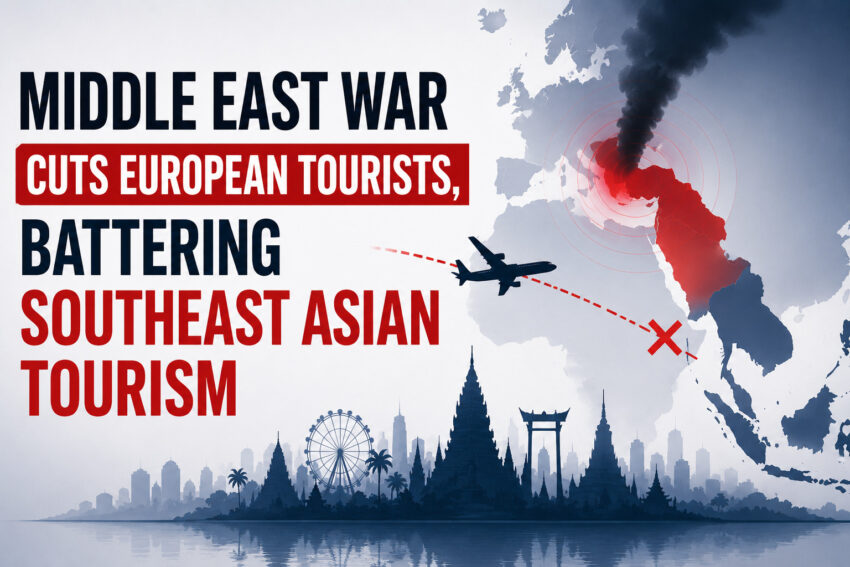
The escalating conflict in the Middle East is sending shockwaves through the global travel industry, with Southeast Asia emerging as one of the regions feeling the economic impact most acutely. Tourism officials and industry analysts report that a growing number of European travelers are postponing or canceling long-haul holidays, leading to weaker visitor numbers across several of the region’s most popular destinations.
The decline comes as airlines continue to adjust routes to avoid conflict-affected airspace, resulting in longer flight times, increased fuel consumption, and higher ticket prices. Combined with heightened concerns over regional stability, these factors have significantly reduced travel demand from Europe.
European Arrivals Show Signs of Weakness
Countries including Thailand, Vietnam, Malaysia, Indonesia, and Singapore have long depended on European visitors, particularly during the summer holiday season. However, hotels, tour operators, and airlines are reporting softer booking trends as travelers opt for destinations closer to home.
Travel experts say many Europeans are choosing Mediterranean resorts and domestic vacations instead of expensive intercontinental journeys, reflecting both economic caution and uncertainty surrounding international travel.
Aviation Disruptions Drive Higher Costs
The conflict has forced numerous international carriers to reroute flights around sensitive airspace, increasing operational expenses. Airlines have responded by raising fares on many Europe–Asia routes, making Southeast Asian holidays less affordable for price-sensitive travelers.
Industry analysts warn that prolonged disruptions could further affect airline profitability and limit travel capacity during peak tourism periods.
Economic Impact on Southeast Asia
Tourism remains a major contributor to economic growth across Southeast Asia. Reduced European arrivals are affecting hotels, restaurants, transport providers, retail businesses, and local tour companies that rely heavily on international spending.
While visitorfrom neighboring Asian markets continue to support tourism activity, they have not fully compensated for the slowdown in European demand. Businesses are therefore facing increased pressure to diversify their customer base and attract travelers from emerging markets.
Governments Strengthen Tourism Campaigns
In response, tourism authorities across the region are expanding international marketing campaigns, introducing promotional travel packages, and working closely with airlines to stimulate demand. Several destinations are also focusing on regional tourism and high-value visitors to help offset losses from traditional European markets.
Industry leaders remain optimistic that once geopolitical tensions ease and international flight operations stabilize, long-haul travel demand will gradually recover.
Outlook
The Middle East conflict illustrates how geopolitical instability can reshape global tourism far beyond the immediate region. As uncertainty continues to influence travel decisions, Southeast Asian economies are adapting to changing visitor patterns while preparing for an eventual recovery.
For now, the decline in European tourists serves as a reminder of the travel industry’s vulnerability to international crises and the importance of building a resilient, diversified tourism sector capable of withstanding global disruptions.