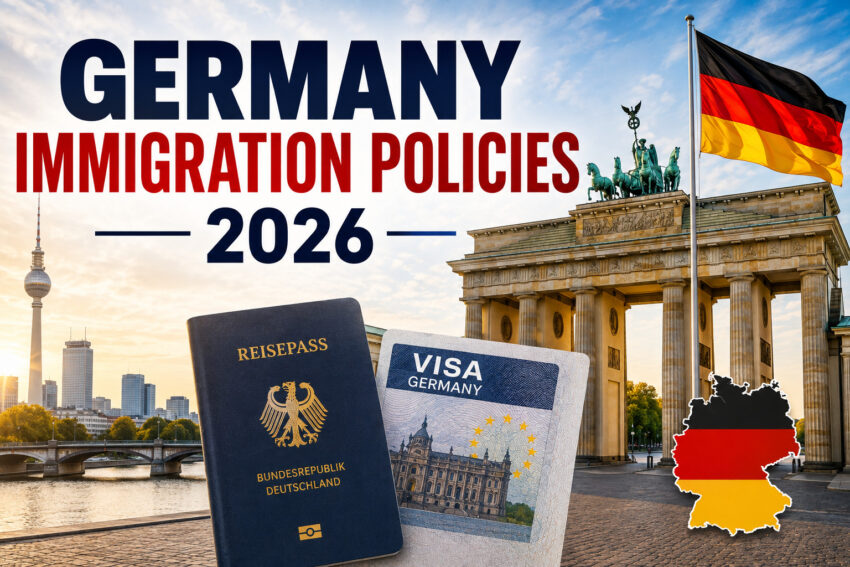

Germany Immigration Policies 2026: What Every Immigrant and Skilled Worker Needs to Know
Germany remains one of Europe’s most attractive destinations for skilled professionals, but 2026 has brought a mix of opportunities and stricter immigration enforcement. The country continues to welcome qualified workers to address labor shortages while tightening border controls and strengthening compliance with immigration laws.
Whether you are planning to move to Germany for work, already living there, or considering applying for a German work visa, understanding the latest policy changes is essential.
Germany’s Immigration Strategy in 2026
Germany’s immigration policy in 2026 focuses on two main objectives:
- Attracting highly skilled international talent to support the economy.
- Reducing irregular migration through stricter border management and faster immigration procedures.
The government is balancing economic needs with stronger immigration enforcement, making legal migration routes more important than ever.
Skilled Workers Continue to Be in High Demand
Germany continues to experience shortages across several industries, including:
- Healthcare
- Information Technology (IT)
- Engineering
- Construction
- Manufacturing
- Logistics
- Skilled trades
- Hospitality
Qualified professionals in these sectors remain among the strongest candidates for obtaining German work visas and residence permits.
Opportunity Card (Chancenkarte) Remains a Key Pathway
The Opportunity Card remains one of Germany’s most attractive immigration programs.
Eligible applicants can:
- Enter Germany without a pre-arranged job offer.
- Search for employment while living in Germany.
- Work part-time during the job search period.
- Transition to a skilled worker residence permit after securing qualified employment.
The points-based system considers:
- Educational qualifications
- Professional experience
- German or English language skills
- Age
- Previous connections to Germany
This route continues to make Germany more accessible for skilled professionals from outside the European Union.
EU Blue Card Updates
The EU Blue Card remains one of the fastest pathways to employment and long-term residence for highly qualified professionals.
In 2026:
- Updated salary thresholds apply.
- Shortage occupations continue to benefit from lower minimum salary requirements.
- Processing has become increasingly digital in many regions.
- Certain IT professionals may qualify even without a traditional university degree if they have sufficient professional experience.
The Blue Card also offers an attractive route toward permanent residence for eligible workers.
Recognition of Foreign Qualifications
Germany continues improving the recognition process for international qualifications.
Authorities are expanding digital services to simplify:
- Degree recognition
- Professional licensing
- Application tracking
- Communication with immigration offices
These improvements help reduce delays for many applicants, although processing times can still vary by profession and federal state.
Employer Responsibilities Increase
Employers hiring foreign workers now face additional obligations.
Companies are expected to provide clear information regarding:
- Employment rights
- Working conditions
- Available counseling services
- Legal protections
- Workplace responsibilities
These measures aim to improve transparency and reduce worker exploitation.
Stronger Border and Immigration Enforcement
Alongside expanded legal migration opportunities, Germany has strengthened measures against irregular migration.
Recent developments include:
- Increased border checks.
- Faster processing of deportation cases for individuals without legal residence rights.
- Stronger action against document fraud and illegal employment.
- Enhanced cooperation with neighboring European countries on migration management.
These measures primarily target unauthorized migration while preserving legal pathways for workers and students.
Digital Immigration Services
Germany continues modernizing its immigration system through digitalization.
Many immigration procedures now include:
- Online visa applications.
- Digital appointment booking.
- Electronic document submission.
- Faster communication between immigration authorities.
Although implementation varies by region, these improvements are intended to reduce waiting times and improve efficiency.
Opportunities for International Graduates
Graduates from German universities continue to benefit from favorable immigration policies.
After graduation, eligible students may:
- Remain in Germany to search for employment.
- Transition to skilled worker residence permits upon securing qualifying jobs.
- Apply for long-term residence after meeting legal requirements.
These policies help Germany retain internationally educated talent.
What These Changes Mean for Immigrants
Positive Developments
- Continued demand for skilled professionals.
- Opportunity Card remains available.
- Improved digital visa services.
- Better recognition of foreign qualifications.
- Clearer pathways to permanent residence.
Areas Requiring Attention
- Stricter border enforcement.
- Increased employer compliance requirements.
- Greater scrutiny of visa applications.
- Stronger measures against unauthorized employment.
Applicants should ensure all documentation is accurate and complete before applying.
Tips for Prospective Applicants
To improve your chances of success:
- Verify that your qualifications meet German standards.
- Prepare certified translations where required.
- Improve your German language skills, even if your role is English-speaking.
- Monitor official immigration updates regularly.
- Apply through official government channels.
Conclusion
Germany’s 2026 immigration policies reflect a balanced approach: welcoming skilled professionals who can contribute to the economy while tightening enforcement against irregular migration. Legal pathways such as the Opportunity Card and EU Blue Card continue to provide excellent opportunities for qualified workers, but applicants should carefully follow the latest requirements and prepare complete documentation.
For immigrants and skilled workers planning a future in Germany, staying informed and using official guidance will be key to a successful application and long-term integration.
Official Sources
- Federal Ministry of the Interior (BMI): https://www.bmi.bund.de
- Make it in Germany (Official Skilled Immigration Portal): https://www.make-it-in-germany.com
- German Federal Foreign Office: https://www.auswaertiges-amt.de
- Germany Visa Information: https://digital.diplo.de
- Recognition in Germany: https://www.anerkennung-in-deutschland.de