
Europe Just Changed Work Immigration Rules: What Non-EU Workers Need to Know
Europe is making changes to its legal migration system as countries face labour shortages and increasing demand for workers from outside the EU.
In 2026, the updated EU Single Permit Directive became fully operational across the EU countries covered by the rules. The changes are designed to simplify applications for non-EU workers and strengthen their rights once they are working in Europe. (European Commission)
💼 What Is the EU Single Permit?
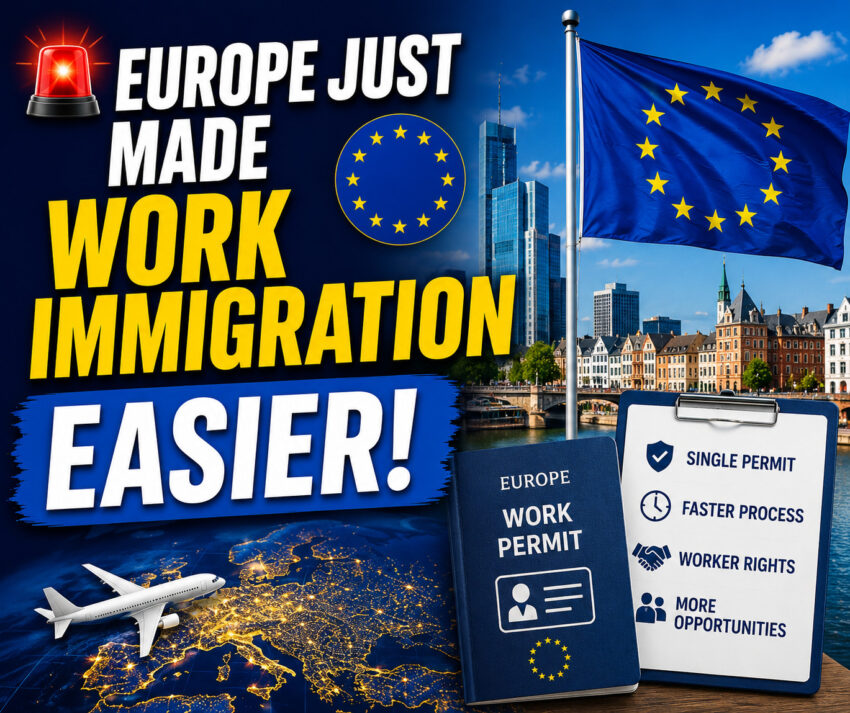
The Single Permit combines the right to live and work in an EU country into one permit.
Instead of dealing with separate procedures for residence and employment rights, eligible non-EU workers can use a single application process under the applicable national system. (European Commission)
⏳ Decisions Within 90 Days
One of the biggest changes is the time limit for processing applications.
EU countries covered by the updated rules must generally make a decision on a Single Permit application within 90 days, including any applicable labour-market test. (European Commission)
This could make the process more predictable for people waiting to find out whether they can legally work and reside in an EU country.
🌍 Can You Apply From Inside the EU?
Under the updated rules, people who already hold a valid residence permit can apply for a Single Permit directly from within the EU in certain circumstances, rather than necessarily having to return to their country of origin. (European Commission)
However, the exact application procedure still depends on the country and the type of residence status involved.
🔄 More Flexibility for Workers
The updated rules also strengthen protections for non-EU workers.
Under certain conditions, workers can change employers without losing their rights immediately. The rules also provide protections for workers who become unemployed during the validity period of their Single Permit. (European Commission)
This is particularly important because workers should not be completely dependent on a single employer if their employment situation changes.
🛡️ Stronger Protection Against Exploitation
EU countries must also provide non-EU workers with information about their rights.
The updated framework aims to strengthen protection against labour exploitation and ensure that foreign workers understand the rights and conditions connected to their employment. (European Commission)
🇪🇺 Does This Mean Everyone Can Easily Move to Europe?
No.
This is one of the most important points.
The new Single Permit rules do not create one universal European work visa.
Each EU country still has its own immigration system, labour-market requirements and procedures. Applicants must meet the conditions of the country where they want to work.
The updated rules also do not apply to Denmark and Ireland. (European Commission)
So someone planning to work in Germany, Sweden, France, Italy or another EU country still needs to check that country’s specific requirements.
🌟 Europe Is Also Developing an EU Talent Pool
The Single Permit isn’t the only development.
The EU has also launched the EU Talent Pool, designed to help connect jobseekers from outside the EU with employers in participating European countries, particularly for occupations experiencing labour shortages. (European Commission)
The platform entered into force in June 2026, but the European Commission says it is still being developed and is expected to become fully operational by the end of 2027. (European Commission)
👷 Why Is Europe Doing This?
Europe is facing labour shortages partly because of demographic changes.
The European Commission says the EU economy increasingly relies on workers from outside the EU and that facilitating legal migration is important for Europe’s competitiveness. (European Commission)
The goal is therefore to make legal recruitment of international workers more efficient, while also improving protections for foreign workers.
📌 What Should Foreign Workers Know?
If you’re considering working in Europe, keep these points in mind:
- 🇪🇺 The Single Permit combines residence and work rights.
- ⏳ Applications should generally receive a decision within 90 days under the updated rules.
- 🔄 Some workers can change employers under certain conditions.
- 🛡️ Foreign workers receive stronger rights and information about their protections.
- 🌍 Some valid residence-permit holders can apply from within the EU.
- 🇩🇰 Denmark and 🇮🇪 Ireland are outside this directive.
- ⚠️ The rules do not guarantee a job or a residence permit.
- 📋 National immigration and employment requirements still apply.
🔑 Final Takeaway
Europe is not introducing one simple work visa for everyone, but the updated Single Permit rules represent an important change for non-EU workers.
The combination of simpler applications, a 90-day decision target, greater worker protections and the developing EU Talent Pool could make legal recruitment of international workers more efficient. (European Commission)
For anyone planning to work in Europe, the most important next step is to check the specific immigration rules of the country where you want to work.
🔗 Official Sources
European Commission — Addressing worker shortages by attracting global talent
European Commission — Single Permit for residence and work
Next, we can turn this into a short, high-engagement Facebook post and a realistic clickbait thumbnail.