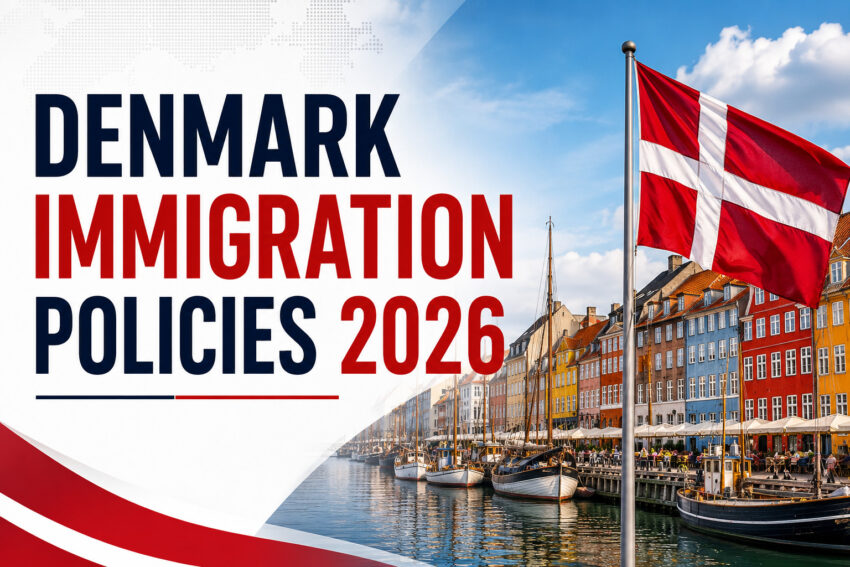

- Denmark Immigration Policies in 2026: A Complete Guide for Workers and Families
Published: July 2026
Meta Description: Denmark continues to maintain one of Europe’s most selective immigration systems in 2026. This comprehensive guide explains the latest immigration policies affecting foreign workers, skilled professionals, and families, including work permits, residence rules, family reunification, integration requirements, and what applicants should expect before moving to Denmark.
Denmark Strengthens Immigration Rules While Protecting Its Skilled Workforce
Denmark has long been recognized as one of Europe’s most prosperous and socially secure countries. With a strong economy, world-class public services, and an exceptional quality of life, it remains an attractive destination for skilled professionals and families seeking long-term opportunities.
However, Denmark also operates one of the continent’s strictest immigration systems. In 2026, the Danish government continues its policy of balancing economic needs with controlled migration, emphasizing integration, labor market participation, and self-sufficiency.
For foreign workers and families considering relocation, understanding these policies is essential before applying for a visa or residence permit.
Denmark’s Immigration Strategy in 2026
The Danish government’s immigration policy is built around a simple principle: immigration should benefit both newcomers and Danish society.
Authorities continue to prioritize:
- Highly skilled professionals.
- Workers in sectors experiencing labor shortages.
- Genuine family reunification cases.
- Successful integration into Danish society.
- Long-term economic contribution.
At the same time, Denmark maintains strict controls over irregular migration and places high expectations on applicants seeking long-term residence.
Skilled Workers Remain in High Demand
Despite tighter immigration controls, Denmark continues to welcome qualified professionals whose expertise supports the country’s economy.
Industries currently experiencing demand include:
- Information Technology (IT)
- Software Development
- Engineering
- Renewable Energy
- Healthcare and Nursing
- Construction
- Manufacturing
- Biotechnology
- Green Technology
- Scientific Research
Applicants with recognized qualifications, relevant work experience, and employment offers from Danish companies generally have stronger prospects under Denmark’s work permit schemes.
The government continues to align immigration with labor market needs, ensuring employers can recruit international talent where local shortages exist.
Work Permit Policies Continue to Focus on Skills
Foreign nationals wishing to work in Denmark typically require a valid work permit linked to an approved employment offer.
Authorities carefully assess:
- Professional qualifications.
- Salary levels.
- Employment conditions.
- Employer compliance.
- Whether the position reflects genuine labor market needs.
Workers are expected to respect Danish labor laws, tax obligations, and employment regulations throughout their stay.
The government also continues monitoring workplaces to reduce labor exploitation and ensure equal treatment of foreign employees.
Permanent Residence Requirements Remain Demanding
Obtaining permanent residence in Denmark remains a long-term goal rather than an automatic outcome.
Applicants generally need to demonstrate:
- Several years of continuous legal residence.
- Stable employment history.
- Financial independence without long-term reliance on public benefits.
- Good conduct and compliance with Danish law.
- Sufficient Danish language proficiency.
- Active participation in Danish society.
Authorities view permanent residence as recognition of successful integration rather than simply the passage of time.
Family Reunification Continues Under Strict Conditions
Family reunification remains an important pathway for spouses, partners, and children of eligible residents.
However, Danish authorities continue applying rigorous eligibility requirements.
Applications may be assessed on factors such as:
- Genuine family relationships.
- Financial capacity of the sponsor.
- Suitable accommodation.
- Compliance with immigration rules.
- Integration-related obligations where applicable.
Applicants should expect careful document verification, and processing times can vary depending on the complexity of each case.
Integration Is Central to Danish Immigration Policy
Unlike many countries that focus primarily on entry requirements, Denmark places equal importance on integration after arrival.
New residents are encouraged to participate in:
- Danish language courses.
- Employment and job-readiness programs.
- Civic education.
- Local community activities.
Authorities believe that language skills and workforce participation are key to successful long-term integration.
For many newcomers, learning Danish significantly improves career opportunities and everyday life.
Rights and Responsibilities of Foreign Workers
Foreign workers legally employed in Denmark generally enjoy strong workplace protections under Danish labor laws.
These include:
- Safe working environments.
- Fair employment conditions.
- Protection against discrimination.
- Regulated working hours.
- Access to labor rights according to employment agreements.
At the same time, workers are expected to:
- Pay taxes correctly.
- Respect Danish laws.
- Maintain valid residence status.
- Report changes affecting their immigration status.
Compliance with these responsibilities is essential for maintaining legal residence.
Housing and Cost of Living
While Denmark offers one of Europe’s highest standards of living, newcomers should be aware of the associated costs.
Major cities such as Copenhagen and Aarhus remain among the most expensive places to live in Northern Europe.
Applicants should budget for:
- Accommodation.
- Transportation.
- Health-related expenses where applicable.
- Daily living costs.
- Childcare and education expenses.
Having sufficient financial resources before arrival is an important part of successful settlement.
What Families Should Know Before Relocating
Families moving to Denmark should prepare carefully before submitting applications.
Important considerations include:
- School options for children.
- Housing availability.
- Healthcare registration.
- Language learning opportunities.
- Employment prospects for accompanying spouses.
- Local municipality registration requirements.
Early planning can make the transition significantly smoother.
Border Management and Immigration Control
Denmark continues working with European partners to strengthen border security and manage migration effectively.
In 2026, authorities remain focused on:
- Preventing irregular migration.
- Strengthening identity verification.
- Combating document fraud.
- Improving asylum processing efficiency.
- Enhancing international cooperation.
These measures form part of Denmark’s broader commitment to maintaining an orderly immigration system while meeting its international obligations.
Challenges Facing New Applicants
Although Denmark remains attractive to international workers and families, applicants may face challenges such as:
- Competitive work permit requirements.
- High living expenses.
- Strict documentation standards.
- Danish language expectations.
- Longer processing times for some applications.
Being well-prepared and submitting complete, accurate documentation can help reduce delays.
Opportunities That Still Exist
Despite stricter regulations, Denmark continues to offer excellent opportunities for qualified individuals.
Workers with in-demand skills, families meeting reunification requirements, and applicants committed to integrating into Danish society remain well positioned to build successful lives in the country.
The government’s approach reflects a balance between attracting valuable international talent and maintaining a sustainable immigration system.
Final Analysis
Denmark’s immigration policies in 2026 demonstrate that the country remains open—but selective. Rather than encouraging large-scale migration, Denmark focuses on attracting skilled professionals, supporting genuine family reunification, and promoting meaningful integration.
For workers and families, success depends on careful preparation, strong qualifications, financial stability, and a willingness to participate actively in Danish society. Those who meet these expectations can still find rewarding opportunities in one of Europe’s safest, most innovative, and highest-quality living environments.
As immigration policies continue to evolve across Europe, Denmark’s model highlights a broader trend: welcoming talent while maintaining rigorous standards for long-term residence and integration.
Sources:
- Danish Agency for International Recruitment and Integration
https://siri.dk/english/ - New to Denmark – Official Immigration Portal
https://nyidanmark.dk/en-GB/ - Danish Ministry of Immigration and Integration
https://uim.dk/en/