
France Tightens Immigration Policies in 2026: What the New Rules Mean for Migrants
Published: July 2026
France has introduced a series of significant immigration reforms in 2026, marking one of the country’s most comprehensive efforts in recent years to strengthen border security, improve migrant integration, and tighten eligibility for long-term residency and citizenship. The measures are part of the government’s broader strategy to better manage migration while addressing labor market needs and maintaining public confidence in the immigration system.
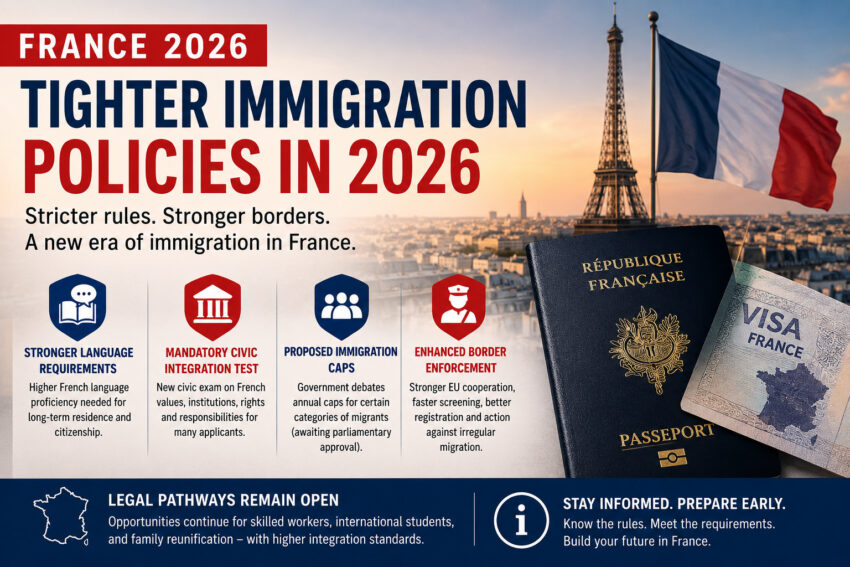
Higher Language Standards for Residency and Citizenship
One of the most notable changes is the increase in French language requirements for foreign nationals seeking long-term residence or French citizenship. Applicants are now expected to demonstrate a higher level of French proficiency than in previous years.
The government believes stronger language skills will help newcomers integrate more effectively into French society, improve employment opportunities, and encourage greater civic participation.
Mandatory Civic Integration Examination
Alongside language reforms, France has introduced a mandatory civic knowledge examination for many residence permit and naturalization applicants. The test evaluates applicants’ understanding of French history, democratic values, institutions, rights, and civic responsibilities.
Officials say the new requirement aims to ensure that future residents are better prepared to participate in French society and understand the country’s legal and cultural framework.
Proposed Immigration Caps
The French government is also considering annual immigration caps for selected categories of migrants. While these proposals remain subject to parliamentary approval, they reflect growing political discussions around managing migration flows based on economic needs and integration capacity.
If implemented, the quotas could influence future admission levels in certain immigration categories while preserving legal routes for qualified applicants.
Stronger Border Enforcement
France continues to strengthen border management in cooperation with the European Union. New measures include improved screening procedures, enhanced registration systems, increased efforts against human trafficking networks, and closer coordination with neighboring countries to reduce irregular migration.
Authorities have also expanded cooperation to combat illegal Channel crossings and improve the return process for individuals without legal permission to remain in the country.
Impact on International Students and Skilled Workers
Despite tighter immigration controls, France remains committed to attracting international talent. Skilled professionals, researchers, entrepreneurs, and international students continue to have access to legal immigration pathways.
However, applicants should expect greater emphasis on integration requirements, including language proficiency and compliance with updated immigration regulations.
For Pakistani students and professionals planning to move to France, early preparation has become increasingly important. Improving French language skills, maintaining complete documentation, and staying informed about policy updates can significantly improve the application process.
What These Changes Mean
France’s 2026 immigration reforms signal a shift toward stricter eligibility standards combined with stronger integration policies. While legal immigration opportunities remain available, applicants are expected to meet higher standards before obtaining long-term residence or citizenship.
Individuals planning to study, work, or settle in France should carefully review the latest requirements and prepare their applications accordingly.
Conclusion
France’s evolving immigration framework reflects its effort to balance economic needs, border security, and successful integration. Although the rules have become more demanding, qualified applicants who meet the new language and civic requirements continue to have opportunities to build their future in France.
As immigration policies continue to evolve throughout 2026, prospective migrants should monitor official government announcements and seek professional guidance before submitting applications.