
France’s Extreme Heatwave and Wildfires Challenge Summer Tourism in 2026
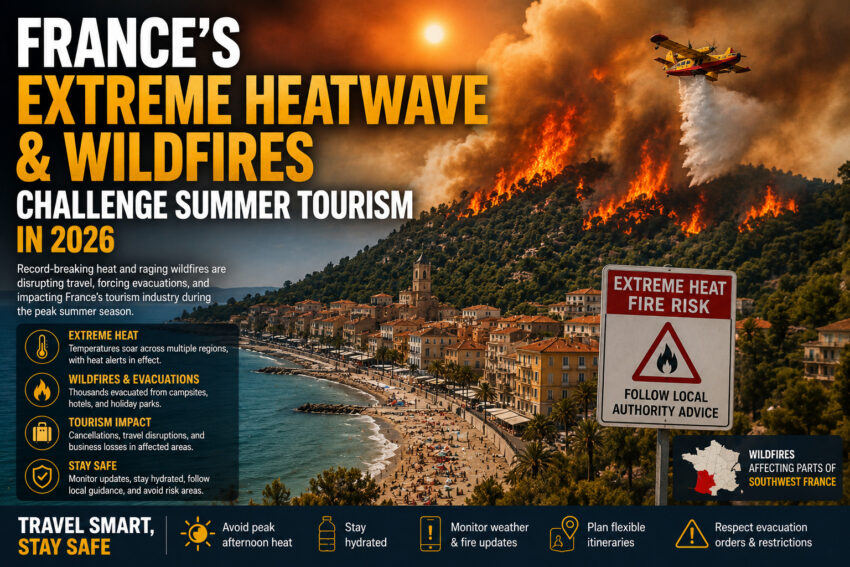
France’s 2026 summer tourism season is facing significant challenges as an intense heatwave and widespread wildfires disrupt travel across several regions. Record-breaking temperatures, prolonged dry conditions, and fast-moving fires have forced evacuations, closed tourist attractions, and raised safety concerns for millions of residents and international visitors.
While France remains one of the world’s most visited destinations, the latest weather emergency highlights the growing impact of climate-related events on Europe’s tourism industry.
Heatwave Grips Large Parts of France
French authorities have issued high-level heat alerts across multiple regions as temperatures climbed well above seasonal averages. Health officials have urged residents and tourists to avoid prolonged outdoor exposure during the hottest hours of the day, remain hydrated, and follow official safety guidance.
The prolonged heat has placed additional pressure on hospitals, emergency services, and local authorities, prompting the activation of emergency response measures to protect vulnerable communities.
Wildfires Force Evacuations
The extreme temperatures, combined with dry vegetation and strong winds, have fueled major wildfires, particularly in southwestern France. Thousands of residents and holidaymakers have been evacuated from campsites, hotels, and holiday parks as firefighters work around the clock to contain rapidly spreading blazes.
Several roads have been temporarily closed, while outdoor recreational areas, hiking trails, and nature reserves have restricted access due to safety risks.
Tourism Industry Faces Peak-Season Disruptions
The summer holiday period is traditionally one of the busiest times for France’s tourism sector. However, the current weather emergency has resulted in accommodation cancellations, itinerary changes, and reduced visitor numbers in affected destinations.
Hotels, restaurants, tour operators, and local businesses in wildfire-hit regions are experiencing financial losses as travelers postpone or redirect their holidays to safer areas. Although many popular destinations—including Paris, much of northern France, and several coastal regions—continue operating normally, travelers are being advised to check local conditions before departure.
Safety Advice for International Travelers
Tourists planning to visit France should stay informed through official weather forecasts and local authority updates. Travel experts recommend maintaining flexible itineraries, preparing for possible transport disruptions, and respecting all evacuation orders and restricted zones.
Visitors should also carry adequate drinking water, use sun protection, avoid strenuous outdoor activities during peak afternoon temperatures, and remain alert to changing wildfire conditions.
Climate Change Reshaping European Tourism
Experts increasingly view the recurring heatwaves affecting southern Europe as part of a broader climate trend. Rising temperatures are influencing travel patterns, with more visitors considering cooler destinations, mountain regions, or travelling during spring and autumn instead of the traditional summer peak.
The situation in France reflects a wider challenge facing Europe’s tourism industry: balancing visitor demand with increasing climate-related risks while ensuring the safety of residents and international tourists.
Outlook
Despite the severe conditions affecting parts of southwestern France, the majority of the country remains open to visitors. French authorities continue to monitor weather conditions closely and have deployed extensive emergency resources to protect communities and visitors.
Travelers are encouraged to follow official guidance, monitor local updates, and plan responsibly as France navigates one of its most challenging summer seasons in recent years.
Disclaimer: Weather conditions and wildfire situations can change rapidly. Travelers should consult official French government and local emergency services for the latest travel and safety information before and during their visit.