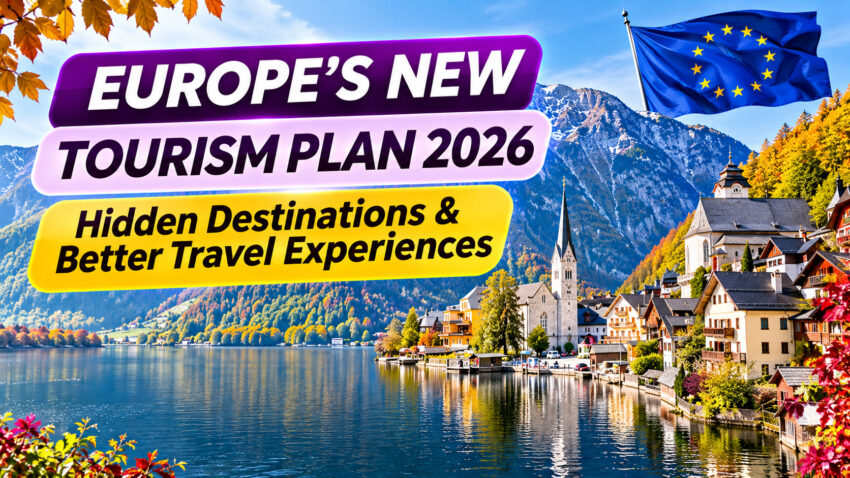

Europe Tourism Strategy 2026: EU Plans Better Travel Experiences and More Support for Hidden Destinations
Introduction
Europe is one of the world’s most popular travel destinations, attracting millions of international visitors every year.
From the historic streets of Rome and Paris to the beaches of Greece and Portugal, European countries offer an extraordinary variety of travel experiences.
However, growing tourism also creates challenges. Popular cities face overcrowding, some destinations experience pressure on local infrastructure, and smaller communities do not always benefit equally from tourism.
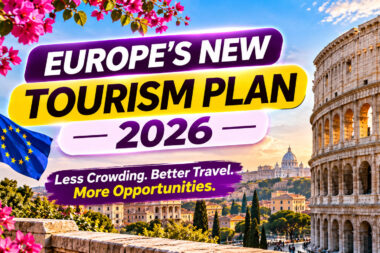
To address these issues, the European Commission presented a new EU Sustainable Tourism Strategy on 4 November 2026.
The strategy aims to strengthen Europe’s position as a leading global tourism destination while making travel more sustainable, balanced and resilient.
It also introduces plans to support lesser-known destinations, improve tourism skills and help businesses use digital technology.
Here is what the new strategy means for European tourism and international travellers.
1. What is the new EU Sustainable Tourism Strategy?
The European Commission’s new strategy is designed to improve the long-term development of tourism across Europe.
It focuses on three major objectives:
- Making Europe’s tourism industry more competitive.
- Improving environmental and economic sustainability.
- Making tourism destinations more resilient to future challenges.
The strategy recognises that tourism is important not only for visitors but also for local businesses, workers and communities.
Rather than concentrating tourism in a small number of famous destinations, the EU wants to encourage a more balanced distribution of visitors across different regions and seasons.
This could help lesser-known European towns and regions attract more international visitors.
2. Why does Europe need a new tourism strategy?
Tourism is one of the most important sectors of the European economy.
According to the European Commission:
- Tourism contributes approximately 10% of the EU’s Gross Value Added.
- The sector supports more than 20 million jobs.
- Europe has approximately 5 million tourism businesses.
- Around 99% of these businesses are small and medium-sized enterprises.
Europe also accounts for approximately 40% of international tourist arrivals worldwide.
These figures demonstrate how important tourism is to the region.
However, the sector faces several challenges.
Overcrowding
Some popular destinations receive very high numbers of visitors during peak travel seasons.
This can place pressure on public transport, accommodation, infrastructure and local communities.
Climate change
Heatwaves, extreme weather and environmental pressures can affect destinations and the travel industry.
Skills shortages
Tourism businesses need qualified workers who can support changing customer expectations and the increasing use of digital technology.
Uneven tourism distribution
Some destinations attract millions of visitors while smaller towns and rural regions receive fewer benefits.
The new strategy aims to address these challenges through better planning and cooperation.
3. Europe wants to reduce tourism overcrowding
One of the most interesting parts of the strategy is its focus on balanced tourism.
The European Commission wants destinations to manage visitor numbers more effectively.
This does not mean introducing a single EU-wide tourist limit.
Instead, the strategy encourages better planning by local and regional authorities.
Possible approaches include:
- Encouraging visitors to explore destinations outside the busiest city centres.
- Promoting travel during quieter seasons.
- Improving tourism infrastructure.
- Supporting alternative destinations.
- Using better data to understand visitor movements.
For example, someone planning a trip to Italy might traditionally focus on Rome, Venice and Florence.
However, Italy also has beautiful smaller destinations such as Matera, Lecce and Bergamo.
Encouraging visitors to explore more regions could help distribute tourism benefits more widely.
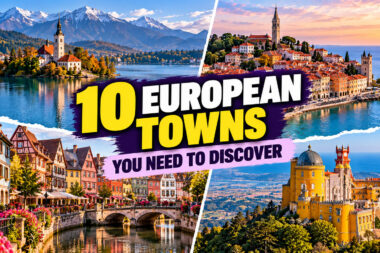
4. Hidden European destinations could receive more attention
Another important objective is to improve the visibility of lesser-known European destinations.
The European Commission plans to introduce new European Capitals of Tourism Awards.
The initiative is intended to highlight destinations that offer attractive and sustainable tourism experiences.
This could provide smaller cities and regions with greater international visibility.
For travellers, it may also create more opportunities to discover places beyond the traditional tourist hotspots.
Some destinations worth exploring include:
Kotor, Montenegro
A beautiful coastal town surrounded by mountains and historic architecture.
Bruges, Belgium
Famous for its canals, medieval streets and picturesque squares.
Tallinn, Estonia
Known for its historic old town, colourful buildings and Baltic atmosphere.
Alberobello, Italy
A unique destination famous for its traditional trulli houses.
Mostar, Bosnia and Herzegovina
A historic city known for its famous stone bridge and Ottoman-influenced architecture.
The new awards are intended to increase the visibility of destinations across Europe, although inclusion in the programme should not be assumed for any particular city.
5. EU Tourism Academy: New focus on tourism skills
The tourism industry depends on millions of workers across Europe.
Hotels, restaurants, travel companies, tour operators and transport providers all require skilled employees.
The European Commission has identified skills shortages as one of the challenges facing the sector.
To address this, the strategy includes plans for an EU Tourism Academy.
Its purpose is to support skills development and help tourism workers and businesses adapt to changing industry requirements.
Areas of focus include:
- Digital skills.
- Sustainable tourism management.
- Business development.
- Customer experience.
- Innovation and new technologies.
This could be useful for tourism businesses looking to improve their services and prepare employees for future industry changes.
However, the strategy does not itself introduce a new tourism work visa or guarantee employment for international applicants.
6. A new European Tourism Observatory
The EU also plans to strengthen tourism research and information through the EU Tourism Observatory.
Better information can help governments and tourism organisations understand how visitors move across Europe.
The initiative is expected to support more informed decisions about:
- Tourism demand.
- Seasonal travel patterns.
- Destination management.
- Economic performance.
- Environmental sustainability.
For example, authorities could use tourism information to understand which destinations experience overcrowding and which areas could benefit from additional visitors.
Better data may also help businesses understand changing travel preferences.
7. A Common European Tourism Data Space
Another important initiative is the Common European Tourism Data Space.
This aims to improve the availability and sharing of tourism-related information.
Tourism businesses often need reliable information to plan their services and understand market demand.
The proposed data infrastructure is intended to help businesses, authorities and tourism organisations access useful information more effectively.
Potential benefits include:
- Better tourism planning.
- Improved business decisions.
- More efficient destination management.
- Greater digital innovation.
- Better understanding of visitor behaviour.
Small and medium-sized tourism businesses could particularly benefit from improved access to digital tools and information.
8. Will the new strategy make European holidays cheaper?
The new strategy does not introduce EU-wide price controls for hotels, flights or holiday rentals.
It also does not require tourism businesses to reduce their prices.
However, encouraging tourism outside peak seasons and promoting lesser-known destinations could give travellers more choices.
For example, visiting popular destinations outside the busiest summer period may offer a different experience.
Travellers may also discover smaller towns where accommodation and activities can be more affordable, depending on the location and travel dates.
The actual cost of a holiday will continue to depend on local demand, accommodation availability, transport prices and other market conditions.
9. How could this affect international travellers?
For international visitors, the new strategy is mainly about improving the tourism experience.
It does not change Schengen visa requirements or introduce a new European tourist visa.
However, the strategy could influence how destinations develop their tourism services.
In the future, visitors may benefit from:
- Better-managed tourist attractions.
- More promotion of lesser-known destinations.
- Improved tourism information.
- More opportunities to travel outside peak seasons.
- Greater attention to environmental sustainability.
- Improved preparation for travel disruptions and crises.
For Pakistani travellers planning European holidays, this could mean more opportunities to discover destinations beyond the most famous cities.
As always, visa and entry requirements will depend on nationality and destination.
10. What happens next?
The European Commission will work with national, regional and local authorities, tourism businesses and other stakeholders to deliver the strategy.
A new EU Tourism Alliance is also planned to bring together relevant organisations and industry representatives.
The Commission intends to support tourism-related activities through existing European programmes and funding instruments.
The strategy also includes initiatives such as:
- EU Tourism Academy.
- EU Tourism Observatory.
- Common European Tourism Data Space.
- EU Tourism Crisis Coordination Network.
- European Capitals of Tourism Awards.
These initiatives are intended to support a stronger and more balanced tourism industry across Europe.
Their practical impact will depend on implementation and cooperation between European institutions and local destinations.
Final Thoughts
The European Commission’s new Sustainable Tourism Strategy is an important development for Europe’s travel industry.
Its focus goes beyond attracting more tourists. It aims to improve how destinations manage visitors, support local communities, strengthen tourism businesses and encourage travel throughout the year.
For international travellers, the most interesting opportunity may be the increased attention given to lesser-known European destinations.
Europe has far more to offer than its most famous capitals.
From the mountains of Montenegro to the historic streets of Estonia, there are countless places waiting to be discovered.
If you could visit one lesser-known European destination, which would you choose? Tell us in the comments!
Official Sources
- European Commission — New EU Sustainable Tourism Strategy, 4 November 2026
- European Commission — EU Tourism Strategy 2030
- European Commission — EU Tourism Policy
Disclaimer: This article is for general travel information and awareness. The Sustainable Tourism Strategy contains policy objectives and planned initiatives. Its implementation will take place through cooperation between European institutions, national authorities and tourism stakeholders. It does not create new visa or immigration rights.