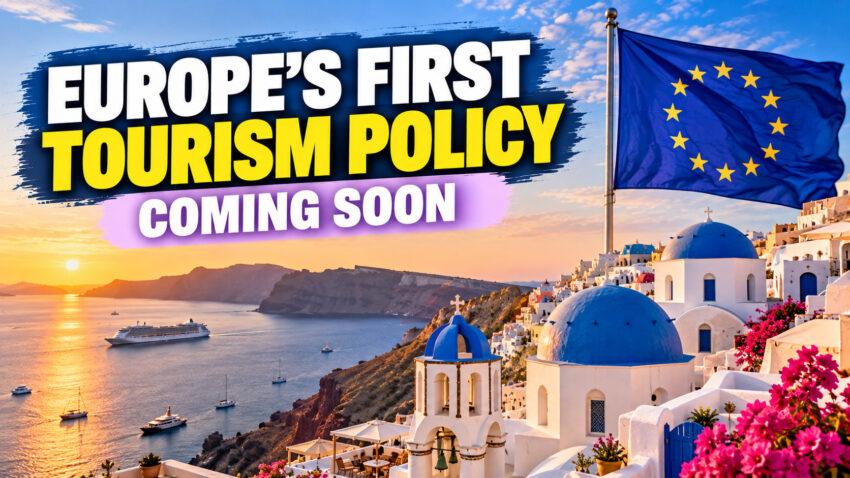

Europe Is Preparing Its First Dedicated EU Tourism Policy: What Could Change for Travellers?
Published: 19 October 2026
Introduction
Europe is one of the world’s most popular regions for holidays, cultural experiences, historic cities and natural landscapes. But managing millions of visitors also brings challenges, from overcrowded destinations and pressure on local housing to environmental concerns and the need for better transport connections.
Now, European tourism is approaching a potentially important milestone.
The European Union is preparing its first dedicated tourism policy, which is expected to be presented on 4 November 2026, according to recent travel-industry reporting. The initiative comes as European policymakers and tourism organisations look for ways to strengthen the region’s competitiveness while making tourism more sustainable.
For travellers, this raises several important questions. Could destinations become easier to explore? Will smaller towns receive more attention? Could Europe improve the way it manages crowded tourist hotspots?
The exact outcome will depend on the policy that is presented. Here is what we know so far and what travellers should watch for.
1. Why Is the EU Preparing a Dedicated Tourism Policy?
Tourism plays an important role in Europe’s economy. It supports hotels, restaurants, transport companies, tour operators, museums, cultural attractions and millions of jobs.
However, tourism conditions differ considerably across the continent.
Some destinations struggle with large visitor numbers during peak seasons. Others want to attract more visitors and investment. Rural areas and smaller towns may have attractive landscapes and cultural heritage but lack the visibility or transport connections enjoyed by major cities.
A dedicated EU tourism policy could provide a more coordinated direction for addressing these challenges.
Rather than treating tourism only as a collection of national and regional activities, a common strategy could help European institutions and governments identify shared priorities.
These may include improving the competitiveness of tourism businesses, encouraging sustainable development, strengthening skills and helping destinations manage visitor demand.
Important: The policy’s precise measures should not be assumed before the official announcement. The areas discussed in this article are issues facing European tourism and potential priorities to watch, not a confirmed list of new rules.
2. Could Europe Become More Sustainable for Tourists?
Sustainability is an increasingly important issue for European destinations.
Popular locations must balance tourism revenue with the needs of residents, the protection of natural environments and the preservation of cultural heritage.
For example, coastal destinations may need to manage pressure on beaches and water resources. Historic city centres must protect buildings and public spaces while accommodating visitors. Mountain regions need to balance outdoor tourism with the conservation of sensitive landscapes.
A coordinated tourism strategy could help encourage destinations to develop more sustainable visitor-management practices.
Potential areas of focus include:
- Supporting businesses that adopt more sustainable operating practices.
- Encouraging tourism beyond the busiest destinations and peak periods.
- Protecting natural landscapes and cultural heritage.
- Improving the management of visitor numbers in crowded areas.
- Helping destinations respond to climate-related risks.
These approaches could help preserve the places that attract visitors in the first place.
However, travellers should not expect a new Europe-wide tourist tax or a universal booking restriction simply because a tourism policy is announced. Such measures would require their own decisions and legal arrangements where applicable.
3. Will Smaller European Towns Get More Attention?
Many travellers immediately think of Paris, Rome, Barcelona or Amsterdam when planning a European holiday.
These cities have famous landmarks, established transport connections and extensive accommodation options. But Europe also has smaller historic towns, rural communities, coastal villages and lesser-known cultural destinations.
Encouraging visitors to explore a wider range of places could help distribute tourism spending more broadly.
Smaller destinations may benefit when travellers discover local restaurants, independent accommodation, regional crafts, museums and outdoor activities.
For visitors, exploring beyond the most famous cities can also mean discovering different traditions, regional food and less familiar landscapes.
A future EU tourism strategy could be an opportunity to strengthen this wider approach. Whether it results in specific funding programmes or new initiatives will depend on the official policy and its implementation.
What could travellers gain?
If destinations receive better support and promotion, travellers could eventually find more information about lesser-known places and a broader range of experiences.
But improved transport, accommodation availability and tourism services will still depend on local investment and decisions. A new policy would not automatically transform every small town into a major tourist destination.
4. Could Travelling Around Europe Become Easier?
A European holiday often involves more than one country. Visitors may combine flights, trains, buses, ferries and local transport to explore several destinations in a single trip.
The experience can vary considerably depending on the route.
Some cities have excellent public transport and frequent international connections. Other destinations require additional planning, particularly when travellers want to visit rural areas or smaller islands.
Better coordination across Europe’s tourism sector could encourage attention to travel information, visitor services, accessibility and connections between destinations.
For travellers, improvements in these areas could make it easier to plan trips and discover places outside major transport hubs.
Nevertheless, the announcement of a tourism policy does not automatically create new train routes, reduce ticket prices or introduce a single booking system for every transport operator.
Those changes would depend on separate initiatives, investment decisions and implementation.
Travellers should continue checking transport schedules and booking conditions before making arrangements.
5. What Could the Policy Mean for Tourism Businesses?
The tourism industry includes businesses of many different sizes, from international hotel groups to family-run guesthouses, local tour guides and independent restaurants.
These businesses operate in a competitive environment and face changing visitor expectations, technology costs, staffing needs and sustainability pressures.
A dedicated tourism policy could help establish a common direction for supporting the sector.
Potential areas of interest include:
Competitiveness: Helping European destinations and businesses remain attractive to international visitors.
Skills and training: Supporting the people who work in hospitality, tourism services and destination management.
Digitalisation: Encouraging tourism businesses to use digital tools to improve booking, communication and visitor services.
Sustainability: Helping businesses and destinations respond to environmental and resource-management challenges.
Investment: Drawing attention to the infrastructure and services needed to maintain high-quality visitor experiences.
These are potential policy areas rather than confirmed benefits for every business. The official announcement will be important for understanding which measures are actually proposed.
6. Why Is Europe Focusing on Tourism Competitiveness?
Europe competes with destinations around the world for holidaymakers, business travellers and investment.
Tourism businesses must respond to changing traveller expectations, transport costs, environmental pressures and competition from other regions.
The World Travel & Tourism Council has recently called on European policymakers to strengthen the region’s tourism competitiveness. Its priorities include supporting investment, improving the conditions for tourism businesses and ensuring that tourism strategies deliver benefits for communities.
The organisation has also highlighted the importance of coordination as European governments develop tourism strategies and the EU prepares its first dedicated policy.
This reflects a wider question for the continent: how can Europe remain an attractive destination while managing tourism’s effects on residents, infrastructure and the environment?
A coordinated strategy could help set priorities, but its success would depend on the actions that follow.
7. Will the New Tourism Policy Affect Travel Prices?
At this stage, travellers should not expect immediate price reductions as a direct result of the policy announcement.
The cost of a European holiday depends on many factors, including:
- Flight and railway ticket prices.
- Accommodation demand and seasonal availability.
- Local taxes and tourism charges.
- Food, activities and transport costs.
- Exchange rates and general economic conditions.
A tourism strategy might influence investment and the development of destinations over time, but it would not automatically make flights, hotels or attractions cheaper.
Travellers planning a holiday should continue comparing prices, checking cancellation conditions and considering destinations outside the busiest travel periods.
A quieter destination can sometimes offer a different experience, but accommodation and transport prices still need to be checked for the dates of travel.
8. When Will the New EU Tourism Policy Be Announced?
Recent travel-industry reporting indicates that European Commissioner for Sustainable Transport and Tourism Apostolos Tzitzikostas is expected to present the policy on 4 November 2026.
As of 19 October 2026, that is an upcoming announcement, not a completed policy launch.
The official presentation should clarify the initiative’s objectives and proposed priorities. Any measures requiring legislation, funding or cooperation between EU institutions and member states may take additional time to implement.
Travellers and tourism businesses should therefore distinguish between three stages:
- Announcement: The policy’s goals and intended direction are presented.
- Implementation: Relevant initiatives, programmes or legal measures are developed and put into practice.
- Practical effects: Destinations, businesses and travellers begin to experience changes where measures are implemented.
Not every policy objective will necessarily result in a new rule for tourists.
9. What Should Travellers Do Right Now?
Although the new policy has not yet been presented, travellers can still take practical steps to plan better European holidays.
Research destinations beyond major cities
Consider smaller towns, regional attractions and rural areas alongside the most famous destinations. Check transport connections before booking accommodation.
Compare travel seasons
The busiest travel period is not necessarily the best fit for every trip. Compare prices, weather conditions, opening times and expected visitor numbers before deciding when to go.
Support local businesses
Local restaurants, independent accommodation providers, museums and guided tours can help visitors experience a destination’s culture while supporting its economy.
Check accessibility and transport
If your itinerary includes several destinations, verify connections and allow sufficient time between services.
Follow official announcements
Once the EU presents its tourism policy, check which proposals are confirmed, which are recommendations and which require further action.
This will help you understand what could genuinely affect your future travel plans.
Frequently Asked Questions
1. What is the EU’s new tourism policy?
It is a forthcoming EU-level initiative intended to establish a dedicated direction for European tourism. Its precise objectives and measures should be confirmed through the official announcement.
2. When is the policy expected to be presented?
Recent industry reporting points to 4 November 2026. Travellers should check official EU announcements for confirmation and any changes to the schedule.
3. Will the policy introduce new visa rules?
A tourism policy announcement should not be confused with a visa reform. Any changes to visa or entry requirements would need to be confirmed through the relevant official immigration channels.
4. Will Europe become cheaper for tourists?
There is no basis to promise immediate price reductions. Holiday costs depend on transport, accommodation, demand, taxes and other factors.
5. Could smaller European destinations benefit?
Potentially. Greater attention to regional tourism and destination development could help lesser-known places attract visitors. Actual benefits would depend on the measures adopted and local implementation.
6. Will travellers need to change their plans?
Not simply because the policy is announced. Travellers should follow existing booking conditions, entry requirements and transport guidance unless official changes are introduced.
7. Where can I follow updates?
The European Commission’s tourism and transport pages and official announcements are the best starting points. Industry organisations can provide additional context about the likely effects on tourism businesses.
Conclusion
Europe’s forthcoming dedicated tourism policy could mark an important step in how the EU approaches tourism, destination development and the industry’s long-term competitiveness.
For travellers, the areas worth watching include sustainability, support for smaller destinations, improved visitor services and the future development of tourism infrastructure.
However, the policy should not be treated as a guarantee of cheaper holidays, new transport services or immediate changes to travel rules.
The most important details will become clearer when the official policy is presented and its proposals begin to move towards implementation.
At TravellerTrek, we will continue following European travel developments and explaining what confirmed changes mean for visitors.
Sources and Further Reading
- Travel Daily News — First EU Tourism Policy to be presented on 4 November
- World Travel & Tourism Council — WTTC sets out priorities for Europe’s travel and tourism leadership
- European Union — EU Newsroom
Disclaimer: This article is for general information only. The policy announcement is forthcoming as of the publication date. Potential benefits described here are not guarantees of future changes. Always consult official sources for confirmed developments.