
Europe’s New Tourism Strategy 2026: What Travellers Need to Know About the EU’s Plans
Introduction
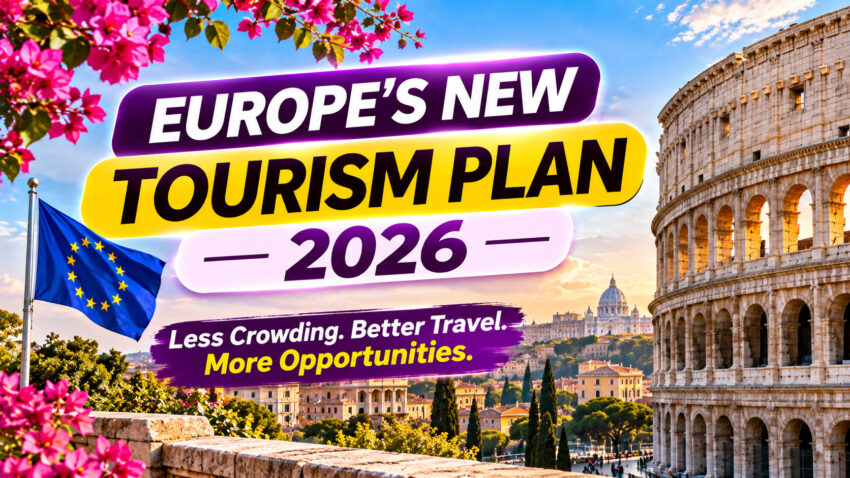
Europe is preparing a new approach to tourism. On 4 November 2026, the European Commission presented its first EU Sustainable Tourism Strategy, aiming to make the continent’s tourism industry more competitive, resilient and sustainable.
The announcement comes as Europe continues to attract millions of international visitors. However, popular destinations are facing challenges such as overcrowding, seasonal pressure, climate change, rising operating costs and shortages of skilled tourism workers.
The new strategy aims to improve the way tourism is managed while supporting businesses, local communities and visitors.
But what does this mean for people planning holidays in Europe? And could it make travelling around European countries easier and more enjoyable in the coming years?
Here is what you need to know.
1. Why has the EU introduced a new tourism strategy?
Tourism is one of Europe’s most important economic sectors.
According to the European Commission, tourism:
- Contributes around 10% of the EU’s gross value added.
- Supports more than 20 million jobs.
- Includes approximately 5 million businesses.
- Is made up of around 99% small and medium-sized enterprises.
Europe also accounts for approximately 40% of international tourist arrivals worldwide.
Despite its importance, the industry faces several challenges. Popular destinations can struggle with overcrowding, while smaller destinations often need better infrastructure, promotion and investment.
The EU wants to address these problems through a more coordinated approach.
2. Tackling overcrowding in popular European destinations
One of the important priorities is helping destinations manage visitor numbers more effectively.
Cities and tourist hotspots can experience significant pressure during peak travel seasons. This can affect accommodation availability, transport, public spaces and the daily lives of residents.
The strategy aims to encourage more balanced tourism by supporting destinations with tools to manage visitor flows.
The Commission plans to develop:
- An EU Model for Tourism Management.
- A Toolbox for Balanced Tourism.
- A Council recommendation on tourism management.
These initiatives are intended to help local and regional authorities manage tourism pressure while protecting the quality of life of residents.
For travellers, better destination management could eventually mean a more comfortable experience in popular European cities.
3. More opportunities to discover Europe throughout the year
Many European destinations depend heavily on summer tourism.
This creates seasonal pressure: some locations become extremely busy during the warmer months, while businesses in other areas experience quieter periods during the rest of the year.
The EU strategy aims to encourage tourism throughout the year rather than concentrating visitors in a few months.
This could create more opportunities for travellers interested in:
- Winter city breaks.
- Spring holidays.
- Autumn countryside trips.
- Cultural festivals outside peak season.
- Less crowded destinations.
For visitors, travelling outside the busiest summer period may also offer more flexibility when choosing accommodation and planning activities.
However, actual prices and availability will continue to depend on each destination and travel provider.
4. A new European Tourism Academy is planned
Tourism businesses need workers with the right skills to provide good services and respond to changing traveller expectations.
The European Commission wants to support skills development through initiatives including an EU Tourism Academy.
The strategy also highlights the importance of digital skills, professional development and better access to training.
This could be relevant for people interested in tourism-related careers, including:
- Hotel and hospitality management.
- Travel and tourism operations.
- Tour guiding.
- Destination management.
- Digital tourism marketing.
- Customer service.
The strategy sets out a direction for future action. It does not automatically create new jobs or guarantee employment or work permits for international applicants.
5. Better digital tools and tourism information
Another major part of the strategy is improving the use of digital technology and tourism data.
The Commission plans to develop a Common European Tourism Data Space and an EU Tourism Observatory.
These initiatives aim to improve access to tourism information and help public authorities and businesses make better decisions.
Better information could help destinations understand visitor patterns, identify pressure points and plan services more effectively.
For travellers, improvements in tourism information could eventually support better planning and destination experiences.
6. Preparing European tourism for future crises
Tourism can be affected by many unexpected events, including extreme weather, natural disasters, geopolitical instability and transport disruptions.
The EU strategy recognises the importance of preparing destinations and businesses for these challenges.
One planned initiative is an EU Tourism Crisis Coordination Network.
The objective is to strengthen cooperation and preparedness across the tourism sector.
This is particularly important for destinations that depend heavily on international visitors and seasonal tourism.
It does not mean that a new emergency travel system has already been introduced. The strategy sets out planned measures and future cooperation.
7. Which European countries could benefit?
The strategy covers tourism across the European Union, but its priorities could be particularly relevant to countries with substantial tourism industries.
Portugal
Portugal has a strong tourism sector, with popular destinations including Lisbon, Porto and the Algarve. Better visitor management could help balance tourism between major cities and smaller destinations.
Croatia
Croatia attracts visitors to its Adriatic coastline, islands and historic towns. Managing seasonal demand is particularly important for destinations that become busy during summer.
Spain
Spain is one of Europe’s major tourism destinations. Better visitor management and year-round tourism could help destinations address seasonal pressure.
Italy
Italy combines major cultural cities, coastal destinations and rural tourism. Improved tourism planning could help distribute visitors more evenly.
Greece
Greece’s islands and coastal destinations attract large numbers of summer visitors. Better planning could support local communities and tourism businesses.
These are examples of countries where the strategy’s priorities may be relevant. The announcement does not provide a separate guaranteed benefit or funding allocation for each country.
8. Tourism’s economic impact is bigger than visitor spending
A separate European Commission research announcement on 4 November 2026 highlighted the wider economic importance of tourism.
The Commission’s Joint Research Centre estimated that tourism’s total impact represents approximately 10.1% of gross value added across the EU countries covered by its analysis.
This includes direct tourism activity, effects on supply chains and spending by people earning income in the sector.
The estimated direct contribution was 4.1%.
The total impact varies considerably between countries. The research estimates it at more than 20% in Portugal and Croatia, around 14% in Spain and Italy, and slightly below 5% in Belgium and Denmark.
This demonstrates why tourism policies matter not only to hotels and airlines, but also to suppliers, local businesses and communities.
9. When will the new strategy take effect?
The European Commission presented the strategy on 4 November 2026.
However, not every initiative will begin immediately.
Several actions will require further planning, cooperation or separate proposals and decisions.
The strategy is a policy framework, not a new visa regulation or a single law that immediately changes travel conditions.
Travellers should continue following the existing entry, visa and border requirements of their destination countries.
What does this mean for international travellers?
For people planning a European holiday, the strategy is a positive development to watch.
Its long-term objectives include better tourism management, stronger local communities, improved digital information and more resilient destinations.
However, there are no immediate changes to Schengen visa eligibility, passport requirements or the 90/180-day short-stay rule as a result of this announcement.
International visitors should still check the official immigration and travel requirements before booking their trips.
Final thoughts
Europe’s new Sustainable Tourism Strategy is an important step towards managing the future of travel across the continent.
By supporting tourism businesses, developing workers’ skills, improving digital information and helping destinations manage visitor pressure, the EU wants to maintain Europe’s position as a leading global tourism destination.
For travellers, the biggest potential benefit is a more balanced tourism experience, with greater attention to local communities and destinations beyond the busiest tourist hotspots.
The real impact will depend on how these plans are developed and implemented in the coming years.
Would you prefer Europe to focus more on reducing overcrowding in famous cities or promoting lesser-known destinations? Share your thoughts in the comments.
Official Sources
- European Commission — Commission strengthens Europe’s position as the world’s leading tourism destination
- European Commission Joint Research Centre — Tourism generates more than one in every 10 euros of value added in the EU
- European Travel Commission — European Tourism: Trends & Prospects, Q3 2026
Disclaimer: This article is for general information and travel awareness. The strategy describes EU policy priorities and planned initiatives; individual measures may require further decisions or implementation. Always check official government sources for current travel and immigration requirements.