
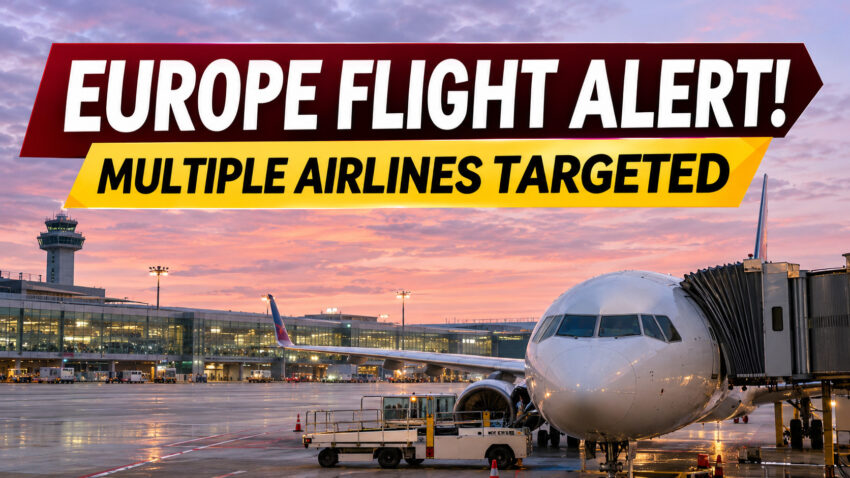

Europe Flight Alert: Multiple Airlines Targeted by Bomb Threats – Airports Face Disruptions in November 2026
Several European flights faced serious security alerts on Tuesday, November 3, 2026, after bomb threats were reported against aircraft operated by major airlines, including Ryanair, Wizz Air, LOT Polish Airlines and Scandinavian Airlines (SAS).
The incidents triggered emergency security procedures, aircraft inspections, flight diversions and temporary airport disruption in several European countries. Although the alerts caused concern among passengers, authorities reported that no explosives were found on the inspected aircraft.
The incidents affected flights travelling to destinations including Warsaw, Rome, Murcia and Sofia. A separate Wizz Air flight was also diverted to Budapest on November 2 following a bomb threat.
Here is what happened and what travellers should know.
Multiple European Airlines Affected by Security Alerts
The incidents involved several airlines operating across different European routes. Airports and security authorities responded by inspecting aircraft, checking passengers and temporarily restricting some airport operations.
According to reports published on November 3, the affected airlines included:
- Ryanair
- LOT Polish Airlines
- Scandinavian Airlines (SAS)
- Wizz Air
The incidents were reported in Italy, Poland, Spain, Bulgaria and Hungary. Authorities treated each alert as a security matter and carried out the necessary checks.
1. Ryanair Flights Face Bomb Threats in Europe
Ryanair was among the airlines affected by the security alerts.
One flight travelling from Manchester in the United Kingdom to Murcia in Spain triggered an emergency security response after a bomb threat was reported.
The aircraft landed safely at Murcia Airport, where passengers and crew were checked and security teams inspected the plane. Spanish authorities later confirmed that no explosives were found.
Other Ryanair flights travelling to Rome from Lisbon and Dublin were also affected by bomb warnings. Security teams carried out inspections at Rome Fiumicino Airport.
One of the flights arriving from Dublin was escorted by the Italian Air Force before landing.
Authorities completed the security procedures without finding explosives.
2. LOT Polish Airlines Flight Diverted to Warsaw-Modlin
A LOT Polish Airlines flight travelling from London Heathrow to Warsaw Chopin Airport was diverted after a bomb threat was reported.
Instead of landing at its scheduled destination, the aircraft was redirected to Warsaw-Modlin Airport.
Passengers were evacuated while security teams inspected the aircraft. The airport was temporarily closed during the security operation, causing disruption to normal airport activity.
After the inspection was completed, officials confirmed that no suspicious items had been found. Warsaw-Modlin Airport subsequently reopened.
Passengers were transferred towards Warsaw Chopin Airport after the necessary checks.
3. SAS Flight From Copenhagen to Warsaw Inspected
Scandinavian Airlines (SAS) also confirmed that a threat had been reported against flight SK751 travelling from Copenhagen to Warsaw.
The aircraft landed normally at Warsaw Chopin Airport, where passengers disembarked.
Security authorities carried out inspections following the alert. One runway was temporarily closed during the operation, but the airport continued operating.
No explosives were found during the checks.
SAS said it was following established security procedures and cooperating with the relevant authorities.
4. Wizz Air Flight Diverted to Budapest
A separate incident involving Wizz Air took place on November 2.
A flight travelling from London Luton to Sofia, Bulgaria, was diverted to Budapest, Hungary, after a bomb threat was reported during the journey.
Hungarian Gripen fighter jets were deployed to escort the aircraft to a safe landing.
Passengers and crew were able to leave the aircraft safely, and security teams carried out inspections. No explosives were found.
Another Wizz Air flight travelling from Bergamo, Italy, to Sofia was also inspected after a threat was reported on November 3.
Bulgarian authorities carried out security checks after the aircraft landed.
Which European Airports Were Affected?
The incidents caused temporary disruption at several airports, although operations resumed after security checks.
| Airport | Country | Reported incident |
|---|---|---|
| Rome Fiumicino | Italy | Ryanair flights inspected after bomb threats |
| Warsaw Chopin | Poland | SAS flight inspected; runway temporarily restricted |
| Warsaw-Modlin | Poland | LOT flight diverted; airport temporarily closed |
| Murcia Airport | Spain | Ryanair flight inspected after security alert |
| Sofia Airport | Bulgaria | Flights inspected following reported threats |
| Budapest Airport | Hungary | Wizz Air flight diverted from London |
The incidents involved separate security alerts. Authorities had not established that all the threats were connected.
Were Any Explosives Found?
No explosives were found on the aircraft inspected in the reported incidents.
Passengers and crew landed safely, and no injuries were reported in the incidents covered by the November 3 reports.
However, the absence of explosives does not mean airports can ignore such warnings. Every reported threat must be assessed seriously because aviation security procedures are designed to protect passengers, airline staff and airport operations.
Authorities have continued examining the incidents and working to establish who was responsible for the threats.
Why Do Bomb Threats Cause Flight Delays?
Even when a threat turns out to be false, it can create significant disruption across the aviation network.
Airlines and airports may need to:
- Divert an aircraft to another airport.
- Temporarily close a runway or airport.
- Evacuate passengers and crew.
- Inspect aircraft, luggage and passenger areas.
- Deploy police, bomb-disposal teams and other security personnel.
- Rearrange flight schedules and provide assistance to affected passengers.
These procedures can affect not only the targeted flight but also other aircraft scheduled to use the same airport.
For passengers, this can mean longer waiting times, missed connections and unexpected changes to travel plans.
What Should Passengers Travelling in Europe Do?
Travellers flying within Europe should remain informed and follow official instructions from airlines and airports.
Here are some practical steps:
1. Check your flight status before leaving
Visit your airline’s official website or app to check whether your flight is operating on time.
2. Follow airport announcements
Pay attention to announcements and instructions from airport staff, particularly if security checks are taking place.
3. Keep your contact details updated
Make sure your airline has your correct email address and phone number so it can contact you about schedule changes.
4. Allow extra time for airport procedures
If you are travelling through an airport affected by security disruption, allow additional time for check-in, security and possible delays.
5. Follow official travel updates
Use information from your airline, airport authorities and relevant government agencies rather than relying on unverified social media posts.
Will These Incidents Affect European Travel?
The incidents demonstrate how quickly security alerts can disrupt air travel across different European countries.
However, passengers should not assume that all European flights are affected or that every airport is experiencing disruption. The reported incidents involved specific aircraft and airports, and normal operations resumed after several inspections.
Airlines and aviation authorities continue to use established security procedures to manage potential threats and protect passengers.
Travellers planning flights in the coming days should check their individual flight information before departure and follow official updates.
Final Thoughts
Multiple European airlines faced bomb threats on November 3, 2026, resulting in aircraft inspections, diversions and temporary airport disruption.
Ryanair, LOT Polish Airlines, SAS and Wizz Air were among the airlines affected by the reported incidents. Despite the disruption, the inspected aircraft landed safely and authorities reported that no explosives had been found.
The incidents remain a reminder that aviation security alerts can affect travel plans even when no actual device is discovered.
For anyone travelling across Europe this week, checking flight updates and following official airport instructions is the best way to stay informed.
Stay updated with the latest European travel and immigration news on TravellerTrek.