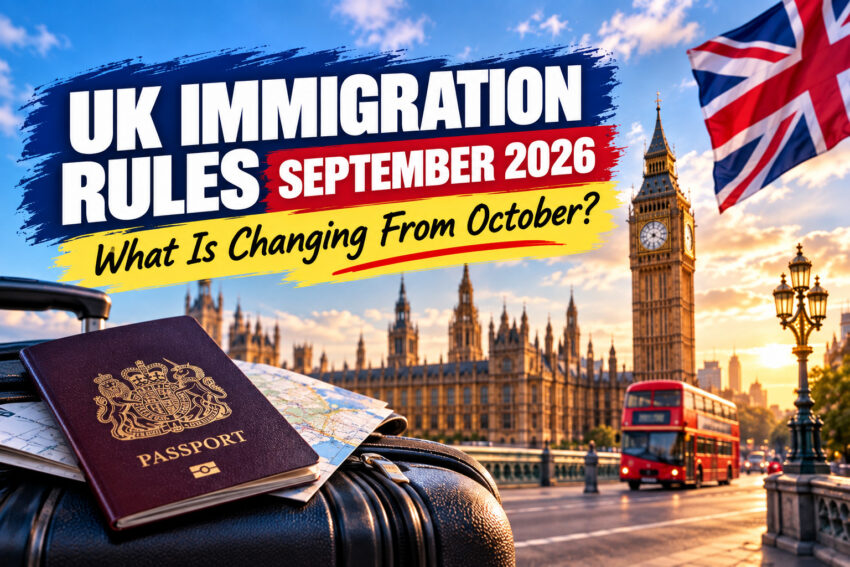

UK Immigration Rules September 2026: What Is Changing From October?
The UK has announced another set of changes to its Immigration Rules, with amendments coming into force from October, November and December 2026.
The latest Statement of Changes, HC 584, was published by the Home Office on 3 September 2026 and affects several immigration routes, including Students, Visitors, Skilled Workers and the EU Settlement Scheme. (GOV.UK)
For anyone planning to study, work or travel to the UK, the key issue is simple: the rules do not all change on the same date.
📅 When Are the New Rules Coming?
The changes are being introduced in stages.
The first major implementation date is 8 October 2026, followed by additional changes on 29 October, 30 November and 9 December 2026. (GOV.UK)
That means applicants need to look at the specific rule that applies to their route and the date on which they submit their application.
🎓 Changes for International Students
One of the biggest areas of change is the Student Route, particularly for students taking part in Erasmus+ programmes.
The new rules create specific provisions allowing Erasmus+ participants to qualify under the Student Route in situations where existing requirements could otherwise prevent them from doing so. (GOV.UK)
The rules also make it possible for qualifying Erasmus+ courses to include work placements that are exempt from the normal duration restrictions.
This is designed to facilitate the UK’s participation in Erasmus+ and allow participating students to undertake courses and placements under the programme. (GOV.UK)
💷 Student Maintenance Funds Are Increasing
From 30 November 2026, the Student Route maintenance requirement will increase.
Students will need to show:
London: £1,570 per month
Outside London: £1,203 per month
The requirement can apply for up to nine months, depending on the course. (GOV.UK)
This means students planning a UK application toward the end of 2026 should pay close attention to the new financial requirement.
Erasmus+ Is Getting New UK Immigration Provisions
The latest rules are particularly significant because they establish immigration provisions for the UK’s participation in Erasmus+.
Qualifying visitors can undertake activities such as:
🎓 Study
💼 Training
👀 Job shadowing
🏃 Sports coaching or training
🧑🎓 Certain traineeships
The rules require participants to demonstrate that they genuinely intend to take part in an Erasmus+ mobility project. (GOV.UK)
For some younger participants, additional parental or institutional consent requirements apply. (GOV.UK)
🛂 Visitor Rules Are Also Changing
The new rules expand some activities that visitors can undertake in the UK.
For example, visitors can participate in skills competitions, while certain activities involving workshops, debates, rehearsals and other professional or cultural events are being clarified or expanded. (GOV.UK)
There are also dedicated provisions for Erasmus+ visitors coming to the UK for study, training, traineeships and job shadowing.
These changes do not mean that visitors can freely take up ordinary employment in the UK. The activity must fall within the permitted visitor rules.
💼 A Targeted Change for Some Skilled Workers
The new Statement of Changes introduces a specific protection for certain Skilled Workers who have been referred to the UK’s National Referral Mechanism and received a positive Conclusive Grounds decision during their most recent immigration permission.
Eligible individuals may have their work conditions amended to allow any work, including self-employment and voluntary work.
Professional sports work remains excluded. (GOV.UK)
This is a targeted provision rather than a general relaxation of Skilled Worker conditions.
EU Settlement Scheme Changes
The latest rules also amend aspects of the EU Settlement Scheme, including changes relating to EU Settlement Scheme Family Permits.
Further amendments concerning biometric residence permits are scheduled to take effect in December 2026. (GOV.UK)
People using the EU Settlement Scheme or related family routes should therefore check the rules applicable to their particular situation instead of relying on older information.
👨👩👧 Family & Other Immigration Changes
The September Statement of Changes contains amendments across a number of immigration routes, including Appendix FM and provisions concerning people in the Family Returns Process. (GOV.UK)
This is another reminder that UK immigration changes are increasingly being introduced through detailed amendments rather than one single immigration overhaul.
🔎 What Should Applicants Do?
With several implementation dates approaching, applicants should pay particular attention to:
📅 The date they apply
💰 The financial requirement
🎓 Their course or study programme
💼 Their work conditions
🛂 The exact immigration route
📋 Whether new rules have already come into force
Applying under an old rule simply because an older article or social media post mentions it could create confusion.
The Home Office’s official Statement of Changes should be the starting point when checking the rules that apply to an application. (GOV.UK)
🚨 The Biggest Takeaway
The UK’s latest immigration update is not one simple “new visa system.”
Instead, it is a collection of changes affecting specific groups:
🎓 Students — higher maintenance requirements and new Erasmus+ provisions
🇪🇺 Erasmus+ participants — new study, training and placement arrangements
🛂 Visitors — expanded permitted activities and Erasmus+ provisions
💼 Some Skilled Workers — new targeted work-condition protections
🇪🇺 EU Settlement Scheme — further technical and eligibility changes
For people planning to move to or visit the UK, the date of application matters more than ever.
Final Word
UK immigration continues to evolve throughout 2026. With new rules arriving across October, November and December, prospective students, workers and visitors should check the official requirements immediately before applying.
Don’t rely on a 2025 or early-2026 checklist when the rules may have changed since it was published.
Official source: UK Home Office — Statement of Changes HC 584