
Norway’s Summer Heatwaves Reshape Tourism: Economic Gains Meet Climate Challenges
Published: July 2026
Norway Emerges as a Preferred Summer Destination Amid Europe’s Rising Temperatures
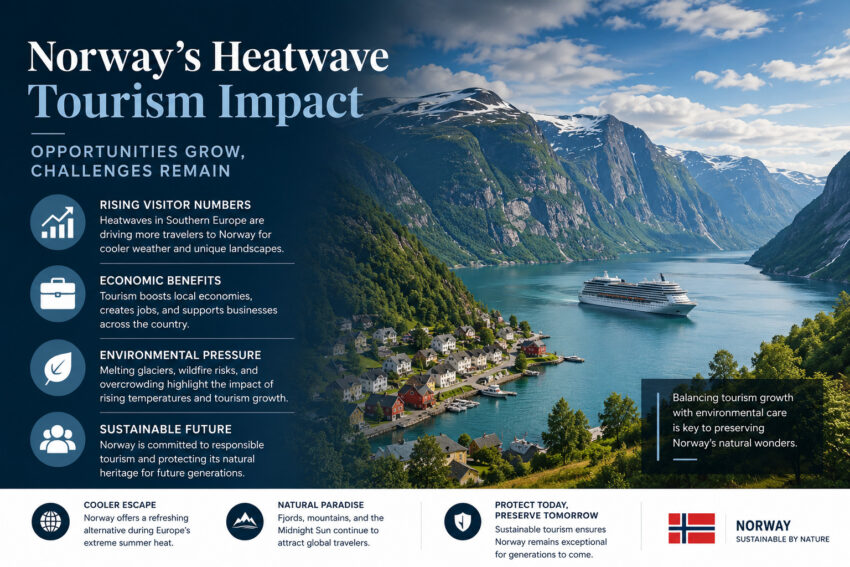
As climate change continues to influence travel patterns across Europe, Norway is experiencing a noticeable increase in summer tourism. With severe heatwaves affecting several southern European destinations, many international travelers are choosing Norway for its comparatively mild climate, breathtaking fjords, Arctic landscapes, and world-renowned outdoor experiences.
While the growing number of visitors is providing a welcome boost to the tourism industry, experts caution that the long-term effects of rising temperatures also present significant environmental and infrastructure challenges. The country’s tourism sector now faces the task of balancing economic growth with sustainable development.
Changing Travel Trends Across Europe
The frequency and intensity of summer heatwaves in parts of Europe have encouraged tourists to seek destinations offering cooler temperatures and natural surroundings. Norway has become one of the primary beneficiaries of this shift, attracting visitors interested in hiking, glacier tours, fjord cruises, kayaking, wildlife experiences, and the unique phenomenon of the Midnight Sun.
Regions including Western Norway, the Lofoten Islands, Tromsø, Bergen, and Geiranger continue to draw both domestic and international travelers seeking outdoor recreation in a more comfortable summer climate.
Strong Economic Benefits
The increase in tourist arrivals has strengthened Norway’s tourism economy during the peak summer season. Hotels, guesthouses, restaurants, tour operators, transport services, and local retailers have all benefited from higher visitor spending.
Seasonal employment opportunities have expanded in several tourism-dependent communities, while increased demand has encouraged investment in accommodation, visitor facilities, and sustainable transport infrastructure. Industry analysts believe continued international interest could further strengthen Norway’s position as one of Northern Europe’s leading summer destinations.
Environmental Concerns Continue to Grow
Despite the positive economic outlook, warmer temperatures are creating new environmental pressures across the country.
Climate researchers have reported accelerated glacier retreat, changing mountain conditions, and an increased risk of wildfires during prolonged periods of dry weather. These developments threaten some of Norway’s most iconic natural attractions while also affecting hiking routes and outdoor recreation.
Growing tourist numbers have placed additional pressure on popular destinations, leading to concerns about overcrowding, traffic congestion, waste management, and the preservation of fragile ecosystems. Local authorities continue to emphasize responsible tourism to reduce the environmental impact of increased visitor activity.
Norway’s Focus on Sustainable Tourism
Norway has positioned sustainability at the center of its tourism strategy. National and regional authorities are promoting environmentally responsible travel through improved public transport, visitor management initiatives, conservation projects, and support for eco-certified tourism businesses.
Tourists are increasingly encouraged to respect local communities, protect natural landscapes, reduce waste, and choose environmentally friendly travel options while exploring the country’s national parks, fjords, and coastal regions.
Outlook
Tourism experts expect climate-related travel trends to continue shaping visitor preferences across Europe in the coming years. As extreme summer temperatures become more common in southern regions, Norway is likely to remain an attractive destination for travelers seeking cooler weather and nature-based experiences.
However, sustaining this growth will require continued investment in environmental protection, infrastructure, and responsible tourism practices. Successfully balancing increased visitor demand with conservation efforts will be essential to preserving Norway’s unique landscapes and maintaining its reputation as one of the world’s premier sustainable travel destinations.
Conclusion
Norway’s tourism industry is entering a new phase as climate change reshapes travel across Europe. The country’s cooler summer climate has created significant opportunities for economic growth and international tourism, but it also highlights the urgent need to protect fragile natural environments. By combining sustainable tourism policies with responsible visitor management, Norway has the opportunity to strengthen its tourism sector while safeguarding the landscapes that make it one of Europe’s most remarkable destinations.