
EU Migration Report 2026: Greece, Spain, Italy and Cyprus Face Pressure as Europe Plans New Support System
Introduction
The European Union has released a new assessment of migration across its member states, identifying countries experiencing significant pressure and outlining how European governments could share responsibility in 2027.
On 6 November 2026, the European Commission launched its second Annual Migration Management Cycle. The assessment reviews migration trends, asylum applications, irregular arrivals and the challenges facing national immigration systems.
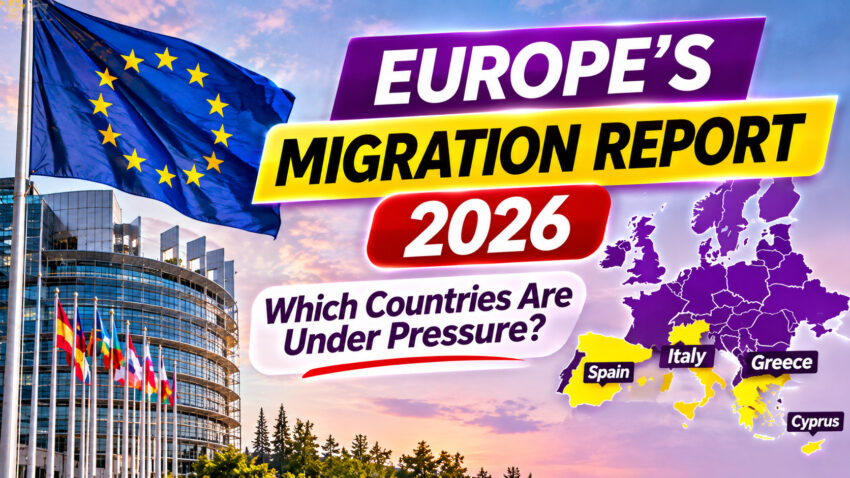
Greece, Spain, Italy and Cyprus have been identified as countries currently under migratory pressure. Several other countries, including Germany, France, Ireland and Finland, have been classified as being at risk.
The Commission has also proposed a new Solidarity Pool for 2027, which could provide support to countries facing greater migration-related responsibilities.
But what does this announcement actually mean? Does it change European work visas or student visas? And how could it affect people planning to move to Europe?
Here is a closer look.
1. Which European countries are facing migration pressure?
The European Commission has divided EU member states into different categories based on migration-related challenges.
Four countries have been identified as currently under migratory pressure:
- Greece: Due to a disproportionate level of arrivals over the previous year.
- Spain: Also experiencing pressure from higher levels of arrivals.
- Cyprus: Identified as facing disproportionate migration arrivals.
- Italy: Pressure is linked to arrivals following search-and-rescue operations at sea.
These countries will be eligible to access the proposed 2027 Solidarity Pool, subject to the applicable responsibility rules.
This classification does not mean that these countries have stopped accepting foreign workers, students or tourists.
2. Germany, France and Ireland are among countries at risk
The report also identifies 15 countries considered at risk of future migratory pressure.
They are:
- Belgium
- Czechia
- Germany
- Estonia
- Ireland
- France
- Croatia
- Latvia
- Lithuania
- Luxembourg
- Netherlands
- Poland
- Romania
- Slovenia
- Finland
The assessment considers factors such as irregular arrivals, unauthorised movements between member states, asylum applications and the number of people receiving temporary protection.
These countries will have priority access to the Permanent EU Migration Support Toolbox.
Their situations will also be monitored and reassessed if necessary.
3. What is the EU Solidarity Pool for 2027?
One of the most important parts of the announcement is the proposed second EU Solidarity Pool.
The European Commission wants to establish this system for 2027 to help countries experiencing greater migration pressure.
Under the proposal, EU member states could contribute in different ways, including:
- Relocating asylum applicants from countries under pressure.
- Providing financial support.
- Using responsibility offsets.
- Offering alternative forms of assistance.
- Combining different support measures.
The system is intended to distribute migration-related responsibilities more evenly across the European Union.
However, the Commission has not yet made the proposed contribution arrangements public. The Council must first agree on the size of the pool and how individual countries will contribute.
Once adopted, the contributions will become legally binding.
4. Six countries face significant long-term migration challenges
The report identifies another category: countries experiencing a significant migratory situation due to cumulative pressures over the previous five years.
These countries are:
- Bulgaria
- Czechia
- Estonia
- Croatia
- Austria
- Poland
The assessment considers long-term factors such as temporary protection beneficiaries, international protection applications, pressure on return systems and responsibilities connected to external border protection.
These countries may request a full or partial deduction from their contributions to the 2027 Solidarity Pool.
This is intended to recognise the migration responsibilities they have already carried over several years.
5. EU reports a decrease in irregular border crossings
The Commission’s latest report also highlights changes in irregular migration trends.
According to the assessment:
- Illegal border crossings fell by more than one-third in the first half of 2026.
- Crossings had already fallen by more than 50% over the previous two years.
- Secondary movements and asylum applications decreased significantly.
- Returns continued to increase.
These figures are presented by the Commission as evidence of progress under the EU’s new migration management framework.
However, the report also acknowledges that important challenges remain, particularly concerning responsibility rules and transfers of asylum applicants between member states.
6. What is happening with the EU Migration and Asylum Pact?
The new assessment also reviews the implementation of the EU Pact on Migration and Asylum.
The Pact establishes a common framework for managing migration and asylum applications across EU member states.
The Commission says several important elements are now operational.
These include:
The new Eurodac system
Eurodac is an EU database used to support the identification and processing of people applying for international protection and certain other migration-related procedures.
Screening procedures
Most member states are carrying out screening of irregular migrants under the new framework.
Border procedures
Member states have operationalised procedures for processing certain asylum applicants at the border.
Asylum processing improvements
Countries are also working to reduce application backlogs and improve the efficiency of their asylum systems.
Despite this progress, the Commission says additional work is needed to make all parts of the Pact function effectively.
7. Does the new report affect international students and foreign workers?
This is an important question for people planning to study or work in Europe.
The short answer is that the annual migration assessment does not automatically change work visa or student visa eligibility.
The report primarily concerns migration management, asylum responsibilities and the distribution of pressure among EU member states.
For example:
- Germany’s work visa requirements are not automatically changed by this report.
- Students applying to universities in France or Finland are not automatically affected by the country classifications.
- Valid residence permits do not become invalid because a country is listed as being at risk of migratory pressure.
- Tourist visa applications continue to follow the relevant national and Schengen rules.
However, migration policy can influence broader political decisions and administrative priorities over time.
Anyone planning to move to Europe should continue checking the immigration authority of their destination country for specific visa requirements.
8. Why does this announcement matter for Europe’s future?
Migration management remains one of the major policy challenges facing the European Union.
Member states have different geographical positions, migration routes and responsibilities.
Countries on the Mediterranean routes may experience significant arrivals, while other countries can face pressure through asylum applications, secondary movements or temporary protection arrangements.
The new assessment is an attempt to create a more coordinated approach.
The proposed Solidarity Pool could also become an important part of how the EU distributes responsibilities in 2027.
Its actual impact will depend on the Council’s decision and how member states implement the agreed arrangements.
9. What happens next?
The European Commission has proposed the second Solidarity Pool for 2027.
The next major step is for the Council to agree on:
- The overall size of the Solidarity Pool.
- The contributions expected from individual member states.
- The support measures that will be used.
- The final arrangements for implementing the system.
The Commission and EU agencies will also continue monitoring migration trends and the implementation of the Migration and Asylum Pact.
The proposed support system should therefore be viewed as part of an ongoing process rather than a completed arrangement.
Final Thoughts
The EU Migration Report 2026 provides an important picture of how migration pressures differ across Europe.
Greece, Spain, Italy and Cyprus have been identified as facing migratory pressure, while countries such as Germany, France, Ireland and Finland are considered at risk.
Through the proposed 2027 Solidarity Pool, the European Commission wants member states to share migration responsibilities more fairly.
For international students, skilled workers and tourists, the most important point is that these classifications do not automatically change ordinary visa or residence permit requirements.
Europe’s migration policy is continuing to evolve, and the next decisions by EU member states will help determine how the new support system works.
What do you think? Should European countries share migration responsibilities equally, or should countries receiving the most arrivals receive greater support? Share your opinion in the comments.
Official Sources
- European Commission — Commission launches second Annual Migration Management Cycle
- European Commission — Questions and answers on the Second Annual Migration Management Cycle
- European Commission — Migration and Home Affairs
Disclaimer: This article is for general information and educational purposes. Migration classifications and proposed support arrangements do not replace national immigration laws or individual visa requirements. Always consult official immigration authorities before making travel or relocation decisions.