
ETIAS Update November 2026: Europe Travel Authorisation Applications Are Still Not Open
Introduction
Europe is preparing to introduce a new travel authorisation system for visitors from countries that currently enjoy visa-free access to the Schengen Area.
The system is called the European Travel Information and Authorisation System, commonly known as ETIAS.
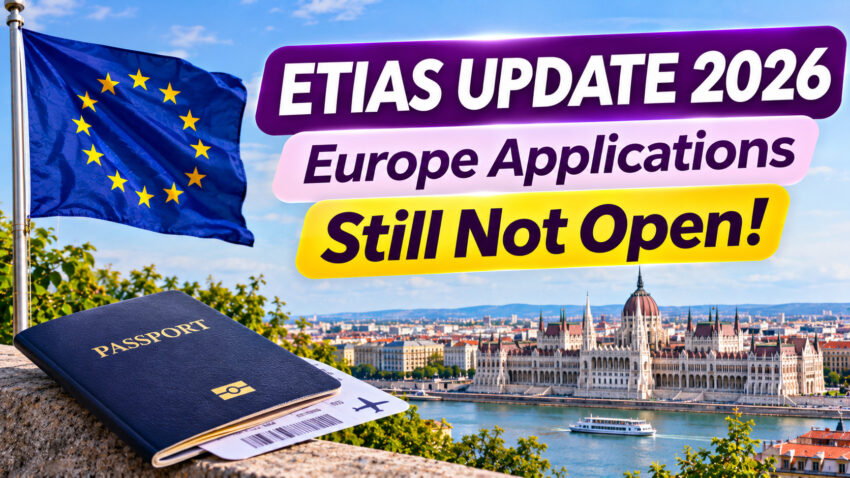
It is expected to change how millions of international travellers prepare for trips to Europe. However, there is an important update for November 2026: ETIAS applications are not yet open.
Although the European Union previously indicated that the system was expected to begin operating during the final quarter of 2026, an exact launch date has not been confirmed in the official information available on 7 November 2026.
This means travellers should be careful about websites claiming to offer immediate ETIAS applications.
Here is everything you need to understand before planning your European trip.
1. What is ETIAS?
ETIAS stands for European Travel Information and Authorisation System.
It is an electronic travel authorisation designed for nationals of countries whose citizens can currently visit participating European countries without obtaining a short-stay visa.
The system will allow European authorities to carry out security and eligibility checks before eligible travellers begin their journeys.
Once operational, travellers will need to obtain ETIAS authorisation before travelling to participating countries for short stays.
ETIAS is not a traditional visa. It is a pre-travel authorisation for eligible visa-exempt visitors.
2. Are ETIAS applications open in November 2026?
This is currently one of the most important questions for travellers.
As of 7 November 2026, the European Commission has not announced a confirmed operational date or opened the application process.
The previously communicated launch expectation was the final quarter of 2026.
However, an expected launch period does not mean applications are already being accepted.
Travellers should:
- Check the official ETIAS website.
- Wait for the European Union’s launch announcement.
- Avoid paying unofficial websites claiming to provide immediate authorisation.
- Not make travel decisions based on unconfirmed launch dates.
Official website:
https://travel-europe.europa.eu/etias
3. Who will need ETIAS?
ETIAS will apply to travellers who meet all the relevant conditions:
- They are nationals of a country whose citizens are visa-exempt for short visits to participating European countries.
- They are travelling for a short stay, generally up to 90 days within a 180-day period.
- They are visiting a country participating in the ETIAS system.
- They do not fall under an applicable exemption.
The system is designed for tourism, business visits, short family visits and other permitted short-stay purposes.
It does not replace the visa application process for nationalities that already require a Schengen visa.
4. What about Pakistani passport holders?
This is particularly important for Pakistani travellers.
Pakistani ordinary passport holders generally require a Schengen visa for short visits to the participating Schengen countries.
Therefore, ETIAS will not replace the Schengen visa requirement for Pakistani citizens.
For example, someone travelling from Pakistan to France, Germany, Italy or Spain for a short holiday will generally need to follow the existing Schengen visa application process.
The introduction of ETIAS does not automatically create visa-free access for Pakistani passport holders.
Important distinction:
- Pakistani passport holders who require a visa must continue applying for the appropriate visa.
- Eligible visa-exempt nationalities will need ETIAS once the system becomes operational.
Always check the visa requirements for your nationality and destination before booking.
5. Which European countries will use ETIAS?
ETIAS is planned for 30 European countries.
These include:
European Union countries
- Austria
- Belgium
- Bulgaria
- Croatia
- Cyprus
- Czechia
- Denmark
- Estonia
- Finland
- France
- Germany
- Greece
- Hungary
- Italy
- Latvia
- Lithuania
- Luxembourg
- Malta
- Netherlands
- Poland
- Portugal
- Romania
- Slovakia
- Slovenia
- Spain
- Sweden
Other participating European countries
- Iceland
- Liechtenstein
- Norway
- Switzerland
Ireland is not included in the ETIAS system.
Although Cyprus is included in ETIAS, it does not participate in the Schengen Area’s Entry/Exit System in the same way as the other participating countries.
6. How will the ETIAS application process work?
Once applications officially open, eligible travellers will be able to apply online.
The expected process includes:
Step 1: Complete the online application
Applicants will provide personal information, passport details and answers to security-related questions.
Step 2: Pay the application fee
The standard ETIAS application fee is expected to be €20, subject to applicable exemptions.
Step 3: Wait for the decision
Applications will be processed electronically. Many decisions are expected to be issued within minutes, although some cases may require additional checks.
Step 4: Receive the authorisation
Approved authorisation will be electronically linked to the passport used in the application.
Travellers should ensure that the passport details they provide are correct.
These are the planned application arrangements. Travellers should confirm the final instructions when the official application service launches.
7. How long will ETIAS be valid?
Under the planned rules, an ETIAS authorisation will generally be valid for up to three years or until the passport used in the application expires, whichever comes first.
It will allow multiple short visits during its validity period.
However, having a valid ETIAS does not guarantee entry into Europe.
Border authorities can still check whether travellers meet the applicable entry conditions.
The 90-days-in-any-180-day-period rule will also continue to apply to eligible short-stay visitors.
8. ETIAS and EES: What is the difference?
Many travellers confuse ETIAS with Europe’s Entry/Exit System (EES).
However, these systems have different purposes.
| Feature | ETIAS | EES |
|---|---|---|
| Main purpose | Pre-travel authorisation | Digital border registration |
| Who it affects | Eligible visa-exempt travellers | Most non-EU short-stay visitors |
| Main process | Online application before travel | Registration at external borders |
| Biometrics | Not a replacement for border biometrics | Facial image and fingerprints |
| Status on 7 November 2026 | Applications not yet open | Fully operational since 10 April 2026 |
The EES is already operational at participating external border crossing points. It records travel information and biometric details for covered travellers.
ETIAS will operate separately as a pre-travel authorisation system.
9. Beware of fake ETIAS application websites
Because travellers are waiting for the official launch, unofficial websites may attempt to attract people by claiming that applications are already available.
Some websites may look similar to official European Union pages.
Before providing passport information or making payments, remember:
- Use the official European Union website.
- Do not trust advertisements promising guaranteed approval.
- Avoid websites claiming to issue ETIAS authorisation before the official launch.
- Do not share sensitive passport information with unverified services.
- Check official announcements for the confirmed application opening date.
A genuine ETIAS application service must be accessed through the official European Union system once it becomes operational.
10. What should travellers do now?
If you are planning to visit Europe in late 2026 or 2027, preparation is still important.
Here are some useful steps:
- Check whether your nationality requires a Schengen visa.
- Keep your passport valid.
- Review the entry requirements of your destination.
- Apply for a visa if your nationality requires one.
- Follow official ETIAS announcements if you are visa-exempt.
- Do not pay unofficial websites claiming to offer ETIAS applications.
Travellers who already hold valid residence permits or long-stay visas should also check the relevant rules, as their travel arrangements may differ from those of short-stay visitors.
Final Thoughts
ETIAS is an important part of Europe’s move towards digital border management.
It is expected to affect visa-exempt travellers visiting 30 participating European countries, introducing an additional authorisation step before travel.
However, as of 7 November 2026, the application process has not officially opened.
For Pakistani passport holders, the key point is that ETIAS will not replace the Schengen visa requirement.
The safest approach is to follow official European Union announcements, avoid unofficial application websites and prepare your travel documents well in advance.
Are you planning to visit Europe in 2027? Tell us which country is on your travel list!
Official Sources
- European Commission — ETIAS Official Website
- European Commission — Main Differences Between EES and ETIAS
- European Commission — Entry/Exit System
- France-Visas — Official Visa Information for Pakistan
Disclaimer: This article is for general information and travel awareness. ETIAS launch dates and application procedures may change. Check the official EU website before making travel or payment decisions.