
Malta Plans Major Immigration Law Reform: What Foreign Workers and Residents Should Know in 2026
Introduction
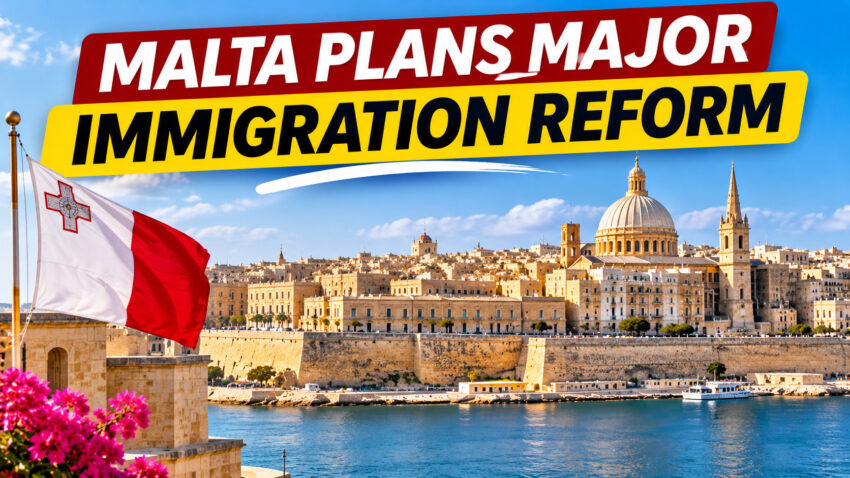
Malta is preparing a major review of its immigration laws, potentially bringing important changes to the way the country manages foreign workers, residents and people seeking international protection.
On October 12, 2026, Malta’s Minister for Home Affairs and Security, Glenn Bedingfield, announced that the government would introduce a comprehensive immigration law reform in the coming months.
One of the main parts of the planned reform will be a review of Malta’s Immigration Act, which dates back to 1970.
The announcement is particularly important because Malta has changed significantly over the past five decades. It is now a member of the European Union and part of the Schengen Area, and its economy attracts workers from many countries.
However, the reform has not yet been published as a draft law. The government has announced its intention to review the legislation, but the exact changes and implementation dates remain unknown.
1. Why Is Malta Planning to Reform Its Immigration Laws?
Malta’s existing Immigration Act was introduced in 1970, long before the country joined the European Union in 2004 and became part of the Schengen Area in 2007.
Since then, Malta’s economy, population and labor market have undergone considerable changes.
The government says the current legal framework needs to reflect the country’s modern circumstances and provide more effective ways to manage immigration.
According to the announcement, Malta wants an immigration system that is:
- More transparent and efficient.
- Based on clearer procedures.
- Better suited to the country’s current economic needs.
- Able to maintain national security and public order.
- Respectful of the rights and dignity of individuals.
The government has also highlighted the growing importance of foreign workers to Malta’s economy.
2. Could the Reform Affect Foreign Workers in Malta?
Foreign workers are among the groups that will be watching the proposed reform closely.
Malta attracts international workers in several sectors, including hospitality, tourism, healthcare, construction and other services.
For non-EU nationals, working legally in Malta generally involves meeting the relevant employment and residence requirements. Many foreign workers use the Single Permit system, which combines authorization to work and reside in Malta.
A review of the wider immigration framework could be relevant to how these processes are managed in the future.
However, the government has not confirmed that the reform will change:
- Work permit eligibility.
- Single Permit requirements.
- Application fees.
- Processing times.
- Employer sponsorship conditions.
- Residence permit validity.
People considering Malta for employment should continue following the existing application requirements rather than assuming that new work visa opportunities have already been introduced.
3. What Could It Mean for Foreign Residents and Their Families?
Foreign residents who already live in Malta may also be interested in the upcoming changes.
Immigration legislation can affect several important areas of life, including residence permissions, family arrangements and the procedures used by immigration authorities.
Family reunification is particularly important for people who want to bring eligible family members to Malta.
The government has not yet announced whether the wider reform will change family reunification rules or introduce new requirements for foreign residents.
For now, existing residence and family reunification requirements remain applicable.
Anyone planning to bring family members to Malta should check the current rules with the relevant Maltese authorities before submitting an application.
4. Will Malta Become Easier for Non-EU Nationals to Move To?
This is one of the biggest questions surrounding the announcement.
Malta’s economy continues to attract international workers, and the government has acknowledged the need for immigration procedures that respond to current economic realities.
More transparent and efficient procedures could benefit people who need to navigate the immigration system.
Nevertheless, the announcement should not be interpreted as confirmation that Malta is opening a new visa route or making immigration easier for every applicant.
The government has not published details about new eligibility criteria, simplified work permits or additional pathways for foreign nationals.
For people from countries such as Pakistan, India, Bangladesh and other non-EU states, the normal visa and work authorization requirements should still be followed.
5. What About Asylum and International Protection?
The proposed reform is not limited to employment-related immigration.
During his announcement, Minister Bedingfield also highlighted the importance of protecting the rights and dignity of people who genuinely need international protection and assistance.
The announcement was made during a visit to Malta’s Agency for the Welfare of Asylum Seekers (AWAS).
The government says it wants to balance an effective immigration system with security, public order and respect for human rights.
However, the precise changes affecting asylum procedures and protection arrangements have not yet been announced.
6. When Will Malta’s New Immigration Rules Take Effect?
The government said that further details of the comprehensive reform would be announced in the coming months.
As of November 2, 2026:
- The government has announced plans for a comprehensive immigration law reform.
- The Immigration Act of 1970 is expected to be reviewed.
- The stated objectives include clearer and more efficient procedures.
- Security, public order and human dignity remain key priorities.
- A complete list of proposed amendments has not yet been published.
- No implementation date for the announced overhaul has been confirmed.
This means that foreign workers and residents should not make immigration decisions based on changes that have not yet been formally introduced.
7. What Should People Planning to Move to Malta Do Now?
If you are considering Malta for employment, study or long-term residence, it is important to prepare using the rules currently in force.
Here are some practical steps:
Check official immigration requirements: Use Malta’s official government and Identità resources to understand the relevant visa and residence procedures.
Understand your work authorization: If you are a non-EU national, check whether you need a Single Permit or another form of authorization.
Research employment opportunities: Look for legitimate employers and verify job offers before paying recruitment or application-related fees.
Prepare your documents: Keep your passport, educational documents, employment records and other required paperwork ready.
Follow official announcements: Future details of Malta’s immigration reform could clarify whether any procedures or requirements will change.
Conclusion: Malta’s Immigration System Could Be Heading for Major Changes
Malta’s planned immigration law reform is an important development for foreign workers, residents and people interested in moving to the country.
The review of the 1970 Immigration Act reflects the government’s intention to modernize a legal framework that was introduced under very different circumstances.
The proposed changes could eventually affect how immigration procedures are managed, but the government has not yet confirmed specific changes to work permits, residence requirements or family reunification.
For now, existing rules remain in place. The next important development will be the publication of further details by the Maltese government.
TravellerTrek will continue following Malta’s immigration developments and report on confirmed changes that matter to people planning to work, study, travel or settle in Europe.
Official Sources and References
- Malta Government – Ministry for Home Affairs and Security, October 12, 2026: Announcement of comprehensive immigration law reform.
- European Union Agency for Asylum (EUAA) – Malta: Minister announces comprehensive reform of immigration law.
- Malta Government announcement · European Union Agency for Asylum report
Editorial note: This article discusses a planned reform, not an enacted new immigration law. Readers should check official Maltese government guidance before making visa or residence applications.