
France Tourism Policy 2026: Building a Sustainable Future for Global Travelers
Published: July 2026
France has once again reaffirmed its position as the world’s leading tourist destination by introducing a series of forward-looking tourism policies in 2026. With millions of international visitors arriving each year, the French government is focusing on sustainable development, improved visitor experiences, and the protection of its cultural and natural heritage. The latest initiatives aim to balance economic growth with environmental responsibility while ensuring that travelers continue to enjoy world-class destinations.
A New Vision for Sustainable Tourism
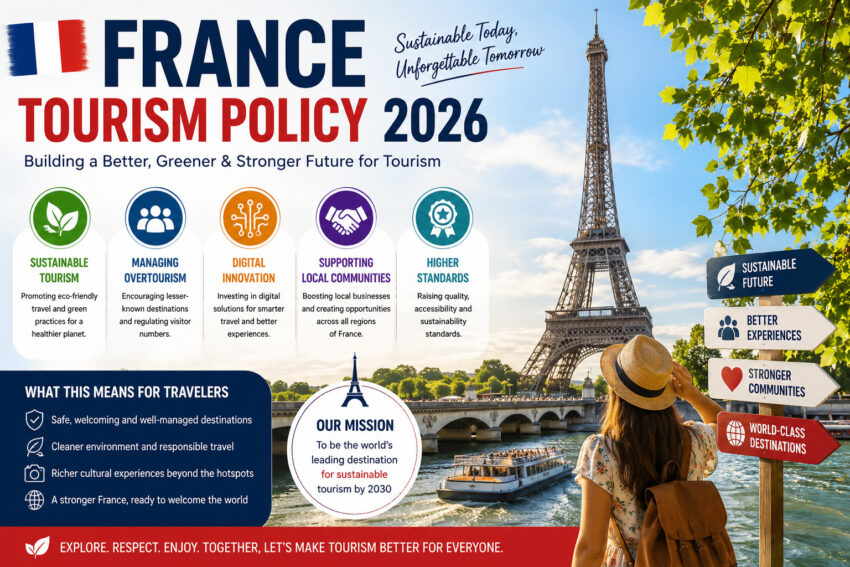
Sustainability is at the heart of France’s tourism strategy. The government has expanded initiatives that encourage environmentally friendly travel, energy-efficient accommodations, and responsible tourism practices. Hotels, restaurants, and tourism operators are being encouraged to reduce their carbon footprint through renewable energy, waste reduction, and sustainable resource management.
Visitors are also being encouraged to choose eco-friendly transportation, including France’s extensive high-speed rail network, cycling routes, and electric public transport systems.
Managing Visitor Numbers
One of France’s biggest tourism challenges has been overcrowding at famous attractions such as the Eiffel Tower, the Louvre Museum, Mont Saint-Michel, and the French Riviera. To address this, authorities are promoting lesser-known destinations across the country, allowing visitors to discover authentic French culture while reducing pressure on popular tourist sites.
Local governments are also strengthening regulations on short-term holiday rentals in certain cities to help preserve residential communities and improve the quality of life for local residents.
Investing in Digital Tourism
France continues to modernize its tourism industry through digital innovation. New investments are improving online booking systems, multilingual visitor information, digital travel guides, and smart tourism technologies that help travelers plan their journeys more efficiently.
Artificial intelligence and digital services are increasingly being used to provide real-time information on transport, attractions, and visitor capacity, creating a smoother travel experience.
Supporting Local Communities
The French government believes tourism should benefit local economies as well as visitors. New funding programs are supporting small businesses, family-owned hotels, regional restaurants, cultural festivals, and rural tourism initiatives. These measures aim to distribute tourism revenue more evenly across the country while creating new employment opportunities.
Higher Standards for Tourism
France has updated quality standards for tourist accommodations and destinations to ensure visitors receive exceptional service. Hotels, campsites, and tourist resorts are expected to meet stricter classification requirements related to sustainability, accessibility, and customer experience.
These improvements strengthen France’s reputation as a premium travel destination known for quality and reliability.
What International Travelers Should Expect
International visitors continue to enjoy straightforward access to France, provided they meet applicable visa and entry requirements. Travelers are encouraged to stay informed about local regulations, respect environmental protections, and follow any temporary safety measures during periods of extreme weather, particularly in regions vulnerable to wildfires.
Tourists are also advised to book accommodations and transportation early during the peak summer season, when visitor demand is highest.
Looking Ahead
France has set an ambitious goal of becoming the world’s leading destination for sustainable tourism by 2030 while increasing international tourism revenue and supporting local communities. Through continued investment in innovation, environmental protection, and high-quality visitor experiences, the country is positioning itself for long-term success in the global tourism industry.
For travelers, these policies promise cleaner destinations, improved services, and a more authentic experience of France’s rich history, diverse landscapes, and world-renowned culture. Whether visiting the streets of Paris, the vineyards of Bordeaux, the beaches of the French Riviera, or the villages of Provence, visitors can expect a tourism experience that combines excellence with sustainability.
Conclusion
France’s 2026 tourism policies demonstrate the country’s commitment to protecting its cultural heritage, supporting local communities, and creating a more sustainable future for travel. By balancing innovation with conservation, France continues to set an example for the global tourism industry while welcoming millions of visitors from around the world each year.