
Sweden’s New Work Permit Rules in 2026: What Foreign Workers Need to Know
Sweden has introduced significant changes to its work permit system, with new rules taking effect from 1 June 2026. The reforms are intended to reduce labor exploitation, strengthen employer accountability, and prioritize skilled workers while ensuring that foreign employees receive fair wages and working conditions.
Higher Salary Requirement
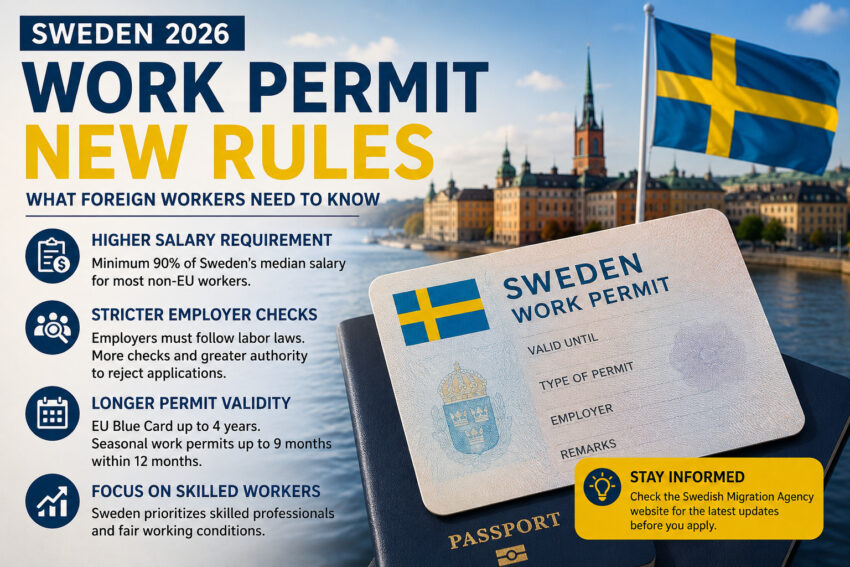
One of the biggest changes is the new salary threshold for non-EU workers. Most applicants must now receive a salary equal to at least 90% of Sweden’s median salary to qualify for a work permit. This replaces the previous requirement and is expected to reduce the number of low-paid work permit applications. Some occupations facing labor shortages may receive exemptions under government rules.
Stricter Employer Checks
The Swedish Migration Agency now has greater authority to reject work permit applications if an employer has committed serious violations, is under investigation for certain offences, or has failed to meet labor law obligations. Employers are also required to notify authorities if a foreign employee does not begin work within four months of receiving a permit.
Longer Permit Validity
The reforms also bring positive changes for some workers. EU Blue Cards can now be issued for up to four years instead of two, while seasonal work permits have been extended from six months to nine months within a twelve-month period. These changes provide greater stability for qualified professionals and seasonal workers.
Impact on Skilled Workers
Sweden’s technology, engineering, and innovation sectors continue to rely on international talent. However, business organizations have warned that stricter immigration rules could make it more difficult for companies to recruit skilled workers from outside the European Union. Recent reports indicate that applications from highly skilled non-EU professionals have declined since the tightening of migration policies.
Advice for Applicants
Anyone planning to work in Sweden should ensure that:
- Their job offer meets the new salary requirement.
- The employer complies with Swedish labor laws.
- All application documents are complete and accurate.
- They stay informed through the Swedish Migration Agency before applying.
Conclusion
Sweden remains an attractive destination for qualified professionals, particularly in sectors such as IT, healthcare, engineering, and research. However, the new work permit rules make it more important than ever for applicants and employers to meet all legal requirements. Foreign workers who prepare carefully and secure employment with reputable employers will have the strongest chance of obtaining a Swedish work permit under the updated system.