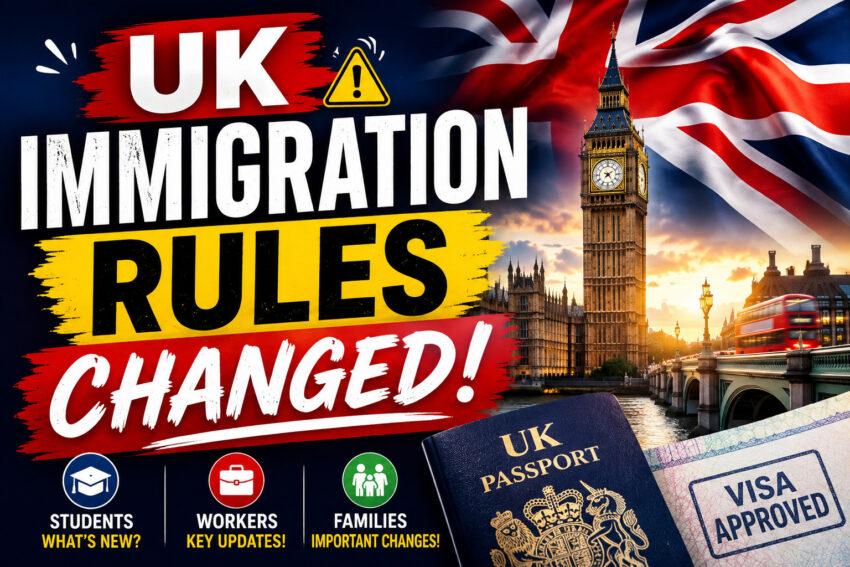

UK Immigration Rules Changed in 2026: What International Applicants Need to Know
Planning to study, work or settle in the UK? 🇬🇧
The UK’s immigration system has undergone another round of changes in 2026.
On 9 July 2026, the UK Home Office published Statement of Changes HC 259, introducing amendments across several parts of the Immigration Rules. The changes began taking effect from 30 July 2026, with further amendments coming into force on 3 August 2026.
The changes are not one single new visa policy. Instead, they are a package of amendments affecting different immigration routes.
So, what should international students, workers and other applicants know?
What Has Changed?
The latest statement covers a wide range of immigration categories, including:
- 🎓 Student and Child Student routes
- 🎓 Graduate route
- 💼 Skilled Worker route
- 🛂 Electronic Travel Authorisation (ETA)
- 🇪🇺 EU Settlement Scheme
- 👨👩👧 Family routes
- 🌍 Global Talent and other work routes
- 📋 Administrative and suitability requirements
The Home Office says the changes apply across the United Kingdom.
This means applicants should avoid assuming that a rule change affecting one visa category automatically applies to every immigration route.
🎓 What Does This Mean for International Students?
International students remain one of the largest groups affected by UK immigration policy changes.
The current Student route continues to require applicants to meet the relevant eligibility requirements, including having a valid Confirmation of Acceptance for Studies (CAS), meeting financial and other requirements, and providing biometrics where required.
The July 2026 changes also amended certain Student-route suitability provisions.
For example, the updated rules clarify how immigration bail and breaches of immigration law are treated when assessing applications for permission to stay.
⚠️ Important:
This does not mean that the UK has completely replaced the Student visa system.
Students still need to follow the official Student route requirements and should check the rules that apply to their individual circumstances.
🎓 The Graduate Route Is Also Changing
The Graduate route remains an important option for international students who successfully complete eligible studies in the UK.
However, applicants should pay close attention to the length of permission available under the rules.
Under current government guidance, the Graduate visa will provide:
2 years
for applications made on or before 31 December 2026
18 months
for applications made on or after 1 January 2027
PhD graduates continue to have a longer period available under the Graduate route.
The latest July changes also made a specific amendment concerning children born in the UK to someone who already holds permission under the Graduate route.
💼 What About Skilled Workers?
The UK has also made amendments to the Skilled Worker route.
The July 2026 changes include technical adjustments to the way certain transitional provisions operate, including references to Certificates of Sponsorship issued before specified dates.
For people considering the Skilled Worker route, this highlights an important point:
A job offer alone isn’t enough.
Applicants must meet the current requirements for their occupation, sponsorship, salary and other eligibility criteria.
The wider UK immigration system has also become more selective in recent years, with major Skilled Worker changes already introduced before 2026. For example, new applicants on several routes have been required to meet a higher B2 English-language standard since January 2026.
🛂 Changes to the ETA Rules
The latest statement also includes amendments to the UK’s Electronic Travel Authorisation (ETA) rules.
Among the changes, the wording concerning certain criminal sentences was updated to include suspended custodial sentences.
This matters because the ETA system is increasingly important for travellers who do not normally need a visa for short visits to the UK.
However, an ETA is not a work or student visa.
Travellers who intend to work, study for longer periods or live in the UK generally need the appropriate immigration permission.
Changes Affecting the EU Settlement Scheme
The July 2026 changes also include amendments to the EU Settlement Scheme (EUSS) and EUSS Family Permit rules.
One change concerns the deadline and circumstances under which certain family members of qualifying British citizens can make an application.
The rules also update requirements relating to biometrics for some EUSS Family Permit applicants.
These changes are particularly relevant to people whose UK immigration status is connected to rights established under the EU Settlement Scheme.
👨👩👧 Family Immigration Has Also Been Updated
The latest package includes changes to Appendix FM, which covers family members.
One amendment concerns the duration of permission for partners of people who hold certain temporary protection status.
The new wording allows, in specified circumstances, permission to be granted for a period ending on the same date as the sponsor’s permission.
This is another example of why applicants should look at the rules for their specific immigration route, rather than relying on general headlines.
📅 When Did the Changes Take Effect?
The changes did not all start on the same day.
According to the Home Office, different amendments came into effect from different dates.
30 July 2026
Certain changes affecting the EU Settlement Scheme and EUSS Family Permit took effect.
3 August 2026
Most of the remaining amendments in HC 259 came into effect.
This distinction is important for anyone preparing an application because the rules applicable to an application can depend on when it is submitted and which route is being used.
🚨 Does This Mean the UK Is Closing Its Immigration System?
No.
The headline “UK Immigration Rules Changed” can sound dramatic, but the reality is more complicated.
HC 259 is a package of targeted amendments, rather than a complete replacement of the UK’s immigration system.
The Home Office’s explanatory memorandum lists changes across numerous areas, including students, workers, visitors, family routes, settlement and other categories.
At the same time, the UK has introduced a number of significant immigration reforms over the wider 2025–2026 period.
That means anyone planning a move to the UK should look at the latest rules for their particular route, rather than relying on older information.
🔍 What Should Applicants Do Now?
If you’re planning to apply for a UK visa, don’t rely on a checklist from several months ago.
Instead:
✅ Check the current Immigration Rules
Rules can change after you have read an older article or watched an older video.
✅ Identify your exact route
Student, Skilled Worker, Graduate, Family, Visitor and other routes have different requirements.
✅ Check the date your application will be submitted
Some rule changes have specific implementation dates.
✅ Check your supporting documents
Make sure your passport, financial evidence, CAS or sponsorship documents and other evidence meet the requirements applicable to your route.
✅ Use official sources
The UK government regularly publishes changes to the Immigration Rules and updates individual visa guidance.
What Does This Mean for People Planning to Move to the UK?
The biggest takeaway is simple:
The UK immigration system is continuing to evolve.
For international students, workers and families, staying up to date can be just as important as preparing the application itself.
A rule that applied when someone started planning their move may not necessarily be the same rule that applies when they actually submit their application.
And with further immigration reforms expected over time, applicants should always check the latest official guidance before making important decisions.
Should You Still Choose the UK in 2026?
For many people, the UK remains an attractive destination for:
🎓 Higher education
💼 Skilled employment
🌍 International career opportunities
🔬 Research
📈 Professional development
But immigration planning now requires more attention to the details.
Before applying, ask yourself:
🎓 Which visa route am I using?
📋 Do I meet its current requirements?
💰 Can I meet the financial requirements?
🗣️ Do I meet the language requirements where applicable?
📅 Which rules will apply on my application date?
The Bottom Line
The UK has introduced another set of immigration-rule amendments in 2026.
The changes affect multiple routes, including Student, Graduate, Skilled Worker, ETA, EU Settlement Scheme and family-related immigration rules.
But there is no single answer to the question:
“What do the new UK immigration rules mean for me?”
It depends on your visa category, nationality, circumstances and application date.
If you’re planning to study, work or move to the UK, check the rules that apply specifically to your route before submitting an application.
👀 What Do You Think?
🇬🇧 Would the UK’s latest immigration changes affect your decision to move there?
👍 Yes
🤔 Maybe
❌ No
Tell us your visa route in the comments — Student, Skilled Worker, Graduate or Family? 👇
This article is for general information only and is not immigration or legal advice. UK immigration rules can change. Always verify the latest requirements on GOV.UK before applying.
Official source
UK Government — Statement of Changes to the Immigration Rules, HC 259