
Europe’s New Immigration Rules Are Now in Effect: What Foreigners Need to Know
Published: August 2026
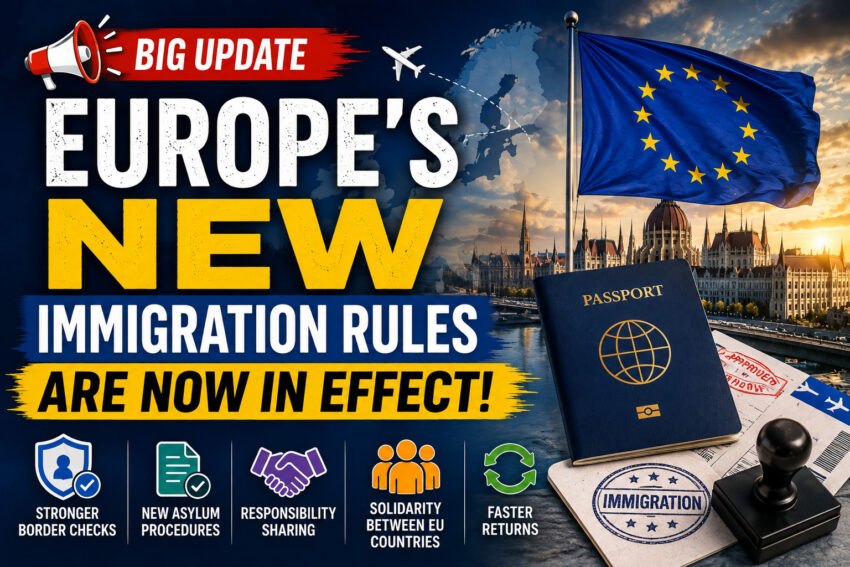
Europe has entered a new phase of migration and asylum management. On 12 June 2026, the European Union’s Pact on Migration and Asylum became applicable, introducing a common set of rules covering border screening, asylum applications, responsibility between EU countries and returns. (Migration and Home Affairs)
For foreigners planning to travel, seek asylum or understand Europe’s immigration system, these changes are important to know.
🚨 What Has Changed?
The new system is built around four major areas:
1. 🛂 Stronger Border Screening
People arriving irregularly at EU external borders can be subject to registration, identity checks, security checks, health checks and vulnerability assessments.
The EU says screening should normally be completed within 7 days at external borders or 3 days for people apprehended within EU territory. (Migration and Home Affairs)
The updated Eurodac database also plays a larger role in recording and identifying people entering the EU through the asylum and migration system. (Migration and Home Affairs)
2. 📄 New Asylum Procedures
The Pact introduces more harmonised asylum procedures across EU countries.
Certain applicants—including people considered unlikely to qualify for international protection, those who mislead authorities or people presenting security concerns—can be subject to a mandatory border procedure. (Migration and Home Affairs)
At the same time, the EU says safeguards for applicants remain in place, including access to legal counselling, information about rights and obligations, and additional support for vulnerable people. (Migration and Home Affairs)
3. 🇪🇺 Which EU Country Handles an Asylum Application?
One major goal is to make responsibility between EU countries clearer.
Under the new framework, asylum seekers generally have to apply for international protection in the EU country of first entry and remain there while responsibility for their application is determined. The rules also address unauthorised movement between EU countries. (Migration and Home Affairs)
This is particularly significant for people considering moving between different EU countries after entering Europe.
4. 🤝 More Responsibility Sharing Between EU Countries
The Pact introduces a mandatory, flexible and needs-based solidarity mechanism.
EU countries facing significant migratory pressure can receive support through measures such as relocations, financial contributions or operational assistance. (Migration and Home Affairs)
The objective is to prevent a small number of countries—particularly those experiencing greater pressure at the EU’s external borders—from having to manage the situation alone.
⚠️ What About People Who Do Not Have a Right to Stay?
The EU is also moving toward more coordinated return procedures.
A separate Return Regulation received political agreement in June 2026 and is intended to create a more coordinated European return system. However, the European Commission says it still requires formal adoption before entering into force, with some provisions subject to an implementation period. (Migration and Home Affairs)
So it is important not to confuse the new Pact, which became applicable on 12 June 2026, with every other immigration proposal or regulation currently being developed.
🌍 What Does This Mean for Foreigners?
The impact depends heavily on why a person is entering Europe and what legal status they have.
For tourists, students, workers and other people travelling legally under the relevant visa or residence rules, the Pact is primarily focused on the EU’s migration and asylum management system, rather than creating one new visa for everyone.
For people seeking asylum or entering the EU irregularly, the changes are much more directly relevant because of the new screening, registration, responsibility and border-procedure rules. (Migration and Home Affairs)
📌 Important Reminder
Immigration rules can differ between EU-level legislation and individual national rules. The Pact establishes a common framework, but national authorities remain responsible for implementing many parts of the system.
If you are planning to work, study, visit or relocate to a specific European country, always check that country’s official immigration authority before making decisions.
🔎 The Bottom Line
Europe’s immigration system has changed significantly in 2026.
The new framework aims to provide:
- 🛂 Stronger external border screening
- 📄 More harmonised asylum procedures
- 🇪🇺 Clearer responsibility between EU countries
- 🤝 A permanent solidarity mechanism
- 🔄 More coordinated return procedures
- ⚖️ Safeguards for people seeking international protection
The European Commission says implementation will continue to require work at both EU and national level even after the Pact entered into application. (Migration and Home Affairs)
For anyone considering Europe for travel, study, work or relocation, understanding the difference between legal migration, asylum and irregular migration is more important than ever.