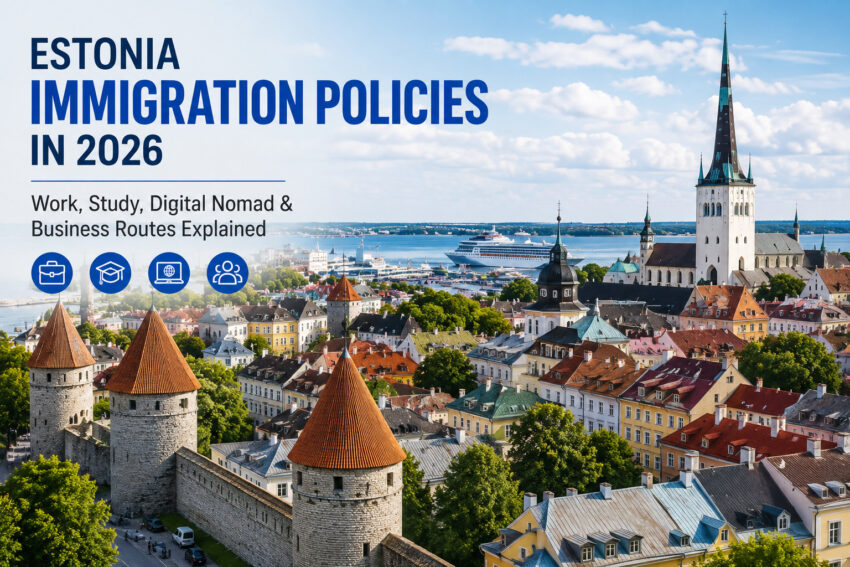

Estonia Immigration Policies in 2026: Work, Study, Digital Nomad & Business Routes
Estonia has attracted increasing attention from foreigners looking to work, study, start a business or relocate to Europe. But while Estonia is known for its digital economy and e-Residency programme, moving to Estonia still requires meeting the country’s immigration requirements.
Here are the main routes foreigners should know about in 2026.
💼 1. Work in Estonia
Non-EU citizens can work in Estonia through different immigration routes depending on the length and nature of their employment.
For short-term employment, the employer generally needs to register the worker with Estonia’s Police and Border Guard Board before employment begins. Short-term employment can be registered for up to 365 days within a 455-day period. (E-Resident Learning)
For longer-term employment, a foreign worker may need a temporary residence permit for employment.
In many cases, requirements include:
- 💼 A qualifying employment position
- 💰 Meeting the applicable salary requirement
- 📋 Approval from the Estonian Unemployment Insurance Fund in relevant cases
- 🇪🇪 Compliance with applicable immigration quotas and exemptions (E-Resident Learning)
The exact requirements depend on the worker, employer and type of employment.
🎓 2. Studying in Estonia
International students can also use Estonia’s immigration system to study.
For a long-stay D visa, applicants must demonstrate sufficient financial means. Estonia’s current official guidance lists €880 per month for students and different amounts for accompanying spouses in applicable cases. (Ministry of Foreign Affairs of Estonia)
Doctoral students have separate financial requirements.
Students should check the latest requirements before applying because the required documents and conditions can depend on their specific programme and nationality.
💻 3. Digital Nomad Visa
One of Estonia’s best-known immigration options is its Digital Nomad Visa.
It is designed for eligible remote workers who can work independently of location and whose work is generally connected to an employer, company or clients outside Estonia. The visa allows eligible digital nomads to temporarily live and work remotely in Estonia for up to one year. (e-Residency)
The official Estonian visa guidance currently lists a financial requirement of:
💰 €3,960 per month
for the digital-nomad visa category. (Ministry of Foreign Affairs of Estonia)
However, the Digital Nomad Visa is not a route to permanent residence or citizenship. (e-Residency)
🚀 4. Start a Business in Estonia
Estonia has several options for entrepreneurs, including routes connected with start-ups, company shareholders and major investors.
The country’s digital infrastructure makes it particularly attractive to international entrepreneurs who want to operate an EU-based company.
There is also an important distinction between e-Residency and immigration.
🪪 5. What is Estonia e-Residency?
Estonia’s e-Residency programme gives foreigners a government-issued digital identity that provides access to Estonian online services and allows entrepreneurs to establish and manage an Estonian company remotely. (E-Resident Learning)
But there is a major catch:
⚠️ e-Residency does NOT give you the right to live in Estonia.
It does not provide:
❌ A residence permit
❌ Citizenship
❌ Visa-free entry
❌ Physical residency
❌ EU residency rights (E-Resident Learning)
So someone who wants to move to Estonia still needs to qualify under an appropriate visa or residence-permit route.
🌍 6. EU vs Non-EU Citizens
The immigration process is different depending on nationality.
Citizens of the EU, EEA and Switzerland have different rights from citizens of countries outside the EU.
Non-EU nationals can generally enter Estonia under visa-free arrangements where applicable, with a visa, or with a residence permit depending on their circumstances. (E-Resident Learning)
For longer stays, a residence permit may be required.
🏠 7. Temporary Residence
An Estonian temporary residence permit can give a non-EU citizen the right to live and, in many cases, work in Estonia.
The permit can often be issued for up to five years, although the exact duration is decided according to the individual’s circumstances. (E-Resident Learning)
The basis for the permit matters — employment, business, study and family-related situations can have different requirements.
👨👩👧 8. Family Immigration
Foreigners living in Estonia may have options for bringing eligible family members depending on their residence status and the circumstances of the family.
However, family immigration requirements vary according to the type of residence permit held by the sponsor and the relationship between the applicants.
Anyone planning family reunification should therefore check the requirements for their specific residence category rather than relying on general information.
🛂 9. Long-Stay D Visa
Estonia’s long-stay D visa can be used for a number of longer-term purposes.
The official visa guidance covers purposes including:
- 🎓 Study
- 💼 Employment
- 🌱 Seasonal work
- 🚀 Start-up business
- 💻 Digital nomad/teleworking
- Other qualifying long-term stays (Ministry of Foreign Affairs of Estonia)
Applicants must provide the required supporting documents and demonstrate sufficient financial means for their purpose of stay.
Why is Estonia attracting foreigners?
Estonia stands out because of its highly digital public services and business environment.
The country’s e-Residency programme has attracted applicants from more than 170 countries, with more than 137,000 people having applied and over 36,000 Estonian companies established by e-residents, according to Estonia’s e-Residency programme. (E-Resident Learning)
This has made Estonia particularly interesting to:
💻 Digital entrepreneurs
🚀 Start-up founders
🌍 Remote workers
👨💼 Freelancers
📈 International businesses
⚠️ Is Estonia easy to immigrate to?
Not necessarily.
Estonia offers several routes for foreigners, but each has specific eligibility requirements.
Being attracted by Estonia’s digital economy or obtaining e-Residency does not automatically give someone the right to move there.
Your nationality, employment, salary, financial situation, education, business activity and intended length of stay can all affect which route is available.
📌 Key Takeaways
Estonia offers immigration routes for workers, students, entrepreneurs and eligible remote workers.
💼 Short-term employment can be registered for up to 365 days within a 455-day period in qualifying cases. (E-Resident Learning)
💻 The Digital Nomad Visa has a current financial requirement of €3,960 per month. (Ministry of Foreign Affairs of Estonia)
🪪 e-Residency is not physical residency and does not give you the right to live in Estonia. (E-Resident Learning)
🏠 Temporary residence permits can provide the right to live and, in many cases, work in Estonia. (E-Resident Learning)
🌍 TravellerTrek Take
Estonia is an interesting option for foreigners considering Europe, particularly for technology workers, entrepreneurs, students and remote professionals.
But don’t confuse Estonia’s famous e-Residency programme with an immigration programme. If your goal is to actually live in Estonia, you’ll need to qualify for the appropriate visa or residence permit.
Official Sources
- Estonian Ministry of Foreign Affairs — Long-Stay D Visa — Official information on D visas, employment, study, start-up business and digital nomad visas.
- Estonia e-Residency — Live and Work in Estonia — Official information on employment, residence permits and immigration requirements.
Disclaimer: Immigration requirements can change and may vary by nationality and individual circumstances. Always verify the latest requirements with the Estonian authorities before applying.