
Effects of the Middle East Conflict on Europe’s Tourism in 2026: What Travelers Need to Know
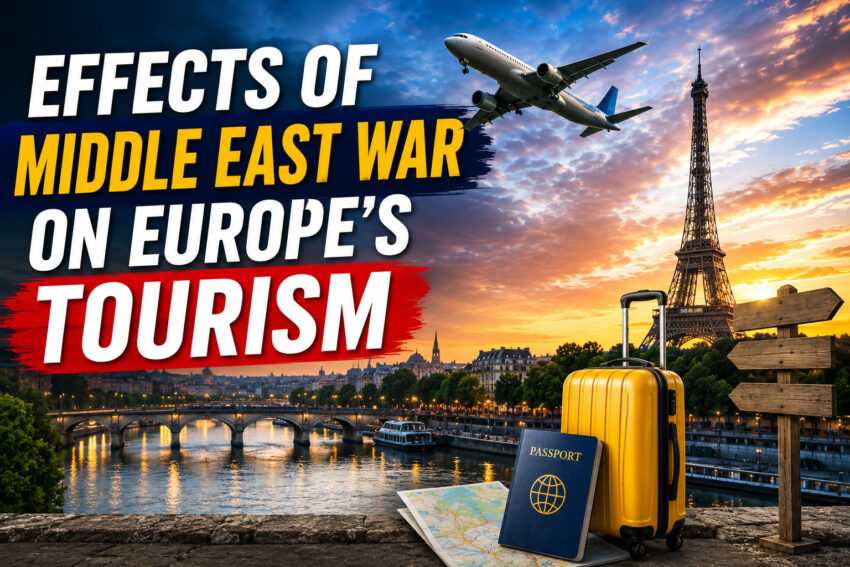
The conflict involving Israel and Iran has created ripple effects across global travel in 2026. Although most European tourist destinations remain open and safe, the war has significantly affected international aviation, transportation costs, travel planning, and tourism demand. For travelers planning a European holiday, understanding these changes can help avoid unexpected disruptions and ensure a smoother journey.
Europe Remains Open to Tourists
Despite instability in parts of the Middle East, most European countries—including France, Germany, Italy, Spain, Portugal, Greece, the Netherlands, Switzerland, Norway, and the Nordic countries—continue to welcome international visitors.
Tourist attractions, museums, hotels, rail networks, and public transport systems are operating normally across most of Europe.
The primary impacts have been on international transport and travel costs, not on tourism infrastructure within Europe.
Flight Routes Have Changed
One of the biggest consequences of the conflict has been the closure or restriction of some Middle Eastern airspace.
Many airlines have responded by:
- Rerouting flights around conflict zones.
- Extending flight times on routes between Europe and Asia.
- Adjusting schedules because of longer operating hours.
- Temporarily suspending flights to some destinations in the Middle East.
These changes mainly affect passengers traveling between Europe and Asia, Australia, and parts of Africa.
Airfares Have Increased
Longer flight routes require additional fuel and crew time.
As a result:
- Some international airfares have increased.
- Last-minute tickets can be more expensive.
- Airlines may reduce frequencies on less profitable routes.
- Connecting flights may take longer than usual.
Prices vary depending on airline, destination, and booking time.
Travelers Should Expect Longer Journey Times
Flights that previously crossed Middle Eastern airspace may now follow alternative routes.
This can result in:
- Longer travel times.
- Additional fuel stops on some routes.
- Changes to connecting flight schedules.
- Occasional delays.
Travelers should regularly check their airline’s latest notifications before departure.
European Tourism Remains Strong
Despite transport disruptions, Europe continues to experience strong tourism demand.
Several factors support continued visitor growth:
- Stable security conditions across most tourist destinations.
- Major cultural festivals and events continuing as planned.
- Strong rail and domestic transport networks.
- Increased interest in intra-European travel.
Many travelers who postponed trips to destinations closer to the conflict have instead chosen European cities and holiday regions.
Higher Travel Insurance Costs
Some insurers have adjusted premiums for international travel because of increased geopolitical uncertainty.
Travelers should:
- Compare insurance policies carefully.
- Review coverage for flight disruptions and trip cancellations.
- Check whether their policy includes protection for unexpected transport changes.
Rail Travel Is Becoming More Popular
Many visitors are choosing trains once they arrive in Europe.
High-speed rail networks in countries such as:
- France
- Germany
- Italy
- Spain
- Austria
- Switzerland
continue to provide reliable alternatives to short-haul flights.
This trend also supports more sustainable tourism across Europe.
Cruise Tourism
Most European cruise itineraries continue to operate normally.
Mediterranean and Northern European cruises remain available, although some operators have adjusted routes where necessary in response to regional security considerations.
What Tourists Should Do Before Traveling
To reduce the risk of disruption:
- Book flights well in advance.
- Monitor airline emails and mobile apps.
- Purchase comprehensive travel insurance.
- Allow extra time for flight connections.
- Check official travel advisories before departure.
- Keep digital and printed copies of travel documents.
Popular European Destinations Continue to Welcome Visitors
Travelers can continue planning trips to destinations such as:
- Paris
- Berlin
- Rome
- Barcelona
- Amsterdam
- Vienna
- Prague
- Zurich
- Oslo
- Copenhagen
These cities continue to operate normally and remain among Europe’s most visited destinations.
Tourism Outlook for 2026
While the Middle East conflict has disrupted global aviation and increased transport costs, Europe’s tourism industry has remained resilient.
Current trends suggest:
- Continued demand for European travel.
- Recovery in airline bookings following initial uncertainty.
- Growth in regional tourism within Europe.
- Increased reliance on rail travel for cross-border journeys.
The situation remains dynamic, so travelers should stay informed through official airline and government updates.
Final Thoughts
The Middle East conflict has affected how people travel to Europe more than whether they can travel to Europe. Flight routes have changed, travel times may be longer, and transportation costs have risen, but Europe’s tourism sector continues to operate normally. With careful planning and up-to-date travel information, visitors can still enjoy a safe and memorable European holiday in 2026.
Official Sources
- European Union Aviation Safety Agency (EASA): https://www.easa.europa.eu
- International Air Transport Association (IATA): https://www.iata.org
- UN Tourism: https://www.unwto.org
- European Commission – Travel Information: https://europa.eu
Reuters – Aviation & Travel News: https://www.reuters.com