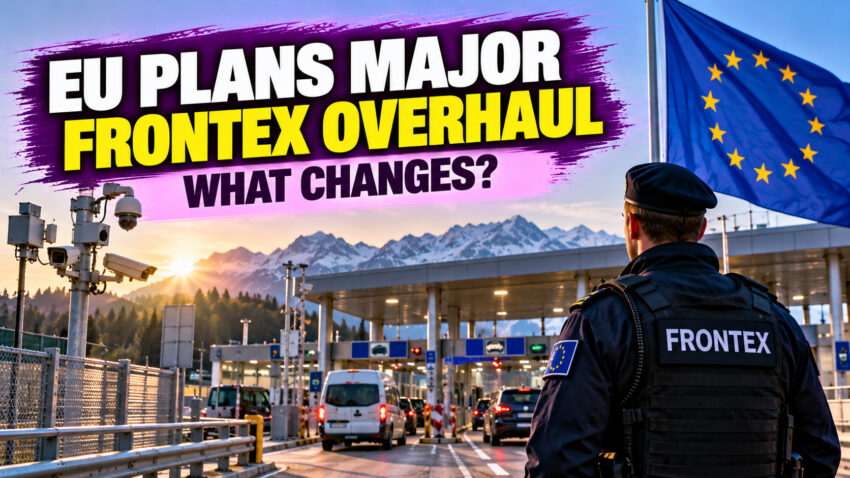

EU Plans Major Frontex Overhaul in 2026: What Travelers Need to Know
The European Union is proposing a major expansion of its border agency, Frontex, that could change how the bloc manages external borders and returns people who have no legal right to stay.
Announced by the European Commission on October 27, 2026, the proposed reform aims to strengthen the agency’s operational capacity, improve responses to border emergencies, and give it a more significant role in migration management.
One of the most notable elements is a proposed increase in the agency’s standing corps to 30,000 officers over time. The plan also envisages a rapid-response capability and closer cooperation with countries outside the EU.
But what has actually been announced? Is the new system already in force? And does it mean new restrictions for tourists, students, or people applying for European work visas?
Here is what you need to know.
What Is Frontex?
Frontex is the European Border and Coast Guard Agency. It supports European countries in managing the EU’s external borders, coordinating joint operations, assessing border-related risks, and assisting with certain return operations.
The agency works with national authorities rather than simply replacing them. Individual countries continue to have responsibilities for managing their own borders and applying relevant immigration laws.
Frontex is particularly relevant to the Schengen Area, where participating countries generally allow travel across internal borders without routine border checks, subject to applicable rules and temporary controls.
Its work focuses primarily on the EU’s external borders, including land, sea, and air entry points.
What Did the European Commission Announce on October 27?
The European Commission has proposed strengthening Frontex’s mandate, staffing, and operational role.
The proposed reform has several major elements.
1. A Larger Border Agency
One headline proposal is to increase Frontex’s standing corps to 30,000 officers over time.
A larger workforce could give the agency more capacity to support national authorities during periods of increased pressure at the EU’s external borders.
The expansion is a proposal, not confirmation that 30,000 officers have already been recruited or deployed.
2. A Rapid-Response Capability
The Commission wants Frontex to respond more quickly when countries face serious border emergencies.
The proposal includes a rapid-response force that could be deployed at short notice during emergencies. This would be intended to strengthen the EU’s ability to support member states facing sudden operational challenges.
The precise arrangements and deployment conditions will depend on the legal proposal and the process that follows.
3. A Greater Role in Returns
The proposed reform would give Frontex a more prominent role in returning people who have no legal right to remain in the EU.
Returns are already part of European migration management, and Frontex already provides assistance to national authorities in this area.
The proposal seeks to expand the agency’s role and improve coordination. It also envisages a broader operational role involving cooperation with countries outside the EU.
This does not mean that every person whose visa expires will automatically be removed without an individual assessment or applicable legal procedures.
4. Closer Cooperation With Non-EU Countries
The Commission also wants to strengthen cooperation with partner countries outside the European Union.
Such cooperation may be relevant to border surveillance, information exchange, migration management, and returns.
The details will depend on the legal framework, agreements with partner countries, and the safeguards that apply.
Official background: European Commission — Migration and Home Affairs
Has the Frontex Reform Already Become Law?
No. The expansion announced on October 27 is a legislative proposal, not a fully implemented new system.
A proposal must go through the applicable EU legislative process before its provisions can become binding law. Its details may change during negotiations, and implementation can require additional preparations.
It is important to distinguish this proposed Frontex overhaul from other European migration measures that have already progressed through separate legislative procedures.
For example, the Council of the European Union announced on October 1, 2026, that it had given its final approval to a separate regulation establishing common rules for returning people who have no legal right to stay in the EU.
That regulation is distinct from the newly announced Frontex reform, even though both concern migration management and returns.
Official source: Council of the EU — New rules on returns, October 1, 2026
What Could This Mean for European Borders?
If the proposal is adopted and implemented, the expanded agency could provide additional operational support to countries managing the EU’s external borders.
Possible effects include:
- More capacity to support national border authorities.
- Faster deployment of personnel during certain emergencies.
- Greater coordination between European and partner-country authorities.
- A stronger role for Frontex in return operations.
- Additional resources for monitoring external-border areas.
These are intended outcomes of the proposal, not guarantees that every border crossing will change in the same way.
National authorities would continue to apply the immigration and entry rules relevant to their countries, alongside applicable EU law.
Will Tourists Face New Travel Restrictions?
The Frontex proposal does not, by itself, introduce a new blanket visa requirement for tourists.
People planning a European holiday should continue to check the entry requirements for their nationality and destination.
For travelers visiting the Schengen Area, relevant requirements may include:
- A valid passport.
- A Schengen visa, where required.
- Evidence supporting the purpose and conditions of the visit.
- Compliance with the permitted duration of stay.
- Any additional requirements applicable to the individual’s circumstances.
The proposed expansion of Frontex does not automatically mean that every tourist will face additional interviews, new biometric requirements, or longer airport queues.
Travelers should follow official guidance rather than assume that a proposed agency reform has already changed passenger procedures.
What About International Students and Work Visa Applicants?
The announcement does not create a new set of student-visa or work-visa eligibility rules.
People applying to study or work in Europe should continue checking the official immigration guidance for the specific country and visa route they intend to use.
For example, work authorization can depend on qualifications, salary requirements, employer sponsorship, and other conditions. Student applications may depend on admission, finances, insurance, and national visa requirements.
Those rules are separate from the proposed changes to Frontex’s institutional powers.
However, all visa holders must comply with the conditions of their permission to stay. People who lose their legal right to remain may be subject to the applicable national and European return procedures.
What Should Pakistani Travelers Know?
Pakistani citizens planning a short visit to a Schengen country generally need a Schengen visa unless a specific exemption applies.
The Frontex announcement does not introduce a new visa requirement specifically for Pakistani citizens.
If you are planning to travel from Pakistan to Europe, keep the following points in mind:
Check the Visa Requirements
Consult the official embassy or consular website for the country you intend to visit. Make sure you understand the documentation and application requirements before booking your trip.
Confirm Your Travel Itinerary
If your journey includes a connection through another country, check whether any airport transit visa or other authorization is required for your particular itinerary.
Follow the Conditions of Your Visa
A visa does not necessarily guarantee admission at the border. Travelers should be prepared to meet the applicable entry conditions.
Use Official Information
Avoid relying on social media claims that a proposed EU policy automatically means visas will be rejected or that new restrictions have already taken effect.
The relevant rules depend on the measure concerned, its legal status, and the traveler’s circumstances.
Does This Mean Schengen Borders Will Close?
No. The proposal is not an announcement that the Schengen Area will close its borders.
Schengen countries generally permit travel across internal borders without routine checks, but temporary internal border controls may be introduced under the applicable rules.
Frontex primarily supports the management of the EU’s external borders. Its proposed expansion should not be confused with a decision to introduce permanent passport checks at every internal Schengen border.
For a multi-country European trip, travelers should check current border-control notices and allow sufficient time for connections.
Official source: European Commission — Temporary reintroduction of border control
What Happens Next?
The Frontex reform will need to proceed through the relevant EU legislative process.
As the proposal develops, further details should clarify the agency’s future responsibilities, staffing arrangements, operational powers, and implementation timetable.
Until the process is completed, travelers should distinguish between proposed changes and requirements that are already in force.
For the latest information, consult the European Commission, the Council of the European Union, and the national immigration authorities responsible for your destination.
Frequently Asked Questions
What is the main purpose of the proposed Frontex reform?
The proposal aims to strengthen the EU border agency’s staffing, operational capacity, emergency response, and role in returns.
Will Frontex have 30,000 officers immediately?
No. The announced figure is a proposed long-term expansion of the standing corps, not the number of officers already deployed.
Has the proposal become law?
The announcement on October 27, 2026, concerns a proposal. It should not be treated as a fully implemented legal change.
Does the reform change Schengen visa fees?
The Frontex proposal does not itself announce a change to Schengen visa fees.
Does it affect Pakistani citizens applying for European visas?
It does not introduce a new visa requirement specifically for Pakistani citizens. Applicants should continue following the official visa and entry requirements that apply to their nationality and destination.
Should travelers expect more checks at airports?
The proposal does not establish a universal new airport-screening procedure or guarantee longer processing times. Travelers should follow official instructions from their airline and destination authorities.
Final Thoughts
The European Commission’s proposed Frontex reform is an important development in European border and migration policy. A larger standing corps, faster emergency deployment, and an expanded role in returns could change how the EU coordinates certain border-management operations if the proposal is adopted.
For travelers, students, and visa applicants, the most important distinction is between a proposed institutional reform and a new rule that already applies to their journey.
Stay informed, check official sources, and never make travel decisions based on headlines alone.