
Luxembourg Visa D in 2026: New Long-Stay Application Procedure Explained
Introduction
Luxembourg is a destination of interest for people planning to work, study, join family members, or settle in Europe. Before making plans, however, prospective residents need to understand the correct immigration procedure.
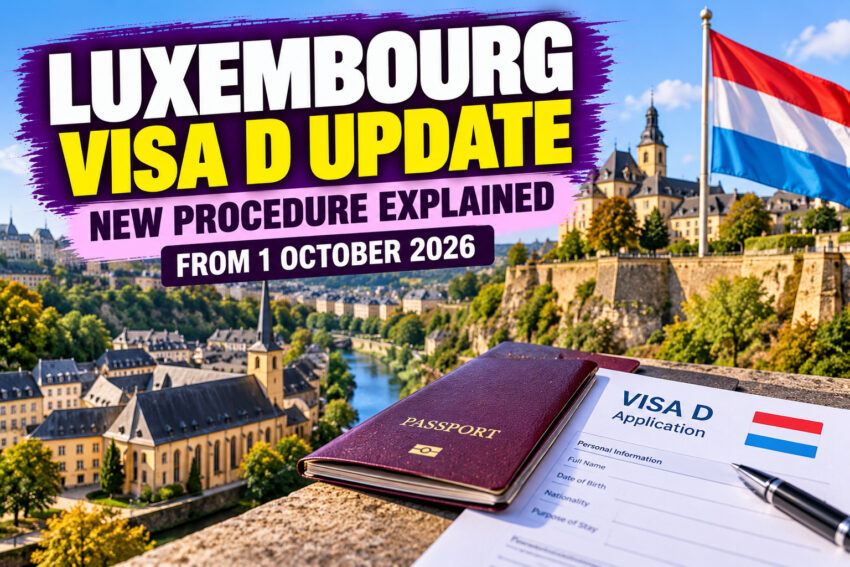
From October 1, 2026, Luxembourg introduced a revised procedure for first-time residence applications by third-country nationals who intend to settle in the country. The process is centered on applying for a long-stay Visa D through the competent diplomatic or consular post, replacing the previous procedure that began with a temporary residence authorization.
The change is primarily procedural. Applicants must still meet the requirements associated with their intended purpose of stay.
1. What Is a Luxembourg Visa D?
A Visa D is a national long-stay visa used for stays exceeding 90 days.
It is different from a short-stay Schengen visa, which generally permits eligible travelers to stay for up to 90 days within any 180-day period.
People planning a longer stay in Luxembourg should identify the immigration category that matches their circumstances.
Examples of possible purposes include:
- Employment.
- Study.
- Family-related residence.
- Other eligible long-term activities.
The correct procedure and supporting documents depend on the applicant’s purpose of stay and personal situation.
2. What Changed on October 1, 2026?
Luxembourg’s revised process replaced the previous first-stage procedure that required applicants to obtain a temporary authorization to stay before applying for a long-stay visa.
Under the revised approach, third-country nationals intending to settle in Luxembourg must submit their long-stay Visa D application through the competent Luxembourg or Belgian diplomatic or consular representation, depending on their country of residence and the applicable arrangements.
Some posts may work with external service providers to receive applications.
Applicants should therefore check the instructions of the diplomatic or consular post responsible for their place of residence.
3. Who Needs to Consider This Procedure?
The procedure is relevant to third-country nationals planning to stay in Luxembourg for more than 90 days.
However, the Visa D process is not a single immigration route that automatically grants permission to work, study, or live in Luxembourg for any purpose.
Applicants must select the correct category and satisfy its conditions.
For example, someone intending to work should check the requirements associated with their employment situation. A prospective student should follow the relevant student procedure. A person joining family should confirm the rules applicable to their family circumstances.
The visa application is one part of the overall immigration process.
4. Where Should You Apply?
Applications are processed through the competent Luxembourg or Belgian diplomatic or consular post, depending on the applicant’s country of residence.
In certain locations, an external service provider may be involved.
Before preparing an application, prospective applicants should:
- Identify the diplomatic or consular post responsible for their place of residence.
- Confirm whether that post handles Luxembourg applications directly or through a service provider.
- Read the instructions for the correct Visa D category.
- Check the required forms, supporting documents, appointment procedures, and fees.
- Follow the current instructions for submitting the application.
Do not assume that the process is identical in every country.
5. What Documents Might Be Required?
The supporting documents depend on the purpose of the intended stay and the applicant’s circumstances.
Depending on the relevant category, applicants may need documents relating to identity, the purpose of travel, accommodation, financial means, employment, education, or family relationships.
This is not a universal checklist. The responsible authority’s instructions determine the documents required for a particular application.
Applicants should make sure that documents are current, complete, and prepared in the required format.
Missing or incorrect documentation can delay a decision.
6. What About Applications Submitted Before October 1?
Luxembourg has provided transitional arrangements.
Temporary authorizations to stay that were already issued remain valid under the conditions specified in the relevant decision.
Applications submitted on or before September 30, 2026, continue to be handled under the previous procedure. If approved, the applicant receives the relevant notification authorizing them to apply for the long-stay visa at the competent consular post.
Applicants in this situation should follow the instructions in their individual notification rather than starting a new process without checking first.
7. Does a Visa D Guarantee a Residence Permit or a Job?
No. A Visa D application must meet the applicable requirements, and approval is not automatic.
A visa also does not create an employment offer. People planning to move for work must separately satisfy the conditions applicable to their employment and residence situation.
Be cautious of advertisements or agents promising guaranteed Luxembourg visas, guaranteed jobs, or automatic residence permits in exchange for payment.
Verify any offer and the relevant immigration requirements before making financial commitments.
8. How Long Does Visa Processing Take?
Processing times can vary according to the type of application, the responsible post, and whether further documentation is required.
The Luxembourg government’s visa guidance states that short-stay visa applications are generally processed within 15 calendar days, with some cases taking up to 45 days when additional documents are required.
These short-stay timelines should not be assumed to apply to a long-stay Visa D application. Applicants should check the current timeline for their specific procedure with the competent authority.
Apply with sufficient time for the relevant processing steps and avoid making non-refundable travel arrangements before confirming what is appropriate for your circumstances.
9. Practical Checklist for Prospective Residents
Before applying to settle in Luxembourg:
- Confirm that your planned stay exceeds 90 days.
- Identify your intended immigration category.
- Find the competent Luxembourg or Belgian diplomatic or consular post.
- Review the updated Visa D procedure.
- Prepare the documents required for your specific category.
- Check appointment availability, fees, and current processing guidance.
- Follow any instructions issued by the responsible authority.
- Keep copies of forms, receipts, and official correspondence.
- Verify any job or education offer independently.
Frequently Asked Questions
Is the Luxembourg Visa D procedure new?
Luxembourg revised its first-time long-stay procedure from October 1, 2026, replacing the previous process based on a prior temporary residence authorization.
Is Visa D the same as a short-stay Schengen visa?
No. A Visa D concerns a long stay, generally exceeding 90 days. A short-stay Schengen visa generally covers up to 90 days within any 180-day period.
Can I apply through a Belgian consulate?
Depending on your country of residence and the applicable arrangements, a Belgian diplomatic or consular post may handle Luxembourg long-stay visa applications. Check the official instructions for your location.
Does everyone need the same documents?
No. Requirements depend on the purpose of stay and the applicant’s circumstances.
Does a Visa D guarantee employment?
No. The visa process does not guarantee a job, and employment-related requirements must be met where applicable.
Conclusion
Luxembourg’s revised Visa D procedure is an important update for third-country nationals planning a long-term move.
The key is to identify the correct category, apply through the competent diplomatic or consular post, and follow the current instructions for your individual circumstances.
Applicants should rely on official government information rather than general online checklists or claims of guaranteed approval.
Official source: Luxembourg Ministry of Foreign and European Affairs: https://mae.gouvernement.lu/en/services-aux-citoyens/visa-immigration.html
Disclaimer: This article provides general information and does not constitute legal or immigration advice. Procedures, documents, and eligibility requirements may vary by category and country of residence. Confirm the latest instructions with the competent Luxembourg or Belgian diplomatic or consular post before applying.