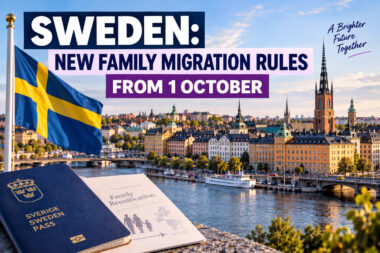
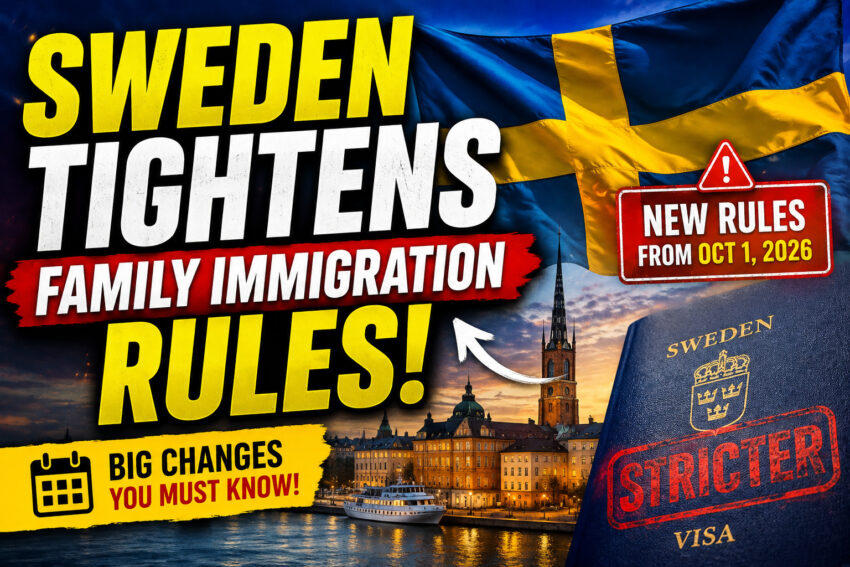

Sweden Tightens Family Immigration Rules: New Requirements Coming October 1, 2026
Published: August 18, 2026
Sweden is introducing stricter conditions for family immigration, following a decision by the Swedish Parliament on August 13, 2026.
The new legislation tightens the rules for obtaining residence permits based on family ties and is intended to bring Swedish rules closer to the minimum requirements permitted under EU law. The changes will generally take effect on October 1, 2026, with some transitional provisions. (Riksdagen)
What has changed?
The reforms affect who can qualify for a residence permit through family connections and introduce additional requirements for some applicants.
One of the most important changes concerns people in Sweden who hold temporary residence permits.
Under the new rules, a person with a temporary residence permit will generally need to have held that permit and lived in Sweden for at least two years before a family member can be granted a residence permit based on the family relationship. (Riksdagen)
However, there are exceptions. The legislation includes exemptions for certain groups, including unaccompanied children and refugees in certain situations. Labour immigrants, researchers and doctoral students are also among groups identified in the government’s proposal as exempt from the two-year waiting requirement. (Regeringskansliet)
⏳ New two-year waiting period
The two-year rule is one of the biggest changes for families.
Under the new framework, a person with a temporary residence permit will normally need to have been resident in Sweden with that permit for two years before family reunification can take place through the relevant family-immigration route. (Riksdagen)
This could mean that some families planning to reunite in Sweden may have to wait longer before their relatives can qualify for residence permits.
The rule does not apply identically to everyone, however. Exemptions and different rules apply depending on the person’s immigration status and circumstances. (Riksdagen)
💰 Stricter income and maintenance requirements
Sweden is also tightening its maintenance requirement for family immigration.
Under the new rules, the financial requirement will apply in more situations and can also apply when someone is applying to extend a residence permit based on family ties. (Riksdagen)
The government has argued that stronger financial requirements can support integration by encouraging people established in Sweden to become financially self-sufficient before bringing family members to the country. (Regeringskansliet)
For families preparing an application, this means it will be important to check the exact income and financial requirements that apply to their situation before submitting documents.
👨👩👧 Who can qualify as a family member?
The legislation also changes how Swedish rules distinguish between different sponsors.
Different rules will apply depending on whether the person in Sweden is:
- 🇸🇪 A Swedish citizen
- 🇳🇴 A Nordic citizen
- 🪪 A person with permanent residence rights
- 📄 A person with a temporary residence permit
This means that family members of a person with a temporary permit may face different requirements from relatives of Swedish citizens or people with permanent residence rights. (Riksdagen)
👥 What about relatives outside the immediate family?
The new rules also adjust provisions concerning close relatives outside the nuclear family, particularly in extension cases.
One notable provision concerns people who are under 21 and previously received a residence permit as children because of their relationship to a parent or the parent’s spouse or partner. Under the new rules, certain people who have since turned 18 may still be able to obtain a residence permit. (Riksdagen)
This provides a specific route for some young adults who might otherwise face difficulties after reaching adulthood.
🏠 Can some people apply from inside Sweden?
There is also a temporary expansion of the circumstances in which certain family migrants can apply for a residence permit from inside Sweden.
These provisions are aimed at specific groups, including some people who previously held residence permits as children because of family ties.
The temporary rules are scheduled to apply from October 1, 2026, and some of these expanded possibilities are scheduled to end on January 1, 2028. (Regeringskansliet)
📅 When do the new rules start?
The main changes are scheduled to enter into force on:
1 October 2026
There are transitional provisions, so the exact effect on an individual application can depend on when the application was submitted and which type of residence permit is involved. (Riksdagen)
People preparing a family-immigration application should therefore check the rules that apply at the time they submit their application rather than relying on older information.
Why is Sweden making these changes?
The Swedish government says the reforms are part of a broader change in migration policy and are intended to bring family-immigration rules closer to EU legal minimum levels.
The government has also linked the reforms to improving integration and reducing social exclusion. (Regeringskansliet)
The Parliament ultimately approved the government’s proposal on August 13, 2026. (Riksdagen)
🇵🇰 What could this mean for Pakistani families?
For Pakistani families with relatives living in Sweden, these changes could be important when planning family reunification.
A person with a temporary residence permit may generally need to wait two years before the relevant family-reunification route becomes available, unless an exemption applies. Applicants may also face stronger financial requirements. (Riksdagen)
However, nationality alone does not determine eligibility. The outcome depends on the residence status of the person in Sweden, the relationship between the family members and the specific immigration category.
⚠️ Important: Not every family is affected in the same way
The phrase “Sweden is making family immigration harder” is accurate as a broad description, but it does not mean every family will face exactly the same requirements.
Some categories are exempt from the waiting period, while other provisions specifically protect certain young adults and expand some applications from inside Sweden.
Applicants should therefore avoid assuming that a rule affecting one residence category automatically applies to another. (Riksdagen)
📌 Key Takeaways
🇸🇪 Sweden’s Parliament approved stricter family-immigration rules on August 13, 2026.
📅 The main changes take effect October 1, 2026.
⏳ People with temporary residence permits will generally face a two-year waiting period before family reunification, subject to exemptions.
💰 Maintenance requirements are being strengthened and will apply in more situations.
👨👩👧 Rules for different types of family members and sponsors will become more specific.
🧑🎓 Certain young adults who previously held residence permits as children receive special provisions.
🏠 Some family migrants will temporarily have expanded possibilities to apply from inside Sweden.
📰 TravellerTrek Take
Sweden’s latest family-immigration reform is one of the most important residence-rule changes for families planning to reunite in the country in 2026.
The biggest practical changes to watch are the two-year waiting period for many temporary-permit holders and the broader financial requirements.
With the legislation taking effect on October 1, 2026, anyone planning family immigration should check the latest rules and transitional provisions before submitting an application.
Official sources: Swedish Parliament and Government of Sweden. (Riksdagen)
Government of Sweden – Stricter conditions for family immigration
Disclaimer: This article is for general information and is not legal or immigration advice. Swedish immigration rules can vary by residence category and individual circumstances. Always verify the latest requirements with the Swedish Migration Agency before applying.