
EU’s €130 Million Border Security Plan: What Travelers Should Know
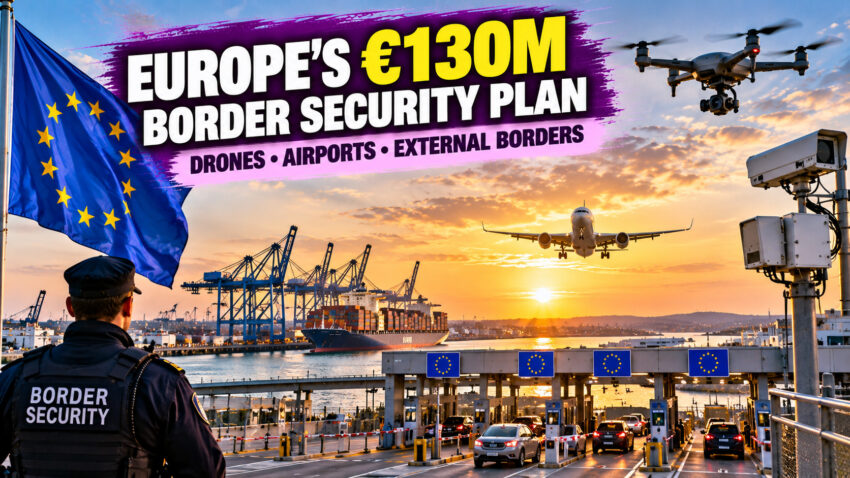
Europe is investing another €130 million in border-security technology. The European Commission announced the additional funding in October 2026 to strengthen surveillance and improve authorities’ ability to detect and respond to unauthorized drone activity and other security threats near the European Union’s external borders.
The investment will support national authorities in 16 EU member states and Norway. It forms part of a wider effort to modernize border-management systems and improve coordination between security agencies.
But what does this announcement actually mean for tourists, international students, workers, and people planning to visit Europe? Here is what travelers need to know.
What Has the European Union Announced?
On October 13, 2026, the European Commission confirmed an additional €130 million under the Border Management and Visa Instrument (BMVI).
The money is intended to help participating countries strengthen their external-border surveillance and improve their response to security threats involving drones and other unauthorized activity.
The funding comes on top of an initial €250 million allocation announced in December 2025. Separate funding has also been made available for surveillance drones and related equipment in 2026.
According to the Commission, the projects will be incorporated into national programmes, with funding available until December 31, 2029.
Official source: European Commission — Additional EU funding to strengthen border security
Which European Countries Will Benefit?
The announcement identifies 16 EU member states and one Schengen-associated country.
The participating EU countries are:
- Bulgaria
- Croatia
- Cyprus
- Estonia
- Finland
- France
- Germany
- Greece
- Hungary
- Italy
- Latvia
- Lithuania
- Poland
- Romania
- Spain
- The Netherlands
Norway is also included as a Schengen-associated country.
These countries cover several regions of Europe, from the Baltic region to the Mediterranean. The programme is intended to strengthen national capabilities while supporting a more coordinated approach to protecting the EU’s external borders.
The Commission’s announcement does not provide a country-by-country breakdown of the €130 million or specify exactly which equipment each country will purchase.
How Will the Funding Be Used?
The investment focuses on technology, surveillance, and the ability of authorities to respond to security incidents.
1. Improved Aerial Border Surveillance
Surveillance drones can help authorities monitor difficult-to-reach areas and identify activity that may require further investigation. Aerial monitoring can complement existing land-based and maritime surveillance systems.
2. Detecting and Responding to Unauthorized Drones
Drones can create security concerns when they operate near sensitive infrastructure or restricted areas without authorization. Counter-drone systems are designed to help authorities detect, track, assess, and respond to potential threats.
The specific equipment and operational arrangements will depend on the projects selected by participating countries.
3. Better Protection for Ports and Airports
The Commission says the programme aims to support the protection of land and maritime borders, ports, airports, and border-crossing points.
These locations are important to international travel and trade. Improved monitoring may help authorities identify security incidents more effectively, although the announcement does not promise faster passenger processing or shorter airport queues.
4. Training and Coordination
The funding can also support information-technology development, staff training, the integration of new systems into national surveillance networks, and closer cooperation between relevant authorities.
The objective is not simply to buy equipment. Authorities must also be able to operate the systems and coordinate an appropriate response.
Does This Mean Europe Is Introducing New Travel Restrictions?
No. The €130 million announcement does not, by itself, introduce a new visa requirement or a blanket travel restriction.
The investment concerns border-security capabilities, particularly drone surveillance and counter-drone measures. It should not be confused with a new Schengen visa policy, a change to the permitted duration of a short stay, or the introduction of a new travel authorization.
However, travelers should remember that border authorities may conduct checks under existing national and European rules. Temporary internal border controls can also be introduced within the Schengen Area in specific circumstances.
Before traveling, check the official requirements for your destination and any countries through which you will transit.
What Should International Travelers Expect?
For most visitors, the announcement is primarily a development in European security policy rather than an immediate change to their travel plans.
Tourists Visiting Europe
Tourists should continue to prepare their passports, visas where required, accommodation details, travel insurance, and other documents applicable to their circumstances.
Do not assume that the funding announcement means every airport will introduce new checks or that every traveler will experience longer processing times.
International Students
Students planning to study in Europe should continue following the visa and residence-permit requirements published by their chosen country and university.
The funding announcement does not establish new student-visa eligibility criteria.
People Applying for European Work Visas
Applicants should check the official immigration website of the country where they intend to work. Salary thresholds, qualifications, sponsorship rules, and application procedures are separate from this border-security funding announcement.
A stronger border-surveillance programme does not automatically change the requirements for obtaining a work visa.
Travelers from Pakistan
Pakistani passport holders planning short visits to Schengen countries generally need a Schengen visa unless a specific exemption applies.
This announcement does not replace the visa application process or establish a new visa requirement specifically for Pakistani citizens. Applicants should continue checking the official embassy or consular website for their destination.
How Does This Relate to Schengen Travel?
The Schengen Area allows travel between participating countries without routine checks at every internal border, subject to the applicable rules and any temporary controls in force.
External-border security and internal-border arrangements are related, but they are not the same thing.
The new funding is directed at strengthening security at the EU’s external borders and improving authorities’ technological capabilities. It does not mean that routine passport checks will automatically be introduced at every border between Schengen countries.
Travelers planning multi-country trips should nevertheless check current border-control notices, particularly when crossing between countries that have temporarily reintroduced controls.
Official source: European Commission — Temporary reintroduction of border control
What Happens Next?
The projects will be integrated into participating countries’ national BMVI programmes. Their implementation will determine how the funding translates into actual equipment, training, and surveillance capabilities.
The Commission has not published a detailed country-by-country spending breakdown in its October 13 announcement. Travelers should therefore avoid relying on unverified claims about particular airports, specific border locations, or new passenger-screening procedures.
Future official announcements may provide further information as individual projects progress.
Frequently Asked Questions
1. How much additional funding has the EU announced?
The European Commission announced an additional €130 million for drone and counter-drone measures intended to strengthen security at the EU’s external borders.
2. Which countries are included?
The programme supports 16 EU member states and Norway. The EU countries are Bulgaria, Croatia, Cyprus, Estonia, Finland, France, Germany, Greece, Hungary, Italy, Latvia, Lithuania, Poland, Romania, Spain, and the Netherlands.
3. Will airport security checks automatically become stricter?
The announcement aims to improve border surveillance and authorities’ response capabilities. It does not specify a universal change to passenger-screening procedures or guarantee that checks will become longer.
4. Does the announcement change Schengen visa fees?
No. The €130 million funding announcement does not introduce a change to Schengen visa fees.
5. Does this affect Pakistani travelers?
There is no new visa rule for Pakistani citizens in this announcement. Travelers should continue following the visa and entry requirements that apply to their nationality and destination.
6. When will the projects be implemented?
The projects will be incorporated into participating countries’ national programmes, with funding available until December 31, 2029. The announcement does not give one common completion date for every project.
Final Thoughts
The European Union’s additional €130 million investment highlights the growing role of technology in external-border security. Surveillance drones, counter-drone systems, improved information technology, and staff training are intended to help participating authorities monitor security threats and coordinate their responses.
For travelers, the key point is straightforward: this is a border-security investment, not a new blanket visa rule.
Anyone planning a trip, study programme, or move to Europe should continue checking official immigration and travel guidance for the relevant country rather than assuming that the announcement changes existing requirements.