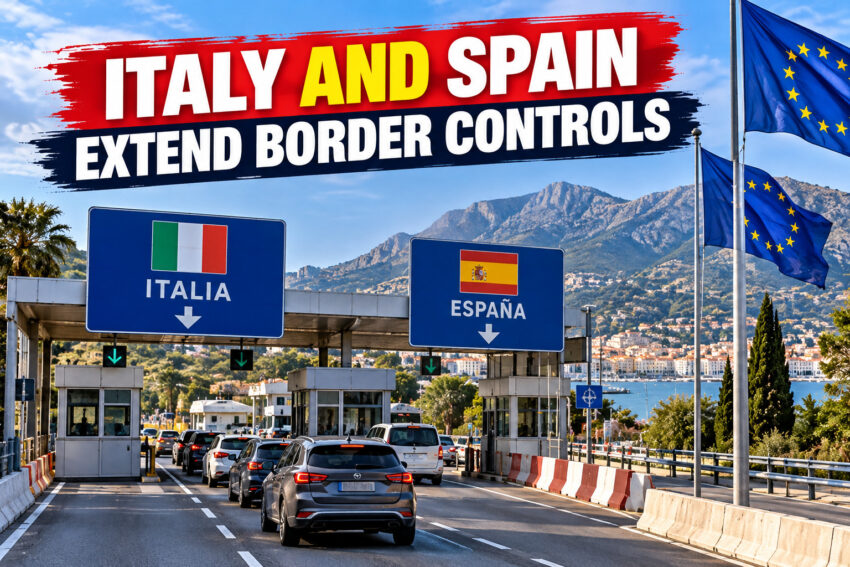

Italy and Spain Extend Border Controls in October 2026: What Travellers Need to Know
Italy and Spain Extend Temporary Border Controls
Travelling between European countries may require extra planning this October. Italy and Spain have extended temporary border-control measures affecting travel between the two countries, according to reports published on October 16, 2026.
The measures come amid diplomatic tensions following a migration crisis involving Ceuta, a Spanish territory in North Africa. Both governments have introduced or extended additional checks on travellers arriving from the other country.
According to Reuters, Italy extended its measures by another week, while Spain extended its own measures until October 22. Officials from both countries are expected to discuss ways to lift the controls and improve cooperation. Source: Reuters, October 16, 2026.
Why Have Italy and Spain Extended the Controls?
The dispute is connected to a large migration movement into Ceuta in late July 2026.
Italian authorities cited concerns about internal security and the possible onward movement of migrants within the Schengen Area when introducing additional controls on travel from Spain.
Spain responded with its own checks on travellers arriving from Italy. Madrid criticised Italy’s decision, while both countries continued to extend their respective measures.
The issue has become a diplomatic challenge because the Schengen system is designed to allow travel between participating countries without routine internal border checks.
What Is the Schengen Area?
The Schengen Area is a group of European countries that generally allows people to travel across participating countries without routine checks at their shared internal borders.
However, this does not mean border checks can never return. Under the Schengen Borders Code, countries may temporarily reintroduce internal border controls in exceptional circumstances involving serious threats to public policy or internal security. Such measures must be limited in scope and duration.
Temporary controls can mean that travellers are asked to show their passports or other valid travel documents, even when crossing a border that would normally have no routine checks.
Official information: European Commission — Temporary Reintroduction of Border Control.
Which Travellers Could Be Affected?
The measures specifically concern travel between Italy and Spain. According to the European Commission’s published notification, Spain’s controls cover internal air and sea borders with Italy.
Travellers who may be affected include:
- Tourists flying between Italian and Spanish cities.
- International visitors connecting through airports in either country.
- Passengers travelling by sea on relevant routes.
- People planning multi-country European holidays.
- Travellers who need to make onward flight, ferry or other transport connections.
The exact checks can depend on the route, travel documents and applicable rules. These measures do not mean that all travel between Italy and Spain has stopped.
Will Flights and Ferries Be Cancelled?
The extension of border controls does not automatically mean flights or ferries will be cancelled.
Travellers should check directly with their airline, ferry operator or travel provider for any schedule changes. Additional identity or document checks may cause delays, so allowing extra time for connections is sensible.
If your journey includes several countries, check the requirements for every stage rather than assuming that all Schengen journeys operate under identical conditions.
What Should Tourists Do Before Travelling?
If you are planning to travel between Italy and Spain, take the following precautions.
1. Carry Your Passport and Travel Documents
Keep your valid passport and any required visa or residence documents accessible. Do not rely solely on a boarding pass or driving licence as proof of international travel eligibility.
2. Check Your Route Before Departure
Confirm whether your journey involves an airport or seaport covered by the temporary measures. Check official updates shortly before travelling because the arrangements may change.
3. Allow Extra Time
Additional checks can affect airport and port processing times. Leave a reasonable buffer between connecting services, particularly when separate tickets are involved.
4. Confirm Your Visa Requirements
Temporary border controls do not automatically introduce a new visa requirement for every traveller. Your existing nationality-specific entry requirements still matter.
If you require a Schengen visa, check that your visa and travel documents remain valid for your intended journey.
5. Follow Official Updates
For the latest information, consult the European Commission’s border-control notifications, relevant government travel advice and your transport provider.
Do These Controls Affect All Schengen Countries?
No. The measures reported in this case concern travel between Italy and Spain, particularly the relevant air and sea borders.
Other Schengen countries may have their own temporary border controls for separate reasons. Travellers planning a wider European itinerary should therefore check the arrangements for each country and route.
The Schengen system continues to support cross-border travel, but temporary controls can be introduced when governments consider them necessary under the applicable rules.
Could the Controls Be Lifted Soon?
There are signs of diplomatic discussions. Reuters reported on October 16 that the interior ministers of Italy and Spain were expected to discuss possible ways to lift the controls and explore alternative forms of cooperation.
However, discussions do not guarantee that the measures will end on a particular date. Travellers should not assume that the controls have been lifted until the relevant authorities confirm a change.
Final Thoughts
Italy and Spain’s extended border controls are an important reminder that travel arrangements within Europe can change, even in the Schengen Area.
For most travellers, the practical response is straightforward: check the latest official information, carry the correct documents, confirm your route and allow extra time for airport or port checks.
Before setting off on a European trip, verify the current arrangements rather than relying on older travel advice.
Stay informed with TravellerTrek for European travel news, immigration updates, visa guidance and practical tips for international travellers.
Sources and further reading
- Reuters — Italy prolongs Schengen suspension with Spain, talks loom
- European Commission — Temporary Reintroduction of Border Control
- EU Your Europe — Travel documents for EU nationals
Editorial note: Border-control dates and scope can change. Recheck official notifications immediately before publication and update this article if the authorities announce a new arrangement.