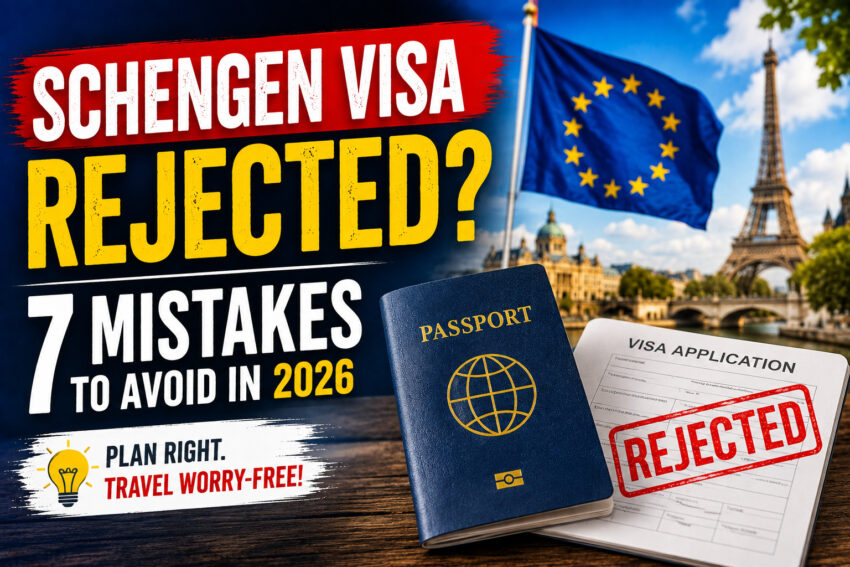

🛂 Schengen Visa Rejected? 7 Mistakes That Could Hurt Your Application in 2026
Planning a trip to Europe? ✈️🇪🇺
Getting a Schengen visa isn’t simply about filling out a form and booking a flight. Consulates assess your travel purpose, financial situation, accommodation, insurance and whether you are likely to leave the Schengen area before your visa expires. (EUR-Lex)
A small weakness in your application can raise questions.
Here are 7 common problems applicants should avoid.
1️⃣ Your Travel Purpose Isn’t Clear
Why are you travelling?
Tourism? Visiting family? Business? Medical treatment?
Your documents should tell a clear and consistent story.
For a tourist application, your itinerary, accommodation and other supporting documents should make sense together.
EU visa rules require applicants to provide documents indicating the purpose and conditions of the intended journey. (EUR-Lex)
🚨 Red flag:
Saying you’re going for tourism while your documents suggest a completely different purpose.
2️⃣ You Can’t Properly Show Your Financial Situation 💶
One of the most important parts of a Schengen application is demonstrating that you have sufficient means for your stay and your return journey.
The required amount isn’t one universal figure for every Schengen country. Member States use national reference amounts when assessing sufficient means. (EUR-Lex)
That means simply showing some money in your account isn’t necessarily enough.
The authorities can look at whether your finances make sense in relation to:
- 📅 Length of your trip
- 🏨 Accommodation
- ✈️ Travel costs
- 🍽️ Daily expenses
- 💼 Your overall circumstances
3️⃣ Your Documents Don’t Match Your Story 📄
This is one of the easiest ways to create doubts.
Imagine your application says you’re staying for 10 days, but your accommodation documents show only 4 nights.
Or your itinerary says you’re visiting three countries while your bookings only support one.
Everything should tell the same story.
Your:
✈️ Flights
🏨 Accommodation
🗓️ Itinerary
💰 Finances
📄 Supporting documents
should be consistent.
4️⃣ You Don’t Provide Enough Evidence That You’ll Return 🏠
A Schengen visa isn’t designed simply to give someone permission to enter Europe indefinitely.
The authorities assess whether you intend to leave the Member States before the visa expires. (EUR-Lex)
Evidence can include things such as:
💼 Employment
🏠 Property
👨👩👧 Family ties
💰 Financial circumstances
📄 Professional commitments
The specific evidence needed depends on your circumstances and the applicable document list.
5️⃣ Your Travel Insurance Doesn’t Meet the Rules 🏥
Travel insurance isn’t something you should treat as an afterthought.
For a uniform Schengen visa, applicants generally need adequate travel medical insurance covering the relevant territory and period of stay.
The Visa Code specifies a minimum coverage of €30,000 for covered medical and repatriation expenses. (EUR-Lex)
So before submitting your application, check:
✅ Coverage amount
✅ Territorial validity
✅ Dates of coverage
✅ Medical and repatriation coverage
6️⃣ Your Application Contains Missing or Incorrect Information ❌
A visa application isn’t the place to guess.
Check every:
📄 Form
📅 Date
🔢 Passport number
🏨 Booking
💰 Financial document
✍️ Signature
The Visa Code requires applicants to submit the application form, travel document, photograph, fingerprints where applicable, visa fee and supporting documents. (EUR-Lex)
One simple rule:
Check everything twice before submitting.
7️⃣ You Apply Without Checking the Correct Requirements 🛂
This is a big one.
There isn’t one identical document checklist for every applicant.
Requirements can depend on:
🌍 Your country of residence
🇪🇺 Your destination
🎯 Purpose of travel
👨👩👧 Your personal circumstances
📅 Length of stay
The EU Visa Code allows supporting-document lists to take local circumstances into account. (EUR-Lex)
So don’t rely entirely on:
❌ Random Facebook posts
❌ Old YouTube videos
❌ Someone else’s checklist
❌ Outdated visa guides
Always check the current official requirements for your application location and destination.
🚨 One Important Thing Many Applicants Forget
Getting a visa doesn’t automatically guarantee entry.
Even with a valid visa, border authorities can check whether you meet the conditions for entry, including your travel purpose and sufficient means. (European Union)
So keep your important travel documents accessible when travelling.
🧳 What Should You Do Before Applying?
Use this quick checklist:
✅ Before submitting your Schengen application:
☑️ Your travel purpose is clear
☑️ Your itinerary makes sense
☑️ Your accommodation matches your plans
☑️ Your finances are sufficient and explainable
☑️ Your travel insurance meets the requirements
☑️ Your documents are complete
☑️ Your information is consistent
☑️ You have evidence supporting your circumstances
☑️ You’ve checked the latest official requirements
The Bottom Line
A Schengen visa application isn’t about having a huge bank balance or simply producing a pile of documents.
It’s about presenting a credible, consistent and properly documented trip that meets the applicable requirements.
✈️ Your goal should be simple:
Make it easy for the visa officer to understand your trip.
And most importantly, never submit fake or misleading documents. That can seriously damage your application and future travel prospects.
👀 WHAT DO YOU THINK?
Have you ever had a Schengen visa rejected?
🇪🇺 YES
✅ NO
🤔 PLANNING TO APPLY
Tell us your experience in the comments — it could help someone else avoid the same mistake. 👇
This article is general information, not legal or immigration advice. Visa requirements can change, so applicants should verify the current requirements with the relevant consulate or official visa service before applying.