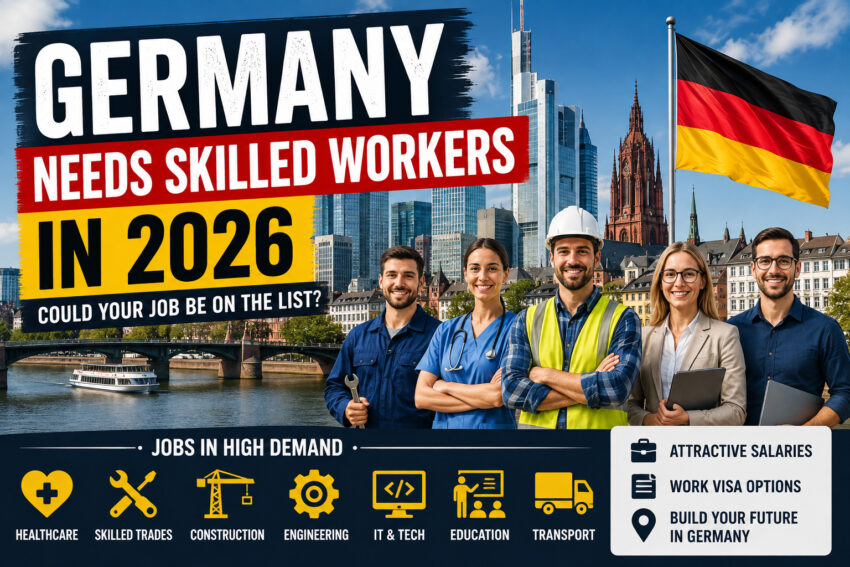

🚨 Germany Needs Skilled Workers in 2026 — Could Your Job Be on the List?
Thinking about moving to Europe for work? 👀🇪🇺
Germany could be one of the most interesting countries to watch in 2026.
But there’s a catch:
Germany doesn’t need just “workers.” It needs people with specific skills.
Germany’s Federal Employment Agency identified 157 occupations with skilled-worker shortages in its latest analysis. The biggest shortages are concentrated in areas such as nursing, healthcare, construction and skilled trades. (Bundesagentur für Arbeit Statistics)
So the real question isn’t:
“Does Germany need foreign workers?”
It’s:
“Does Germany need YOUR skills?”
🏥 Healthcare: One of Germany’s Biggest Needs
Healthcare continues to be one of the country’s major shortage areas.
Germany is looking for qualified professionals in areas including:
👩⚕️ Nursing
👨⚕️ Medical professions
💊 Pharmacy
🦷 Dentistry
👶 Nursing and midwifery
Qualified professionals may have opportunities through Germany’s skilled-immigration routes, although regulated professions can require professional recognition or a licence to practise. (Make it in Germany)
🔧 It’s Not Just University Graduates
Here’s something many people don’t realise.
Germany’s labour shortages also include skilled trades and construction occupations.
The latest Federal Employment Agency analysis highlights shortages in construction and craft occupations, as well as strong demand for occupations such as cooks, professional drivers and educators. (Bundesagentur für Arbeit Statistics)
So if you have a vocational qualification or practical experience, don’t assume Germany isn’t for you.
⚙️ Engineers & STEM Professionals — Take Note
Germany also has shortage occupations covering parts of:
⚙️ Engineering
🧪 STEM
🏗️ Architecture and planning
💻 Selected technology roles
For eligible professionals, Germany’s EU Blue Card can provide another route.
In 2026, the salary threshold is €45,934.20 per year for shortage occupations, compared with €50,700 for other occupations. (Make it in Germany)
😮 And Here’s the Interesting Part…
You may not need a job offer before going to Germany.
Germany has introduced the Opportunity Card (Chancenkarte) for eligible non-EU/EEA/Swiss jobseekers.
It can allow qualified people to come to Germany to look for suitable employment.
Depending on the route, applicants can qualify through a recognised qualification or through a points system. (Make it in Germany)
The initial Opportunity Card can allow a stay of up to one year for job searching. (Make it in Germany)
That’s a major difference from the traditional idea of:
“First find a German employer → then move.”
💻 But Don’t Believe Every “Germany Needs IT Workers” Post
This is where things get interesting.
Germany does have demand for technology professionals, but not every IT occupation is currently classified as a shortage occupation.
According to the latest Federal Employment Agency analysis, software development, for example, was no longer classified as a shortage occupation in the 2025 analysis. (Bundesagentur für Arbeit Statistics)
So simply saying:
💻 “Germany needs IT workers!”
isn’t enough.
Your specific profession, experience and qualifications matter.
Who Should Look Closely at Germany in 2026?
You may want to investigate Germany if you have experience or qualifications in areas such as:
🏥 Healthcare
🔧 Skilled trades
🏗️ Construction
⚙️ Engineering
🧪 STEM
🚛 Transport
👶 Education & childcare
💻 Selected technology professions
The exact opportunities depend on your occupation and the immigration route you’re eligible for.
🛂 Germany Has Several Routes for Skilled Workers
Depending on your situation, you could potentially explore:
🔵 EU Blue Card
For eligible highly qualified professionals with a suitable job and salary.
🟢 Skilled Worker Visa
For people with recognised or comparable professional or academic qualifications.
🟡 Opportunity Card
For eligible people who want to come to Germany to search for qualified employment.
Germany’s skilled immigration framework has expanded options for people with vocational qualifications as well as university degrees. (Make it in Germany)
⚠️ But There’s One BIG Mistake to Avoid
Don’t see:
“Germany has 157 shortage occupations”
and assume that means:
“I can get a German visa because my occupation is in demand.”
It doesn’t work that way.
You still need to meet the requirements of the relevant immigration route.
That could involve:
📄 Qualification requirements
💼 Employment requirements
💰 Salary requirements
🗣️ Language requirements
🏫 Recognition of qualifications
💶 Proof of financial resources
For example, an Opportunity Card applicant using the job-search route must demonstrate sufficient financial resources; the official 2026 amount is generally €1,091 net per month through the specified proof methods. (Make it in Germany)
🔥 So, Is Germany Worth Considering?
If your skills match what Germany needs — absolutely worth investigating. 🇩🇪
But don’t choose Germany simply because you saw a social-media post saying:
🚨 “GERMANY NEEDS WORKERS!”
Instead ask:
What does Germany need — and do I have those skills?
That’s the smarter way to approach European immigration.
YOUR TURN 👇
What is your profession?
💻 IT
👨⚕️ Healthcare
⚙️ Engineering
🔧 Skilled Trade
🏗️ Construction
🎓 Education
🚛 Driver/Transport
📊 Business/Finance
👨🍳 Hospitality
❓ Other
Comment your profession below — we can check whether Germany is currently looking for your type of skills. 👇
Official sources
Germany’s Federal Employment Agency — Skilled-worker shortage analysis
Make it in Germany — Official skilled immigration information