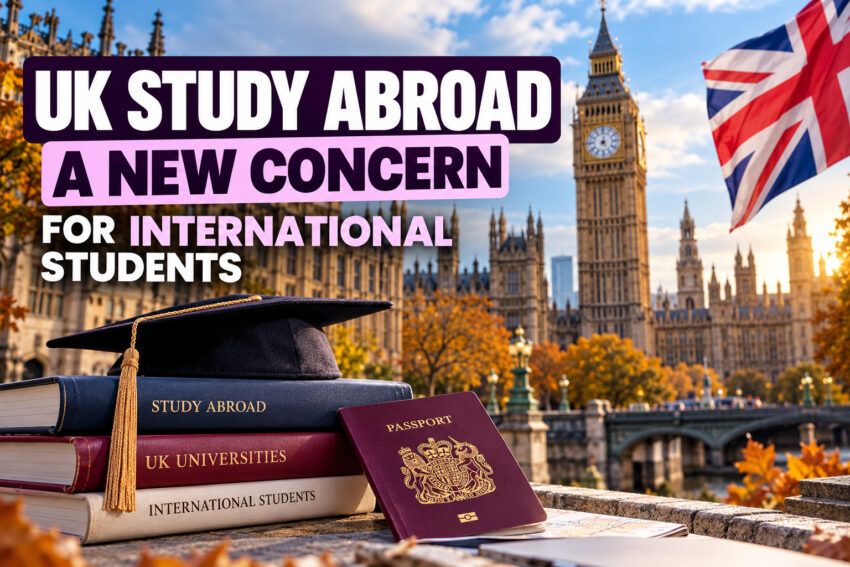

🎓 UK Study Abroad: A New Concern for International Students in 2026
TravellerTrek · UK Education News · Updated 12 October 2026
The United Kingdom remains a popular destination for international students, but a new concern is emerging for applicants hoping to study there. Recent reporting indicates that some UK universities are withdrawing offers to international applicants as they respond to increased student visa refusals and stricter government compliance requirements. Students from Pakistan and other countries may need to prepare more carefully before applying.

The situation does not mean that all international students are being rejected or that Pakistani students are automatically ineligible. However, it highlights the importance of choosing a suitable university, preparing a credible application and understanding the current visa process.
What is happening to international students?
According to a Financial Times report published on 10 October 2026, some UK universities have begun withdrawing offers to international applicants because they are concerned about the consequences of high student visa refusal rates. The report identifies applicants from Pakistan, Nigeria and Bangladesh among those affected by this trend.
The concern is connected to tighter rules for universities that sponsor international students. Institutions must meet government standards covering visa refusals, student enrolment and course completion. Universities that fail the applicable compliance requirements may face enforcement action, including the possible loss of their student sponsorship licence.
This creates uncertainty for some applicants who may have received an offer but have not yet completed the visa process.
Why are UK universities withdrawing offers?
The main issue is the pressure on universities to demonstrate that they recruit students responsibly and comply with UK immigration requirements.
The UK Home Office strengthened the compliance framework for student sponsors from 1 June 2026. Under the updated rules, universities generally need to meet these core thresholds when assessed:
| Compliance measure | Requirement |
|---|---|
| Student visa refusal rate | Below 5% |
| Course enrolment rate | At least 95% |
| Course completion rate | At least 85% until the next threshold change |
The course completion threshold is scheduled to rise to at least 90% for assessments submitted from 1 June 2027. These standards apply to institutions’ sponsorship compliance assessments; they are not individual visa approval targets for applicants.
Universities are concerned that visa refusals among their prospective students could affect their ability to recruit internationally. The Financial Times report says some institutions have responded by withdrawing offers or suspending recruitment from certain markets.
What does this mean for Pakistani students?
For Pakistani applicants, the report raises a particular concern. The Financial Times reported that 40.9% of UK study visa applications from Pakistan were recorded as withdrawn during the first half of 2026, compared with 3% during the same period in 2025. The report attributes much of the increase to universities withdrawing offers in response to rising visa refusals.
This figure needs careful interpretation: withdrawn applications are not the same as refused visas. It does not mean that 40.9% of Pakistani students were refused a visa, nor does it mean every Pakistani applicant faces the same outcome.
The report also says that some universities have paused recruitment from certain countries. Applicants should therefore confirm their individual university’s current admissions policy rather than assume that all UK universities have stopped accepting Pakistani students.
What should students do before applying?
Students planning to study in the UK can take practical steps to reduce avoidable problems.
Check the university’s status. Confirm that the institution is authorised to sponsor students using the official Register of Student Sponsors.
Confirm your offer in writing. Ask the university whether your offer remains valid and whether it is accepting applicants for your intended intake.
Prepare a consistent application. Your application, academic records, funding evidence and explanations of your study plans should agree with one another.
Understand your course choice. Be prepared to explain why you selected the course, how it relates to your background and why you want to study at that institution.
Provide genuine financial evidence. Check the current UK government requirements and make sure your documents are accurate and verifiable.
Respond carefully to university requests. Submit the requested documents by the stated deadlines and keep copies of correspondence.
Avoid making non-refundable commitments too early. Before paying for accommodation or travel, confirm your admission and understand the refund conditions.
No university can guarantee a visa decision. Meeting the requirements and preparing carefully can help, but the final decision rests with UK Visas and Immigration.
Can international students still apply to UK universities?
Yes. The latest reports describe a more demanding environment for some applicants, not a blanket ban on all international students.
Official Home Office statistics recorded 409,954 sponsored study visa grants in the year ending March 2026, including 391,572 main applicants. The total was 3% lower than in the preceding year, showing that international students continued to receive UK study visas despite the tighter environment.
Students should assess universities individually, check the latest requirements and avoid relying on social media claims that suggest every applicant from a particular country is being rejected.
Frequently asked questions
1. Are UK universities rejecting all Pakistani students?
No. The reporting describes some universities withdrawing offers or restricting recruitment. It does not establish a universal ban on Pakistani applicants.
2. Can I still apply for a UK Student visa in 2026?
Students can still apply if they meet the applicable eligibility requirements and have the necessary sponsorship and documentation. Check the current requirements on the official UK Student visa guidance page.
3. Does receiving a university offer guarantee a visa?
No. A university offer is one part of the process. Applicants must meet the relevant immigration requirements, and UK Visas and Immigration makes the visa decision.
4. What happens if a university withdraws my offer?
Contact the university’s admissions or international student office immediately to ask why the offer was withdrawn, whether it can be reviewed and what happens to any deposit already paid. Do not assume that you can proceed with a visa application using an offer that is no longer valid.
5. How can students check whether a university can sponsor them?
Use the official Register of Student Sponsors and contact the university directly to confirm its current position.
Final thoughts
The latest UK study-abroad news is an important warning for international applicants, especially those preparing applications from Pakistan. Increased visa refusals and stricter compliance requirements are putting pressure on some universities, and some prospective students have experienced withdrawn offers.
However, the situation should not be confused with a nationwide ban on international students. The most sensible approach is to verify your university, prepare accurate documentation, understand the current visa rules and seek written clarification if your admission status changes.
For students planning a UK degree in 2026 or 2027, careful preparation and checking official information before making financial commitments are more important than ever.
Sources and further reading
UK Government — Student sponsor compliance guidance (updated October 2026)
Editorial note: The figures and policy details above reflect the sources available as of 12 October 2026. Recheck the official guidance before publication, as immigration rules and university admissions policies can change.